To better plan and track its progress toward equity, the city of Houston is creating a new system of equity indicators.


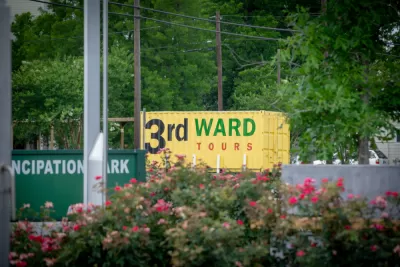
The city of Houston and the Kinder Institute for Urban Research are in the final days of public feedback on a process to generate a "Houston Equity Indicators" report.
When complete, "the report will influence decision-makers on budget priorities, programming, policies, and projects to achieve equitable outcomes," according to the "Let's Talk Houston" website hosted by the Houston Planning and Development Department.
"Equity is achieved when a Houstonian’s race, ethnicity, disability, gender identity, and/or sexual orientation, do not predict their outcomes or limit their choices," adds the website.
The website is taking feedback through April 2 on seven indicators: 1) Economic Opportunity, 2) Health, 3) Public Safety, 4) Housing, 5) Infrastructure, 6) Environmental and Climate Ricks, and 7) Access and Inclusion.
"Indicators are the regularly collected data that will be used to determine the city's equity score and track progress over time," according to the site.
Read the full story: Equity Indicators
Advocates: Equity Lacking in the New Houston Climate Action Plan
Advocates and local residents are expressing concern about a lack of direct support in the Houston Climate Action Plan for underserved neighborhoods that have already experienced some of the worst effects of climate change.

Everything you Need to Know from the APA’s 2026 Trend Report for Planners
Plus, a conversation with the APA’s Chief Foresight and Knowledge Officer, Petra Hurtado.
Houston’s Equity Score Leaves Room for Improvement
Houston is an international city, with a diverse population and economy. Its equity indicators, however, are relatively average compared to other U.S. cities.

Planetizen Federal Action Tracker
A weekly monitor of how Trump’s orders and actions are impacting planners and planning in America.

Washington state to charge fee to drivers with fuel-efficient cars
Revenue from the fee will go towards supporting the state’s highways.

Illinois considers spending $1 billion in taxpayer money on data center
A quantum computing campus and data center are currently under construction in Chicago.

Senate passes bill overhauling permitting
The bill still needs to pass the House.

Did data centers change how voters cast their ballots?
Texas, Ohio, and Georgia all flipped party control. But in rural counties, the effect of local data centers was mixed.

Amtrak invests in eight new Airo trainsets
The new trainsets will begin serving passengers in 2031.

FREE Course: Walkable City 1: Why Walkability?
After describing his path towards focusing on walkability as the essence of good planning, Jeff Speck marches through his five principal reasons for making more walkable places.
Reinventing Malls: Planning Alchemy—Turning Gray Fields Into Gold
The course focuses on the opportunities and imperatives that shape reinvention of mall sites.

City of Charlotte
City of Rosemead
Rutgers University, Edward J. Bloustein School of Planning and Public Policy
University of Michigan School for Environment and Sustainability (SEAS)
Hunter College, City University of New York (CUNY)
The Architects Foundation
University District Partnership