Call it gentrification or rebirth, but a couple's move into the Hingetown neighborhood has led to a transformation of the formerly "toxic corner" of Cleveland.


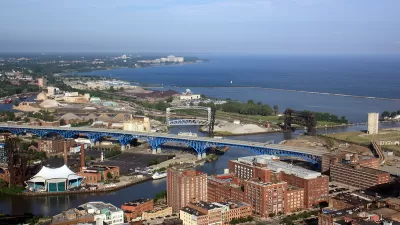
When Graham Veysey and Marika Shiori-Clark moved into a former firehouse in one of Cleveland’s most dilapidated areas, they knew that they wanted to "sink roots down and make an impact." Lee Chilcote writes in Vanity Fair that the couple's investment in the firehouse and the surrounding street (adding public art, bike racks, and the rehab of a building across the street) has turned Hingetown into a destination.
"Hingetown is now a development hotbed, with more than $70 million in new projects planned in the roughly eight-square-block area. Veysey and Shioiri-Clark credit this to the authentic sense of neighborhood vitality and the fact that residents have taken ownership."
Chilcote writes that the neighborhood is now home to an art gallery, a tea shop, and an independent coffee shop. The ongoing investment has attracted empty nesters, millennials, and young families.
FULL STORY: How One Couple Turned a “Toxic Corner” of Cleveland into a Development Hotbed

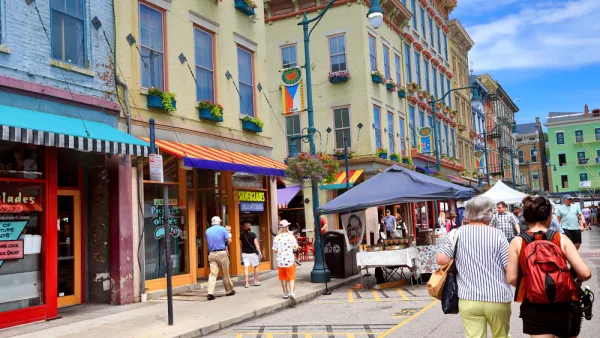
Black Residents Leaving Cincinnati's Fast Growing Urban Area
The housing market in the neighborhood of Over-the-Rhine is a 'segregation machine.'
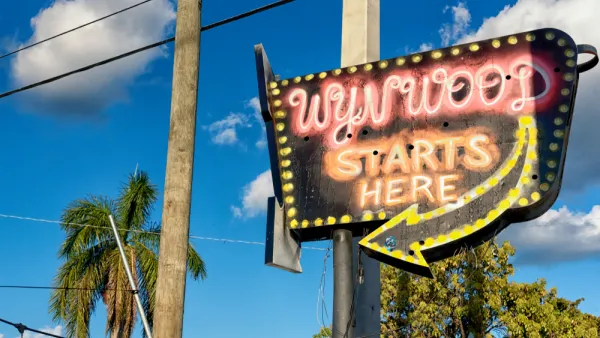
Revitalization Without Displacement: A New Model From Miami
Upzonings in working class neighborhoods usually provoke political opposition based on concerns about gentrification and displacement. But the new Wynwood Norte Neighborhood Revitalization District in Miami might have worked for a solution.
Past Civil Unrest Sets the Table for Today's Gentrification
The story is similar in Washington, D.C., Philadelphia, Los Angeles, Miami, Cincinnati, and Boston: scenes of widespread destruction—the fires, looting, and property damage of civil unrest—sow the seeds for redevelopment and gentrification.

Planetizen Federal Action Tracker
A weekly monitor of how Trump’s orders and actions are impacting planners and planning in America.

The state-sanctioned urbicide of Austin
People don’t kill cities. Freeways do.

US to reduce Colorado River water deliveries to Mexico
A new Colorado Treaty amendment reduces Mexico’s Colorado River water allocation by 250,000 acre feet.

5 New England states march closer to 800 megawatt wind energy project
Securing federal approval for the project may be complicated under the Trump administration, which has historically been hostile towards domestic wind power.

Baltimore to break ground on $50 million Transit Priority Project
The project will bring faster bus trips, safer streets and better bike connections to Baltimore.

Airbnb launches $250 million 'last-dollar financing' housing accelerator, makes first investment in Austin
The company will put $6.4 million towards affordable housing development in Texas’ capital.

FREE Course: Walkable City 1: Why Walkability?
After describing his path towards focusing on walkability as the essence of good planning, Jeff Speck marches through his five principal reasons for making more walkable places.
Reinventing Malls: Planning Alchemy—Turning Gray Fields Into Gold
The course focuses on the opportunities and imperatives that shape reinvention of mall sites.

Eagle County Government
Harvard University Graduate School of Design
Nashville Planning Department
The Architects Foundation
University of Cincinnati Online
The Pocatello Development Authority
The Urban Renewal Agency of the City of Pocatello
Journal of the American Planning Association