Modern maps are visual representations of millions of points of standardized data.


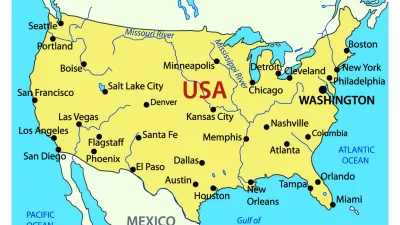
"As rapid change and urbanization redraw the world, someone must refresh our maps so that the two-dimensional pictures that give us a common sense of where we live reflect the dynamic, shape-shifting places around us," Emily Badger writes.
Over 12,000 new place names were identified in the United States last year, including natural landmarks, such as basins or cliffs, infrastructure, such as crossings and hospitals, and municipalities, such as newly incorporated cities. In the course of just four months this year, over 57,000 new place names in China were identified, standardized, and added to the U.S. government's database of foreign places. These data are maintained by the Board of Geographic Names (BGN), a 125-year old agency tasked with ensuring consistent spelling, transliteration, and description of the place.
As the world's population grows and expands it's terrestrial footprint, the BGN acquires information—sometimes conflicting—about the names, features, and locations of newly identified places, and these data are used to update maps.
The BGN website explains: "The original program of names standardization addressed the complex issues of domestic geographic feature names during the surge of exploration, mining, and settlement of western territories after the American Civil War. Inconsistencies and contradictions among many names, spellings, and applications became a serious problem to surveyors, map makers, and scientists who required uniform, non-conflicting geographic nomenclature." Such problems still occur for places in countries that don't have well-developed cartographic services, such as Afghanistan, or in countries where spellings and transliterations vary across regions and languages.
A quick search for the places in California containing the word "calhoun" returns one canal in Solano County, identified in 1981 as “Calhoun Cut.” A search for lakes in Minnesota crashes the computer. According to the database, there are 32 arches in Missouri, though none appear to be the iconic Gateway Arch of Saint Louis. That's because the monument does not fit the official definition of an arch, which is "a natural arch-like opening in a rock mass." By BGN standards, the 630-foot landmark is technically a park.
Badger explains why this agency's responsibilities are so critical. "Imagine the Army and the Marine Corps talking about the same town with different names in Afghanistan. Or what would happen if no one could agree on what to call Mount Hood. Or how you'd find Reston if no one had ever added it to a map."
Read the full story: How official mapmakers keep up with a world that won’t stand still


Four New Map Books Reviewed
Looking for the perfect holiday gift for a planner? Check out these new map books.
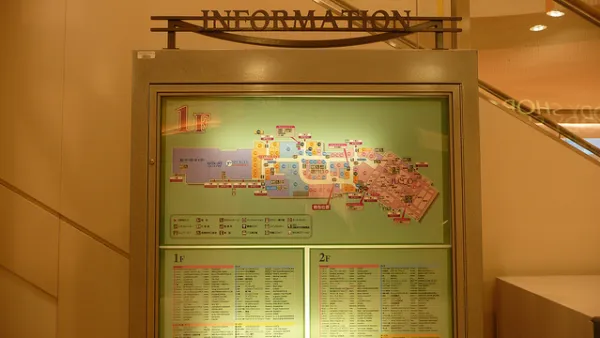
The Future of Mapping is Going Indoors
Cartographers have a new world to map, as technology opens up the interiors of malls, museums, and other large spaces to online exploration.
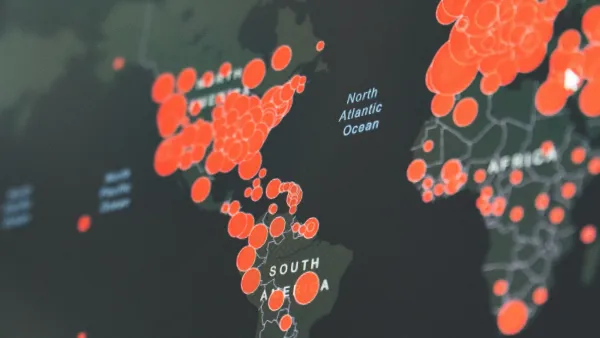
Visualizing the Coronavirus Pandemic
Mapping of the crisis is producing a fascinating and important trove of cartographic records.

Planetizen Federal Action Tracker
A weekly monitor of how Trump’s orders and actions are impacting planners and planning in America.

Amtrak, CN end decades-long dispute with eight-year agreement
The new operating agreement establishes an updated framework for the companies to work together, including processes to resolve disputes.

Northwest rail fans eager for Sept. 30 debut of Amtrak’s Airo fleet
Get ready for that new train smell and more seats. But they won’t go faster or run more frequently on the Cascades route in Washington and Oregon.

Brightline Florida files for bankruptcy
The transit company is over $5 billion in debt.

St. Louis Metro to test if single-car trains can reduce operating costs, maintain rider satisfaction
The pilot program will run from October to spring 2027, and begin with one single-car train operating on Metrolink’s Red and Blue lines.

Pennsylvania is building data centers in abandoned mines
Housing data centers in mines provides an alternative to destroying local forests and may spare residents from data centers’ noise and air pollution.

FREE Course: Walkable City 1: Why Walkability?
After describing his path towards focusing on walkability as the essence of good planning, Jeff Speck marches through his five principal reasons for making more walkable places.
Reinventing Malls: Planning Alchemy—Turning Gray Fields Into Gold
The course focuses on the opportunities and imperatives that shape reinvention of mall sites.

City of Thousand Oaks
City of Wisconsin Rapids
Harvard University Graduate School of Design
The Architects Foundation
University of Cincinnati Online
The Pocatello Development Authority
The Urban Renewal Agency of the City of Pocatello