San Francisco has long been the envy of other cities. But in recent years, as real estate prices have skyrocketed and the city's soul seems on the wane, many cities have begun looking at San Francisco as an example of what not to do.


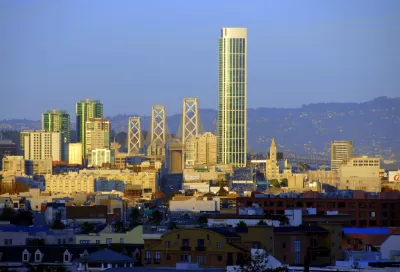
"Nowhere… has there been a more concerted effort to create a San Francisco-like tech scene with fewer downsides than in Seattle, the country’s second-biggest tech hub by some measures," according to an article by Nick Wingfield.
Wingfield cites examples of similar concerns in cities like Boulder and Austin, but focuses on how Seattle has reacted to the evolution of San Francisco in recent years as a result of the influx of residents and businesses connected to a booming tech industry.
Seattle, too, has been attracting varieties of tech businesses—none with more capacity to change the fabric of the city than Amazon. According to WIngfield, "[w]hile the city’s mayor, Ed Murray, praises Amazon, he has also said he wants to keep the working-class roots of Seattle, a city with a major port, fishing fleet and even a steel mill. After taking office last year, he made the minimum-wage increase a priority and reassured representatives of the city’s manufacturing and maritime industries that Seattle needed them." Mayor Murray is pinning his vision for the city on the idea that a bustling tech sector need not cause the demise of the manufacturing industry.
One key difference between Seattle and San Francisco, as examined in the article, is each of the city's construction of housing. "Last year, Seattle had a net addition of more than 7,500 homes, a record for the city, compared with just over 3,500 in San Francisco, according to planning departments in both cities." To be fair, according to Wingfield, "Seattle partly benefits from having a larger area and about 185,000 fewer residents than San Francisco."
FULL STORY: Seattle, in Midst of Tech Boom, Tries to Keep Its Soul

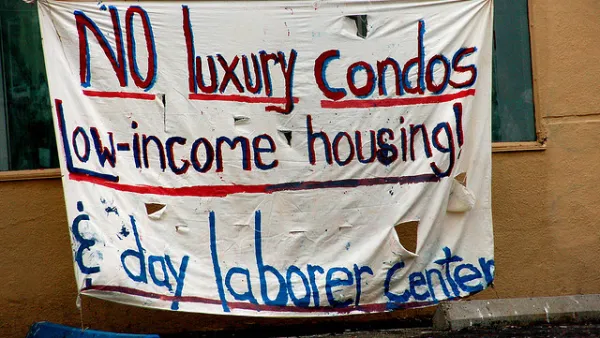
San Francisco Preserves Affordable Housing At Risk of Gentrification
A loan program helps non-profits procure affordable apartment buildings that might otherwise be snatched up by speculative developers.
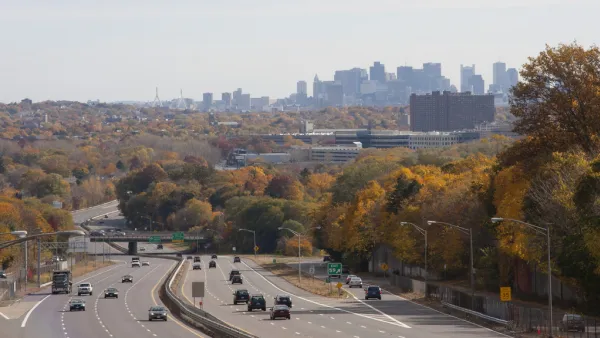
If Housing Affordability Is Top Concern, Let Metro Regions Sprawl
Research from BuildZoom, a San Francisco-based contractors' website, shows that housing affordability increases with a region's ability to build outwards, as opposed to upwards. Densification largely has not accompanied efforts to curb sprawl.

Is Portland the Next San Francisco?
Now that tech companies have "discovered" Portland, Oregon, longtime residents question whether the progressive city has done enough to protect them from displacement. Sound familiar?

Planetizen Federal Action Tracker
A weekly monitor of how Trump’s orders and actions are impacting planners and planning in America.

The state-sanctioned urbicide of Austin
People don’t kill cities. Freeways do.

US to reduce Colorado River water deliveries to Mexico
A new Colorado Treaty amendment reduces Mexico’s Colorado River water allocation by 250,000 acre feet.

5 New England states march closer to 800 megawatt wind energy project
Securing federal approval for the project may be complicated under the Trump administration, which has historically been hostile towards domestic wind power.

Baltimore to break ground on $50 million Transit Priority Project
The project will bring faster bus trips, safer streets and better bike connections to Baltimore.

Airbnb launches $250 million 'last-dollar financing' housing accelerator, makes first investment in Austin
The company will put $6.4 million towards affordable housing development in Texas’ capital.

FREE Course: Walkable City 1: Why Walkability?
After describing his path towards focusing on walkability as the essence of good planning, Jeff Speck marches through his five principal reasons for making more walkable places.
Reinventing Malls: Planning Alchemy—Turning Gray Fields Into Gold
The course focuses on the opportunities and imperatives that shape reinvention of mall sites.

Eagle County Government
Harvard University Graduate School of Design
Nashville Planning Department
The Architects Foundation
University of Cincinnati Online
The Pocatello Development Authority
The Urban Renewal Agency of the City of Pocatello
Journal of the American Planning Association