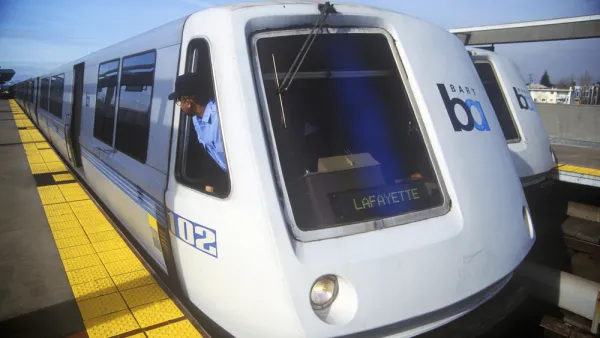
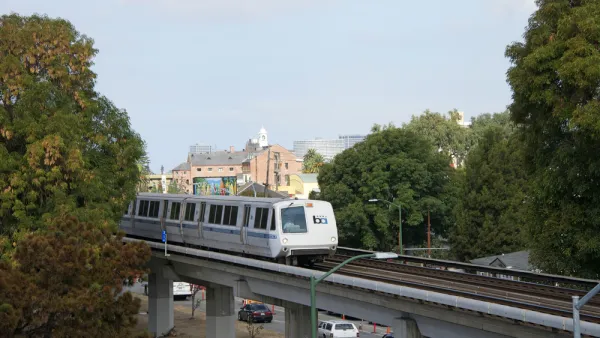
BART expanded service in September in a display of the lost art of making the most of what they've got.


Michael Cabanatuan reported recently on BART's implementation of expanded service—longer trains, more trains, and longer operating hours—in response to record crowds.
Ridership on the system currently stands at about 430,000 trips per weekday, according to Cabanatuan. But the new service is not a result of some special rush order on new rolling stock, reports Cabanatuan: "BART has new trains on the way, but they won’t arrive in significant numbers until 2017. With few railcars to spare, the agency has beefed up its maintenance staff to get the cars out of the shop and on the tracks more quickly, and has repaired some damaged cars."
The remainder of the article goes on to detail the new service capacity for each of the system's lines. The Pittsburgh/Bay Point line, the system's busiest, will see the most improvements, with maximum train length on all trains headed to San Francisco International Airport and additional rush hour trains, for example.
Read the full story: BART, packed with record crowds, to expand service

BART's Six-Month Transit Incentive Experiment Reports Mixed Success
The BART Perks pilot program was the first transit incentive program in the country.
How BART Hopes to Open the Rush Hour Window
In the hopes of letting some air into the congested rush hour commute, BART is considering a social-media focused program to entice riders onto trains at times other than the peak commute.
S.F. Giants Celebratory Parade Causes Transit Surge - Records Broken
The Oct. 31 parade to honor the World Series-winning San Francisco Giants resulted in record-breaking numbers of riders taking BART, Caltrain, SF Muni and ferries to attend the parade who were accommodated by increased service. Why not continue it?

Planetizen Federal Action Tracker
A weekly monitor of how Trump’s orders and actions are impacting planners and planning in America.

‘Going backwards:’ Baltimore mayor, students rally against state's transit funding plan
Maryland's proposed six-year plan provides no funding for Baltimore’s BMORE bus program and reduces its road maintenance funding.

Detroit to transform waterfront with $2.2 billion investment
Developers will convert about 18 acres of unused parking lot space into civic spaces.

HUD modernizes 50-year-old manufactured housing framework
The Next Generation Manufactured Housing Action Plan establishes new energy-efficiency standards for manufactured homes, and new guidelines for anchoring them.

New CA housing laws tear down development red tape
Recently-signed legislation makes building starter homes and ADUs cheaper and faster in California.

Metrolink finishes first expansion in 20 years
The transit agency is now one of very few in the United States to connect two major airports.

FREE Course: Walkable City 1: Why Walkability?
After describing his path towards focusing on walkability as the essence of good planning, Jeff Speck marches through his five principal reasons for making more walkable places.
Reinventing Malls: Planning Alchemy—Turning Gray Fields Into Gold
The course focuses on the opportunities and imperatives that shape reinvention of mall sites.

One Hundred Miles
County of Mendocino
planning NEXT
The Architects Foundation
University of Cincinnati Online
Montrose County
Northern Illinois Transit Authority (NITA)
The Pocatello Development Authority