What will it take for the electric car to become practical and economically feasible for the masses?


Neal Ungerleider provides a dispatch from the recent revealing of the new Tesla X to make a point about the mainstreaming of electric cars into American culture: "Tesla, and to a far lesser extent other high-end fully-electric cars like the BMW i3 and Mercedes-Benz electric B, are the standard-bearers for electric cars in the mass consciousness, writes Ungerleider. "But the future doesn’t belong to Tesla…. It belongs to far cheaper, mass-market electric cars like the Nissan Leaf and Ford Focus."
Although electric cars are currently only available to affluent consumers, and only feasible along heavily traveled routes, that gap could be closing. So, for instance, "Sources at the Kelley Blue Book, a car pricing guide, told Fast Company that prices for electric vehicles declined 9.7% compared to 2014, while prices for cars in general had actually increased 1.2%."
According to Ungerleider's argument, the marketing campaign connected to the crossover appeal of the new Model X, might soon get an extra push from global economic events that lead to a rise in oil prices. That might be all it takes for electric cars to finally, fully enter the mainstream.
Read the full story: TESLA'S MODEL X AND THE MAINSTREAMING OF THE ELECTRIC CAR

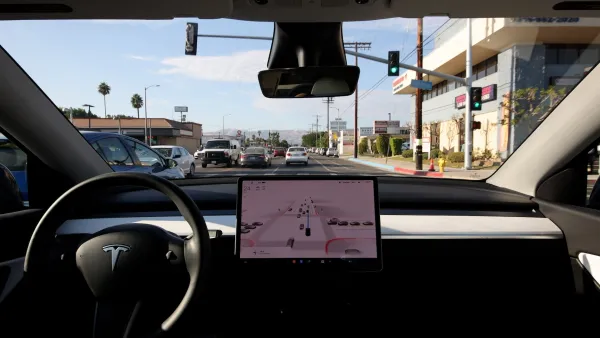
Tesla Launches Unsupervised Robotaxis in Austin
The company has been operating autonomous taxis with human safety drivers in the car in Austin since last June.
Texas Safety Advocates Raise Alarm in Advance of Tesla Robotaxi Launch
The company plans to deploy self-driving taxis in Austin with no oversight from state or local transportation agencies.
Tesla Protests Release of Documents About Austin Robotaxi Launch
The company seeks to block the release of emails with city officials on the grounds they could contain confidential information and trade secrets.

Planetizen Federal Action Tracker
A weekly monitor of how Trump’s orders and actions are impacting planners and planning in America.

Northwest rail fans eager for Sept. 30 debut of Amtrak’s Airo fleet
Get ready for that new train smell and more seats. But they won’t go faster or run more frequently on the Cascades route in Washington and Oregon.
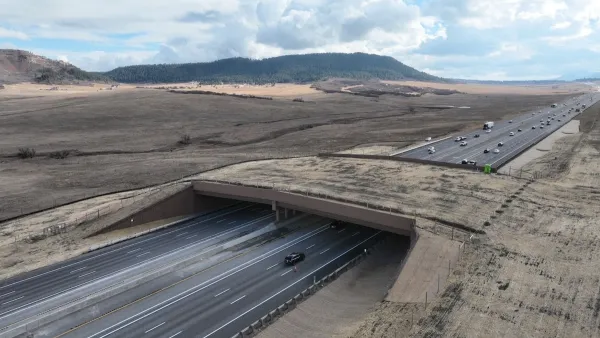
Record-breaking wildlife overpass in Colorado brings 91% reduction in animal collisions
Prior to the overpass, vehicles were hitting one deer per day on Colorado’s Interstate 25.

Detroit to transform waterfront with $2.2 billion investment
Developers will convert about 18 acres of unused parking lot space into civic spaces.

‘Going backwards:’ Baltimore mayor, students rally against state's transit funding plan
Maryland's proposed six-year plan provides no funding for Baltimore’s BMORE bus program and reduces its road maintenance funding.

Trump wants to cancel nearly 98% of funding for HUD housing support program
Multiple housing groups are suing the administration in an effort to preserve the funding.

FREE Course: Walkable City 1: Why Walkability?
After describing his path towards focusing on walkability as the essence of good planning, Jeff Speck marches through his five principal reasons for making more walkable places.
Reinventing Malls: Planning Alchemy—Turning Gray Fields Into Gold
The course focuses on the opportunities and imperatives that shape reinvention of mall sites.

City of Thousand Oaks
City of Wisconsin Rapids
Harvard University Graduate School of Design
The Architects Foundation
University of Cincinnati Online
Northern Illinois Transit Authority (NITA)
The Pocatello Development Authority
The Urban Renewal Agency of the City of Pocatello