Many people outside of Salt Lake City might not realize that the city's proximity to the Wasatch Fault puts it at risk for an earthquake likely in the range of 7.1 on the Richter scale.


Henry Grabar reports on the ongoing work of the Utah Geological Survey (UGS) to "to determine the history (and the ongoing potential) of earthquakes in the West Valley fault zone," where Salt Lake City is located. The question they hope to answer: Is Salt Lake City ready for the "Big One."
The "big One" is expected to occur along the Wasatch Fault. "According to a study [pdf] released this summer by the Utah chapter of the Earthquake Engineering Research Institute, “big ones” on the Salt Lake segment of the Wasatch Fault tend to occur every 1,300 to 1,500 years. The last one occurred 1,400 years ago," writes Grabar.
There are also smaller faults just across town, which the UGS is still studying to learn more about their relationship to surrounding faults.
The crux of all this study to those in the planning profession: the research is intended to produce a model of the "degree of ground shaking" in an earthquake. According to Grabar, "Research like this provides the backbone of the municipal codes that dictate how apartments, roadways, transit lines and virtually everything else in the city must be built — or should be renovated."
Read the full story: Seismologists See Salt Lake City Future Disaster by Reading the Dirt


DC energy efficiency rule requires buildings to upgrade their infrastructure or face millions in fines
Building owners and condo co-op members say the upgrades are often prohibitively expensive.
When the Earth Turns to Liquid
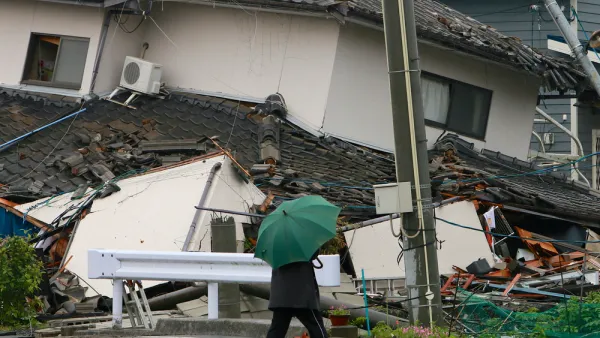
A 7.5 magnitude earthquake struck the Indonesian island of Sulawesi on Sept. 25, followed by a massive tsunami. Soil liquefaction caused by the tremor resulted in 1,700 homes being "swallowed" as the soil shifted. Deaths exceeded 1,400 on Oct. 3.
Bay Area Not Prepared for Next Big One
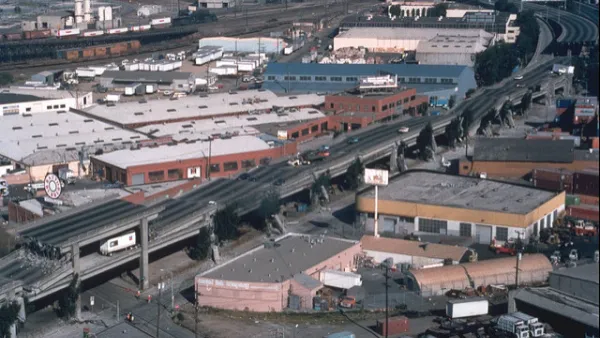
As the death toll from Mexico's 7.1 magnitude earthquake on Sept. 19 climbs above 300, the San Francisco Chronicle investigates how well prepared the Bay Area is for an earthquake of comparable magnitude. Not very well.

Planetizen Federal Action Tracker
A weekly monitor of how Trump’s orders and actions are impacting planners and planning in America.

Data reveals that NYC’s bet on congestion pricing has paid off
After almost two years of the program, reports show positive impacts on traffic and air quality and no disruptions to parking.

HUD modernizes 50-year-old manufactured housing framework
The Next Generation Manufactured Housing Action Plan establishes new energy-efficiency standards for manufactured homes, and new guidelines for anchoring them.

Developers sue Mississippi landowners who object to pipeline through their land
Because the Federal Energy Regulatory Commission approved the pipeline project, the developer can use private land without the consent of the owner.

A gas leak in NYC is costing residents $300 million
More than 90% of NYC’s electricity is from natural gas. About 2% of that gas is leaking and escaping into the air.

CA officials have the power to fix the state’s riskiest dams. They’ve never used it
California’s 40 most hazardous dams would endanger up to 1.5 million people if they failed.

FREE Course: Walkable City 1: Why Walkability?
After describing his path towards focusing on walkability as the essence of good planning, Jeff Speck marches through his five principal reasons for making more walkable places.
Reinventing Malls: Planning Alchemy—Turning Gray Fields Into Gold
The course focuses on the opportunities and imperatives that shape reinvention of mall sites.

One Hundred Miles
County of Mendocino
planning NEXT
The Architects Foundation
University of Cincinnati Online
Montrose County
Northern Illinois Transit Authority (NITA)
The Pocatello Development Authority