The Wall Street Journal implies a take on the U.S. economy that might make some urbanists uncomfortable: more single-family construction is necessary for a full economic recovery.


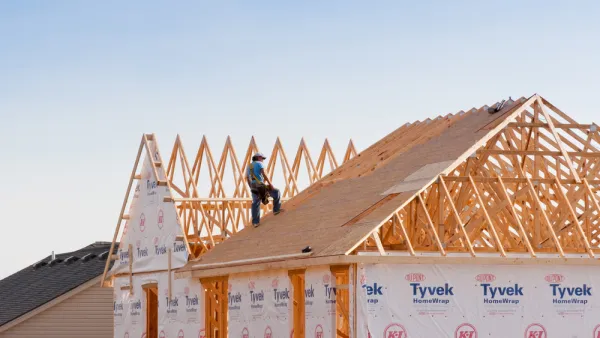
Kris Hudson and Nick Timiraos pen a speculative post for the Wall Street Journal that explores the effect of the U.S. housing market on the country's economy, especially given what the article describes as sluggish construction of single-family homes. The rhetorical question that frames the article: "The U.S. housing market dragged the economy into a deep recession nearly eight years ago. Could it now insulate the domestic expansion during a fragile period of global growth?"
"The problem: Housing still isn’t contributing much to overall economic growth because new construction of single-family homes, which packs an outsize economic punch, is stuck near levels hit during the early 1990s recession."
The article goes on to explore details of the market's current reality, and its relationship the realities of the larger economy.
FULL STORY: Why a Stronger Housing Sector Isn’t Boosting the U.S. Economy That Much


Single-Family Home Prices Cool, Rents Continue to Rise
Despite a slowdown in the single-family market, record-high rents show no signs of dropping.

Local, State Governments Creating Obstacles for Institutional Investors on the Housing Market
Large Wall Street investors are increasing their footprint in the housing market, like they did after the Great Recession, and some local and state governments are inventing new ways to prevent these institutional investors from cornering the market.
Single-Family Homes Appearing Faster Than Any Year Since 2006
The housing construction market is responding to strong demand with a glut of new single-family homes.

Planetizen Federal Action Tracker
A weekly monitor of how Trump’s orders and actions are impacting planners and planning in America.

The state-sanctioned urbicide of Austin
People don’t kill cities. Freeways do.

US to reduce Colorado River water deliveries to Mexico
A new Colorado Treaty amendment reduces Mexico’s Colorado River water allocation by 250,000 acre feet.

Colorado’s Largest Data Center Could Rise Next to Homes — Without a Public Hearing
The proposed campus would consume 11 times the power of Denver International Airport; as it has across the country, opposition mounts.

5 New England states march closer to 800 megawatt wind energy project
Securing federal approval for the project may be complicated under the Trump administration, which has historically been hostile towards domestic wind power.

Baltimore to break ground on $50 million Transit Priority Project
The project will bring faster bus trips, safer streets and better bike connections to Baltimore.

FREE Course: Walkable City 1: Why Walkability?
After describing his path towards focusing on walkability as the essence of good planning, Jeff Speck marches through his five principal reasons for making more walkable places.
Reinventing Malls: Planning Alchemy—Turning Gray Fields Into Gold
The course focuses on the opportunities and imperatives that shape reinvention of mall sites.

Eagle County Government
Harvard University Graduate School of Design
Nashville Planning Department
The Architects Foundation
University of Cincinnati Online
The Pocatello Development Authority
The Urban Renewal Agency of the City of Pocatello
Journal of the American Planning Association