Facing tough competition from Uber, New York City's neighborhood car service providers are using apps to retain clientele. The jury's still out on whether adaptation will help them stay in business.


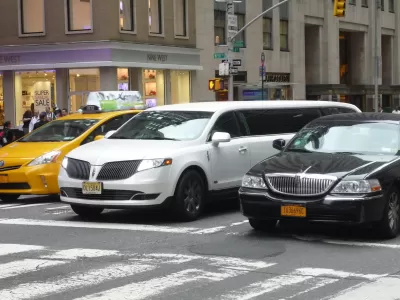
In addition to yellow cabs, private car service companies (often driving the ubiquitous Lincoln Town Car) face increasing pressure from Uber. They recognize that apps have taken center stage in the ride-hailing business.
"Uber's rapid expansion has fed industry unease, especially among yellow-taxi owners and drivers, who see the ride-hailing apps as a threat to the value of the medallions that, at a considerable cost, have long provided entry into the tightly controlled business." Now car and limo services are feeling the crunch too, and have deployed their own apps to keep patrons loyal.
Multiple New York car services—previously competitors—have joined forces against their common foe. They "devised a network where each company could have its own app with its own brand, but that would link all of the bases to one software system so that companies could effectively pool their cars and serve more customers."
One notable advantage taxis and car services have over Uber: "They take cash. Uber relies exclusively on credit cards — and customers with the means to have credit cards."
Read the full story: Neighborhood Car Service Companies Adopt Their Own Apps to Fend Off Uber


Tesla Approved to Operate Uber-like Service in Arizona
State regulators approved a permit for a ride-hailing service, but a permit for driverless taxis is still pending.
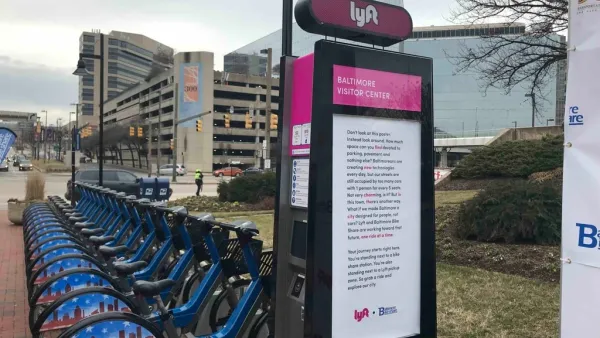
Uber and Lyft: A Tale of Two Companies
After years of resisting efforts by cities to regulate their business and constant—but unprofitable—growth, Uber and Lyft are homing in on their unique strengths.
California Judge Renders Gig Worker Law Unenforceable
A judge ruled against California's Proposition 22, which let ride-hailing and delivery businesses classify workers as independent contractors and discouraged unionization efforts.

Planetizen Federal Action Tracker
A weekly monitor of how Trump’s orders and actions are impacting planners and planning in America.

The state-sanctioned urbicide of Austin
People don’t kill cities. Freeways do.

US to reduce Colorado River water deliveries to Mexico
A new Colorado Treaty amendment reduces Mexico’s Colorado River water allocation by 250,000 acre feet.

Nation's most wind-powered state turns to coal as data centers increase energy demand
For the first time in decades, Iowa has increased its generation of coal power.

NYC cools commuters with city's first rain garden above a bus stop
New York City officials say the plants in the rain garden can absorb 16 gallons of rainwater during heavy storms.

Brightline West’s future may rely on $6 billion federal loan
The company has until Nov. 2 to make a $400 million equity investment into its proposed high-speed rail line.

FREE Course: Walkable City 1: Why Walkability?
After describing his path towards focusing on walkability as the essence of good planning, Jeff Speck marches through his five principal reasons for making more walkable places.
Reinventing Malls: Planning Alchemy—Turning Gray Fields Into Gold
The course focuses on the opportunities and imperatives that shape reinvention of mall sites.

Greater Baltimore Committee
Eagle County Government
Harvard University Graduate School of Design
The Architects Foundation
University of Cincinnati Online
The Pocatello Development Authority
The Urban Renewal Agency of the City of Pocatello
Journal of the American Planning Association