The U.S. Department of Housing and Urban Development has shifted its response to an audit finding tens of thousands "over-income" residents living in subsidized housing.


"The Department of Housing and Urban Development said Tuesday that in response to an unsparing audit by its watchdog, it’s urging public housing authorities across the country to kick out tenants who make too much money to qualify for government subsidies," reports Lisa Rein.
The audit, by the office of Inspector General David Montoya, found that "more than 25,000 tenants earn more than the maximum income to get into public housing –almost half of them making $10,000 to $70,000 more," according to Rein.
The decision to evict "over-income" families marks a shift from the initial response to the audit from HUD. "HUD’s deputy assistant secretary for public housing and voucher programs had denounced the report before its release in late July as contradicting HUD policy, which allows 'over-income' families to stay because evicting them could destabilize their progress toward self-sufficiency."
The article goes into how HUD might address the dual goals of public housing—economic diversity and affordable housing—in the future so that they aren't as likely to contradict with each other.
FULL STORY: After criticism, HUD says it’s trying to give the boot to public housing families who earn too much money

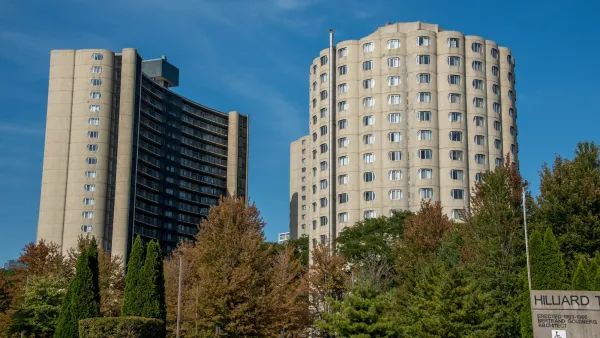
HUD Threatens Sanctions for Housing Authorities That Don’t Verify Resident Immigration Status
The Trump administration continues its crackdown on undocumented immigrants, claiming it is “rooting out abuse of taxpayer-funded resources.”
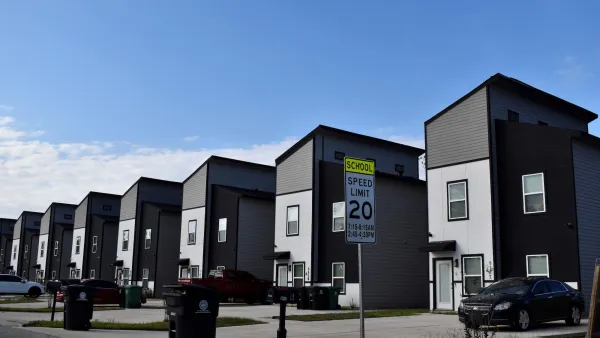
Troubled Houston housing agency announces plan to resolve 'material deficiencies'
The newly renamed Housing Alliance Houston has created a new accounting team and instituted new tenant file inspections, per a recent update required by HUD.

NYC mayor announces plan to repair, restore and build new public housing
Roughly 300,000 New Yorkers live in the city's public housing system.

Planetizen Federal Action Tracker
A weekly monitor of how Trump’s orders and actions are impacting planners and planning in America.

The state-sanctioned urbicide of Austin
People don’t kill cities. Freeways do.

US to reduce Colorado River water deliveries to Mexico
A new Colorado Treaty amendment reduces Mexico’s Colorado River water allocation by 250,000 acre feet.

5 New England states march closer to 800 megawatt wind energy project
Securing federal approval for the project may be complicated under the Trump administration, which has historically been hostile towards domestic wind power.

Baltimore to break ground on $50 million Transit Priority Project
The project will bring faster bus trips, safer streets and better bike connections to Baltimore.

Airbnb launches $250 million 'last-dollar financing' housing accelerator, makes first investment in Austin
The company will put $6.4 million towards affordable housing development in Texas’ capital.

FREE Course: Walkable City 1: Why Walkability?
After describing his path towards focusing on walkability as the essence of good planning, Jeff Speck marches through his five principal reasons for making more walkable places.
Reinventing Malls: Planning Alchemy—Turning Gray Fields Into Gold
The course focuses on the opportunities and imperatives that shape reinvention of mall sites.

Eagle County Government
Harvard University Graduate School of Design
Nashville Planning Department
The Architects Foundation
University of Cincinnati Online
The Pocatello Development Authority
The Urban Renewal Agency of the City of Pocatello
Journal of the American Planning Association