Eventually, Bertha will push through and create an alternative route for what is now Highway 99. Eventually, also, Seattle will decide on a plan to build a park where the viaduct now runs.


"A battle is brewing over what should be done with a historic piece of Seattle's waterfront," according to an article by Russ Bowen. "It all boils down to a park, but what that park ends up looking like is still very much up for debate."
The controversy pits Park My Viaduct against Waterfront Seattle—each support of separate proposals for a waterfront park, built from the ashes of the doomed Highway 99.
According to Bowen, "Park My Viaduct now has enough signatures to get Initiative 123 on the ballot. It would establish the Downtown Waterfront Preservation and Development Authority that would oversee the construction of the park to replace the viaduct."
"The group has proposed an elevated section that would be a total of six acres. The elevated park would be one mile long and include one section that would be saved from the old viaduct," adds Bowen.
Friends of Waterfront Seattle, however, recently released a statement claiming that Park My Viaduct used paid signature gathers and "appropriated facts and the City's 'Waterfront for All' language." In effect, Friends of Waterfront Seattle prefer the city's project, already underway with environmental review, and say the Park My Viaduct proposal would "put public space into the hands of a private developer."
Mike Lindblom provides additional coverage of the controversy, picking up the news when the Park My Viaduct qualified Initiative 123 for a public vote.
Read the full story: Battle brewing over Seattle waterfront park proposals
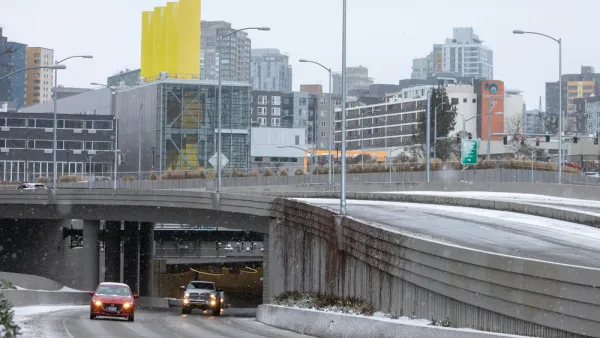
Seattle Emerges From Tolled Tunnel Unscathed
Promises of congestion and thousands of cars spilling on to quiet residential streets proved unfounded after the first week with tolls on the Highway 91 tunnel in Seattle.
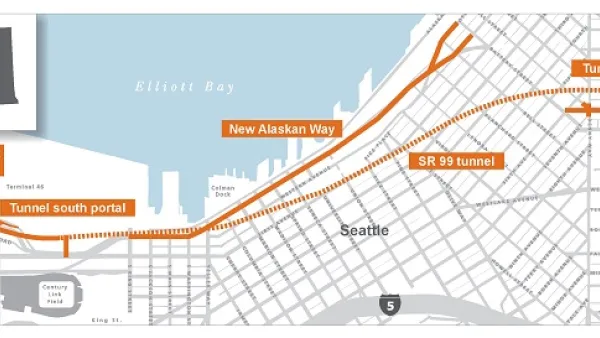
Seattle's Most Dramatic Traffic Reduction Will Occur Next Month
There will be no road closures, no traffic bans, no loss of parking, and no new transit lines opening. Call it the "tolling effect" on Nov. 9 when motorists have to pay to drive through the two-mile State Route 99 tunnel that opened last February.
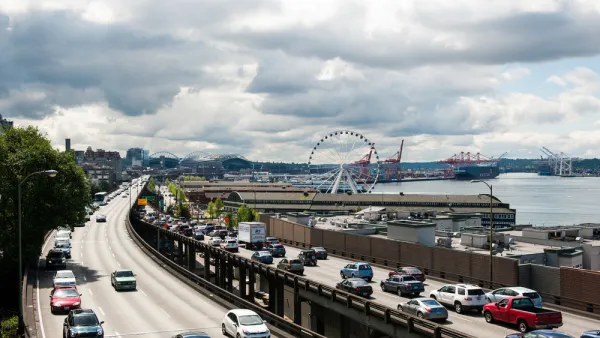
Tax Deal Clears the Way for Seattle's Grand Waterfront Park Plans
A proposed waterfront plan has secured the necessary funding to move forward in Seattle, pending City Council approval.

Desperate measures: Advocates weigh draining Lake Powell to fill Colorado River
Draining the reservoir could reduce evaporation losses by a couple hundred thousand acre-feet.

Eastern Nebraska is running out of electricity
Data centers and electrification are straining eastern Nebraska’s grid, throttling economic development.

Move over, LA: St. Louis gears up for Olympics, invests millions in downtown redevelopment
The Missouri city will host the 2028 Olympic soccer group stage and knockout matches.

Maryland’s $15 billion bridge project gains key approval
The Maryland Transit Authority said the project will create over 60,000 jobs and add $23 billion to the local economy.

‘No clear next steps’ for Chicago's permanent festival grounds
Eleventh Ward Ald. Nicole Lee has suggested Soldier Field as a possible location for the permanent event space.

California, Hawaii, Rhode Island approve housing propositions
Hawaii and Rhode Island each approved their sole proposition, while California approved two of its three.

FREE Course: Walkable City 1: Why Walkability?
After describing his path towards focusing on walkability as the essence of good planning, Jeff Speck marches through his five principal reasons for making more walkable places.
Reinventing Malls: Planning Alchemy—Turning Gray Fields Into Gold
The course focuses on the opportunities and imperatives that shape reinvention of mall sites.

City of Rosemead
Rutgers University, Edward J. Bloustein School of Planning and Public Policy
One Hundred Miles
University of Michigan School for Environment and Sustainability (SEAS)
Hunter College, City University of New York (CUNY)
The Architects Foundation
City of Cambridge
Montrose County
The Pocatello Development Authority