A proposed waterfront plan has secured the necessary funding to move forward in Seattle, pending City Council approval.


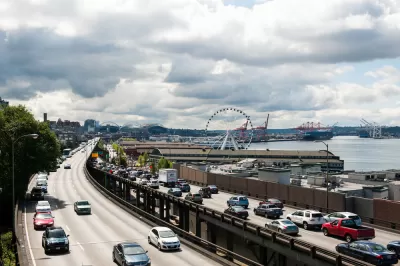
"Visions of a grand new downtown waterfront for Seattle moved one significant step closer to reality Thursday after Mayor Jenny Durkan announced that the city had quelled threats of obstruction from downtown property owners," reports David Kroman.
"By reducing a proposed tax on downtown residents and businesses from $200 million over the next 20-years to $160 million, enough property owners have agreed to not formally challenge the tax," explains Kroman.
Through a program called Waterfront Seattle, the city has been planning the new waterfront park for a decade as a component of the city's plans to remove the Alaskan Way Viaduct.
"The $160 million over the next 20 years will fund a 20-acre park, a new Alaskan Way, a walkway connecting Pike Place Market to the waterfront and a number of other waterfront features. The concept was designed by James Corner, the famed landscape architect best known for New York City's Highline Park," according to Kroman.
The threat that local property owners would not agree to a local improvement district (LID) (i.e., a tax on increased property values) could have still sunk the city's vision for a grand new waterfront park.
FULL STORY: Seattle's waterfront overhaul saved by $160M tax deal

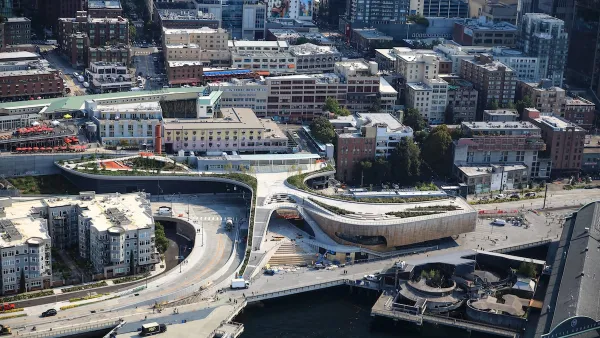
Seattle’s New Overlook Walk Offers Ample Park Space Near Pike Place Market
The elevated park and event space replaces part of the demolished Alaskan Way Viaduct, connecting the city’s famous Pike Place Market to the waterfront.

Rural Parks Planning Underway in Los Angeles County
The Los Angeles County Department of Parks and Recreation is conducting a survey to better understand the park and recreation needs of rural areas.

Poised for a New Era of Parks Planning in Bellevue, Washington
The last round of capital investment made possible by a 2008 parks levy offers a chance to look further into the future in Bellevue, Washington.

Planetizen Federal Action Tracker
A weekly monitor of how Trump’s orders and actions are impacting planners and planning in America.

The state-sanctioned urbicide of Austin
People don’t kill cities. Freeways do.

US to reduce Colorado River water deliveries to Mexico
A new Colorado Treaty amendment reduces Mexico’s Colorado River water allocation by 250,000 acre feet.

Baltimore to break ground on $50 million Transit Priority Project
The project will bring faster bus trips, safer streets and better bike connections to Baltimore.

Airbnb launches $250 million 'last-dollar financing' housing accelerator, makes first investment in Austin
The company will put $6.4 million towards affordable housing development in Texas’ capital.

Guerilla urbanists are building DIY bus stop benches in Chicago
A before-and-after of one of the bus stops with a new bench. The new benches are not officially sanctioned or permitted, but the residents who placed them hope they will be the start of a network of DIY benches across the city.

FREE Course: Walkable City 1: Why Walkability?
After describing his path towards focusing on walkability as the essence of good planning, Jeff Speck marches through his five principal reasons for making more walkable places.
Reinventing Malls: Planning Alchemy—Turning Gray Fields Into Gold
The course focuses on the opportunities and imperatives that shape reinvention of mall sites.

Eagle County Government
Harvard University Graduate School of Design
Nashville Planning Department
The Architects Foundation
University of Cincinnati Online
The Pocatello Development Authority
The Urban Renewal Agency of the City of Pocatello
Journal of the American Planning Association