The origin story of one of the definitively American typologies—the shopping mall—is one of unintended consequences run amok. Could the next chapter of this story come closer to the author's intention?


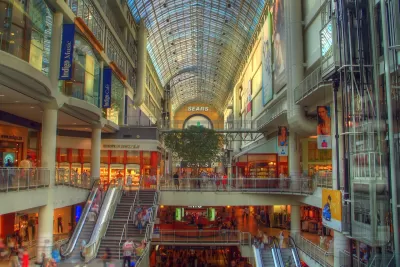
Anne Quito sets the stage for a critical re-evaluation of the value and role of the shopping mall in the history of the American landscape:
"As sociologists and urban planners debate the relevance of these classic American brick-and-mortar shopping spaces in the era of e-commerce and Amazon Prime Day, a group of architecture enthusiasts will gather this weekend to celebrate the birthday of Victor Gruen, the man known as 'father of the modern shopping mall,' and the first annual Gruen Day."
The organizers of the event credit Gruen with a novel and popular form of third space—outside of the home and office. In recent years, however, shopping malls are threatened from an economic standpoint by online shopping and recession, while the narrative about car culture, with the shopping mall as one of its iconic symbols, has shifted in tone.
Quito notes, however, that Gruen hated cars, and designed his first malls to encourage walking—a great idea that "backfired." Gruen is on record saying that the "bastard" versions of his vision "destroyed our cities."
Quito concludes by examining the possibility that the rebirth of shopping malls, following their recent and current struggles, might bring their reality closer in line with Gruen's original vision.
Read the full story: The father of the American shopping mall hated what he created

What's in Store for America's Shopping Malls?
As America's beloved shopping mall enters its "golden years", Emily Badger considers the astounding anti-suburban ethos of its inventor, and what the future has in store for this "over the hill" retail development model.
Examining Our Now-Fading Mania For Malls
On the sixty-year anniversary of the genesis of the country's first enclosed mall, Mark Hinshaw looks at America's foolish detour into shopping malls.
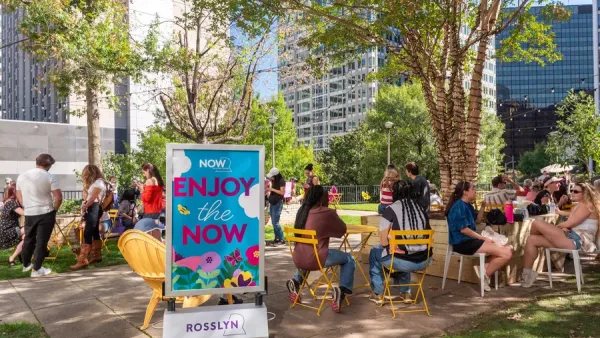
Arlington's 'pop-up park' activates a vacant plaza
Third spaces don't have to be permanent.

Planetizen Federal Action Tracker
A weekly monitor of how Trump’s orders and actions are impacting planners and planning in America.

Amtrak, CN end decades-long dispute with eight-year agreement
The new operating agreement establishes an updated framework for the companies to work together, including processes to resolve disputes.

Judges permit Denver to divert 77,000 acre feet from the Colorado River for reservoir expansion
Overuse and climate change have caused the Colorado River’s water levels to plummet.

How ‘post-disaster gentrification’ alters neighborhoods after natural calamities
After hurricanes, fires or other calamities, the original residents of a community are often replaced by younger, wealthier residents.

Maryland local governments examine if they should have more power to raise property taxes
Maryland’s housing market is out of reach for the majority of moderate-income residents.

Northwest rail fans eager for Sept. 30 debut of Amtrak’s Airo fleet
Get ready for that new train smell and more seats. But they won’t go faster or run more frequently on the Cascades route in Washington and Oregon.

FREE Course: Walkable City 1: Why Walkability?
After describing his path towards focusing on walkability as the essence of good planning, Jeff Speck marches through his five principal reasons for making more walkable places.
Reinventing Malls: Planning Alchemy—Turning Gray Fields Into Gold
The course focuses on the opportunities and imperatives that shape reinvention of mall sites.

Harvard University Graduate School of Design
KFH Group Inc.
Greater Baltimore Committee
The Architects Foundation
University of Cincinnati Online
The Pocatello Development Authority
The Urban Renewal Agency of the City of Pocatello