A wealthy county in Virginia has a reputation for prohibiting the construction of new housing. Development interests, however, are fed up with anti-development arguments.


Jonathan O'Connell reports on a controversy in Loudoun County over the externalities of housing. According to a 2011 study, the county spends $1.62 in services for every dollar in revenue it receives for every new home added in the county. The county uses that figure, according to O'Connell, to reject construction permits and zoning requests.
In response to the county's obstructions, a group of developers, realtors, zoning attorneys, and other real estate businesses created an organization called All-In Loudoun and commissioned their own study to critique the county's $1.62 figure. Their finding: "housing on average only costs the county $1.20 in services for every dollar it brings in," and, "by allowing construction of more condominiums or higher-priced homes… the county could break even."
The article goes on to provide more details about some of the county's development controversies in recent years. O'Connell also calls on Christopher Leinberger to testify on the issue at the heart of the controversy. Leinberger says the real lesson of the study might be that all housing developments are not the same—some requiring higher costs in infrastructure and services than others.
Read the full story: Why one number has homebuilders furious with Loudoun County

Exposé: Development Obstruction in Los Angeles
Homeowners groups use their influence to extract payments and concessions in Los Angeles.

Small Cities Booming Near Washington D.C.
"Mini D.C.s" provide the successful examples of revitalized, walkable urban places, according to a recent trend piece in the Washington Post.
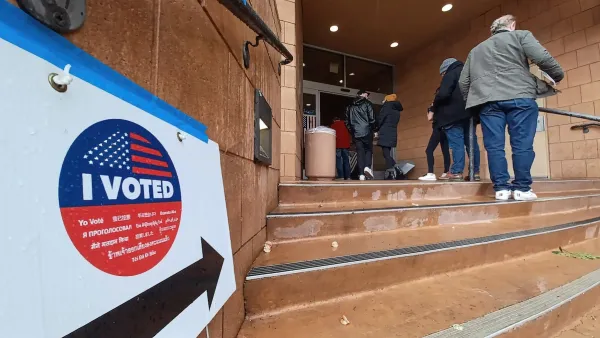
California appears to reject Prop. 45
The proposition would have expanded the projects that qualify for a streamlined environmental review, effectively paring down the California Environmental Quality Act.

Planetizen Federal Action Tracker
A weekly monitor of how Trump’s orders and actions are impacting planners and planning in America.

California plans to bury El Niño’s downpour
If the state plays its cards right, it may be able to store a billion acre-feet of El Niño’s water in aquifers.

Desperate measures: Advocates weigh draining Lake Powell to fill Colorado River
Draining the reservoir could reduce evaporation losses by a couple hundred thousand acre-feet.

Chicago voters approve permanent festival grounds, penalty for vacant property owners
Currently, major summer and fall festivals take over public parks for weeks at a time, drawing criticism from nearby residents

NYC votes to cut outdoor dining red tape, speed up permitting
New York City also voted to allow the Department of Transportation to begin work on urgent projects before notifying elected officials.

California appears to reject Prop. 45
The proposition would have expanded the projects that qualify for a streamlined environmental review, effectively paring down the California Environmental Quality Act.

FREE Course: Walkable City 1: Why Walkability?
After describing his path towards focusing on walkability as the essence of good planning, Jeff Speck marches through his five principal reasons for making more walkable places.
Reinventing Malls: Planning Alchemy—Turning Gray Fields Into Gold
The course focuses on the opportunities and imperatives that shape reinvention of mall sites.

City of Rosemead
Rutgers University, Edward J. Bloustein School of Planning and Public Policy
One Hundred Miles
Hunter College, City University of New York (CUNY)
The Architects Foundation
University of Cincinnati Online
City of Cambridge
Montrose County
The Pocatello Development Authority