"Mini D.C.s" provide the successful examples of revitalized, walkable urban places, according to a recent trend piece in the Washington Post.


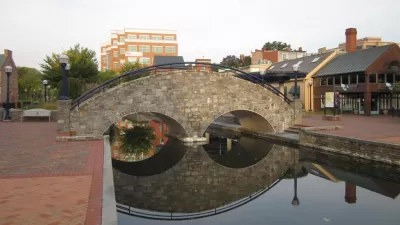
"Many of the same forces fueling Washington’s renaissance are driving a small-city boom regionally and nationally," writes John Woodrow Cox. "From the historic cities of Alexandria, Annapolis and Leesburg to the newer Metro-centric communities of Bethesda and Clarendon, the desire to live within walking distance of restaurants, bars, theaters and parks has revitalized once-withering downtowns…"
The article provides a Washington D.C.-proximate case study of the kind of urban revitalization described by Christopher Leinberger as a walkable urban place, or "WalkUP."
In the Washington region, few places have benefited more from the phenomenon than downtown Frederick, where a flourishing restaurant, bar and art scene has transformed the 18th century county seat into a mini-D.C. In the past five years, the city has added 40 businesses to its eclectic downtown, Frederick officials say, and demand for houses in the most walkable parts of the city has pushed up median home prices.
Throughout, the article maintains that the walkable downtowns of cities like Frederick offer the best of both worlds: the charms and amenities of downtown life without the hassle of a larger city.
Read the full story: Mini-D.C.’s: A small-city boom revitalizes downtowns once left for dead

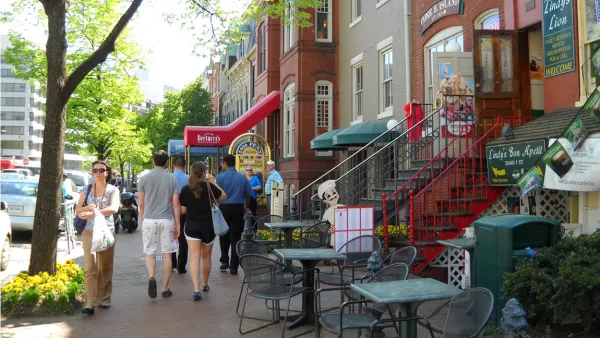
Walkable Neighborhoods Benefit Property Values
Walkable areas are more prosperous in cities all around the country, a report from Foot Traffic Ahead concludes.
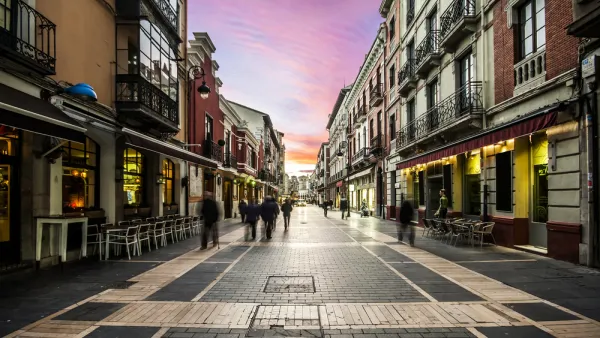
Looking for a Walkable Urban Place for Retirement
Though many retirement communities still look just as they have for many decades—defined by cul-de-sacs and golf courses—many seniors are looking for a more urban lifestyle.
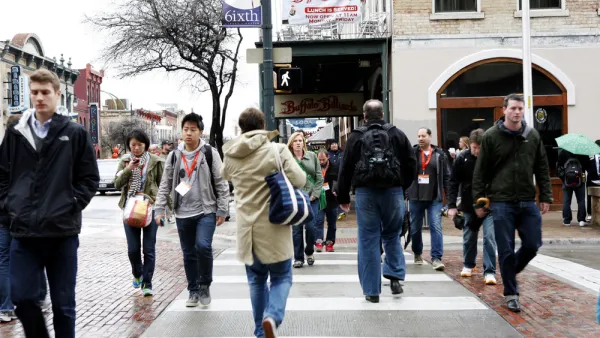
Report Finds Increasing Popularity of 'Walkable Urban Places'
The Foot Traffic Ahead 2016 report, by Smart Growth America and The George Washington University’s Center for Real Estate & Urban Analysis ranks cities based on their walkability.

Planetizen Federal Action Tracker
A weekly monitor of how Trump’s orders and actions are impacting planners and planning in America.

California plans to bury El Niño’s downpour
If the state plays its cards right, it may be able to store a billion acre-feet of El Niño’s water in aquifers.

Chicago breaks ground on $3 billion megadevelopment
The new neighborhood, titled Foundry Park, will one day host 3,700 residences.

California High-Speed Rail Authority CEO resigns after $600,000 scandal
Under Ian Choudri, the authority used taxpayer dollars to fund first class flights and trips to nightclubs.

Want to study the Missouri River? Soon, you may need unanimous approval from 10 states
Legislation would require 10 governors’ permission to study or build projects moving water outside the basin.

Desperate measures: Advocates weigh draining Lake Powell to fill Colorado River
Draining the reservoir could reduce evaporation losses by a couple hundred thousand acre-feet.

FREE Course: Walkable City 1: Why Walkability?
After describing his path towards focusing on walkability as the essence of good planning, Jeff Speck marches through his five principal reasons for making more walkable places.
Reinventing Malls: Planning Alchemy—Turning Gray Fields Into Gold
The course focuses on the opportunities and imperatives that shape reinvention of mall sites.

City of Rosemead
Rutgers University, Edward J. Bloustein School of Planning and Public Policy
One Hundred Miles
Hunter College, City University of New York (CUNY)
The Architects Foundation
University of Cincinnati Online
City of Cambridge
Montrose County
The Pocatello Development Authority