Recent legislation considered (with some approved) by the Seattle City Council Planning, Land Use, and Sustainability Committee takes anti-development politics to a new level in a city reacting to years of growth.


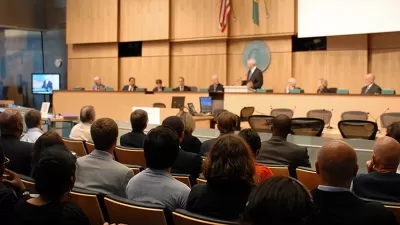
Josh Feit reports on the latest development in an anti-development crusade from an outgoing city councilmember in Seattle. "Already pushing blank-check 'neighborhood conservation district' legislation to halt development in single-family zones, [Councilmember Tom] Rasmussen set out yesterday to make it more difficult for developers to build in multi-family zones—the stretches of apartment and town homes in low-rise zones on the edges of single-family neighborhoods in places such has Capitol Hill and Ballard," according to Feit.
The proposed legislation would come as amendments to earlier legislation proposed by Councilmember Mike O’Brien. Councilmember Rasmussen, however, wanted more out of the slow growth measure. Feit provides amendment by amendment analysis of Councilmember Rasmussen's platform.
Feit's coverage provides a lot of insight into the development politics of the Seattle City Council, as well as how future elections are influencing the politics of a fast-growing city.
Read the full story: The War on Density
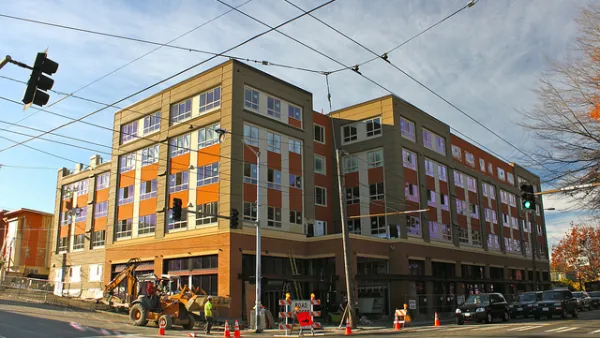
Seattle NIMBYs Protest Dense Development, Cite Eastern Bloc
A zoning bill has stirred up the fear that dense development projects will transform Seattle into a "Soviet cityscape." Residents accuse developers of using loopholes to squeeze in pricey, out-of-character townhomes.

The Problem With Tone Policing
One common criticism of pro-housing advocacy is that supporters of new housing are (in the words of one commentator) “arrogant.” But there is no reason to believe that this is any less true of their opponents.

Thousands of Seattle Housing Units Blocked by Lawsuits
Legal challenges filed by condo associations are holding up multiple high-rise housing developments that could bring much-needed housing and jobs to downtown Seattle.

Planetizen Federal Action Tracker
A weekly monitor of how Trump’s orders and actions are impacting planners and planning in America.

Washington state to charge fee to drivers with fuel-efficient cars
Revenue from the fee will go towards supporting the state’s highways.

Illinois considers spending $1 billion in taxpayer money on data center
A quantum computing campus and data center are currently under construction in Chicago.

Senate passes bill overhauling permitting
The bill still needs to pass the House.

Did data centers change how voters cast their ballots?
Texas, Ohio, and Georgia all flipped party control. But in rural counties, the effect of local data centers was mixed.

Amtrak invests in eight new Airo trainsets
The new trainsets will begin serving passengers in 2031.

FREE Course: Walkable City 1: Why Walkability?
After describing his path towards focusing on walkability as the essence of good planning, Jeff Speck marches through his five principal reasons for making more walkable places.
Reinventing Malls: Planning Alchemy—Turning Gray Fields Into Gold
The course focuses on the opportunities and imperatives that shape reinvention of mall sites.

City of Charlotte
City of Rosemead
Rutgers University, Edward J. Bloustein School of Planning and Public Policy
University of Michigan School for Environment and Sustainability (SEAS)
Hunter College, City University of New York (CUNY)
The Architects Foundation
University District Partnership