The Detroit Free Press offers clear analysis of the multiple ongoing efforts in Detroit to improve vacant and blighted properties and return them to the benefit of the city's neighborhoods and residents.


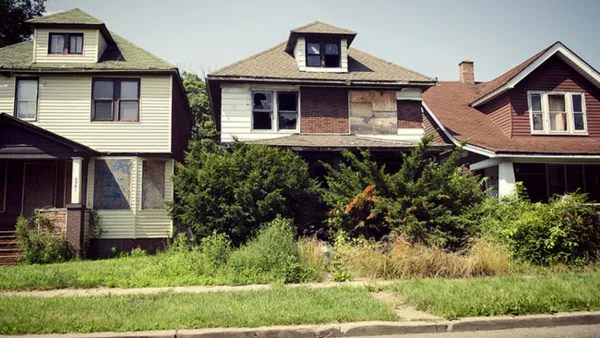
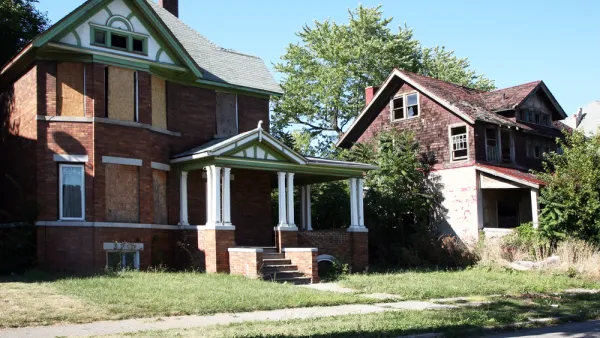
John Gallagher reports on Detroit's ongoing efforts to recreate neighborhoods beset by massive numbers of vacant and blighted properties.
Gallagher identifies Mayor Mike Duggan as the driver of the actions taken by the Detroit Land Bank Authority, and why:
"The essence of Mayor Mike Duggan's policy on Detroit's vacant land is to put as much of it as he can in the hands of residents. Pushed to declare his preferences for the city's tens of thousands of vacant lots, Duggan has repeatedly deferred to the neighborhoods themselves to decide new uses."
Gallagher offers the vital statistics on the Detroit Land Bank's activities: its portfolios have swelled from a few hundred to about 90,000 in the space of just over a year. One in four properties in the city are now working through the land bank's program. Also of note is a recently announced program to lease vacant lots to residents for $25 a year per lot. One condition of the lease program, according to Gallagher: "A local block club would have to bless the intended use as compatible with neighborhood norms."
The article goes on to list a few of the innovations included in the Detroit Future City strategic plan, including incentives for blue infrastructure, urban reforestation, distributed energy production, and urban agriculture.
Read the full story: What's next for Detroit's vacant lots and who decides?

Detroit Residents Find it Hard to Access Land Bank Properties
Longtime residents say the city is not fulfilling its goal of keeping vacant parcels in the hands of locals as property values rise steeply.
Detroit Continues Demolition Program After Lead Risks Revealed
The city of Detroit said it would halt a demolition program after a report revealed the amount of lead released by demolitions into the environment, risking the health of children and other local residents.
Federal Agencies Investigating the Rising Costs of Detroit's Blight Program
Detroit's aggressive blight reduction strategy, to demolish vacant homes by the thousands, is coming under scrutiny for rising costs. The FBI and the U.S. Inspector General are investigating.

Planetizen Federal Action Tracker
A weekly monitor of how Trump’s orders and actions are impacting planners and planning in America.

California plans to bury El Niño’s downpour
If the state plays its cards right, it may be able to store a billion acre-feet of El Niño’s water in aquifers.

Chicago breaks ground on $3 billion megadevelopment
The new neighborhood, titled Foundry Park, will one day host 3,700 residences.

One of Denver’s busiest corridors to gain BRT
The project will span 18 miles and contain 74 bus rapid transit stations.

275,000 bus trips are at stake on Seattle's ballot
If passed, the Seattle Transit Measure would trigger a 0.3% sales tax and raise an average of $138 million per year to maintain and expand Seattle’s bus services.

Texas may pay Israeli company billions to ease water woes
Texas awarded IDE Technologies the contract for its Harbor Island project, which is slated to become the Western Hemisphere's largest desalination plant.

FREE Course: Walkable City 1: Why Walkability?
After describing his path towards focusing on walkability as the essence of good planning, Jeff Speck marches through his five principal reasons for making more walkable places.
Reinventing Malls: Planning Alchemy—Turning Gray Fields Into Gold
The course focuses on the opportunities and imperatives that shape reinvention of mall sites.

City of Rosemead
Rutgers University, Edward J. Bloustein School of Planning and Public Policy
One Hundred Miles
Hunter College, City University of New York (CUNY)
The Architects Foundation
University of Cincinnati Online
City of Cambridge
Montrose County
The Pocatello Development Authority