Gehl Studio, the leading name in people-first design and one of the most influential forces in planning today, has philanthropic backing for a non-profit that will focus studies and work on the public sphere.



"The Gehl Institute officially launched today, with $1.6 million in backing from the Knight Foundation," reports Marielle Mondon. "The Institute, an offshoot of San Francisco-based urban design firm Gehl Studio, will help create public spaces that draw in people and boost economic opportunity of the surrounding area in Knight communities (cities and towns where the foundation…focuses funding)."
"With a focus on fostering equality, the Institute will bring its trademark 'people-first design' to streets, parks, plazas and more. The nonprofit will be a testing ground for how to tailor the Gehl approach to different city settings and encourage broader community participation in planning."
More info about the promise of the Gehl Institute is also available in a Knight Foundation press release announcing the grant.
Read the full story: New Gehl Institute Will Bring “People-First Design” to More Cities

The New 'Public Life Data Protocol' Aims to Revolutionize Public Life
The Gehl Institute, working with several public sector partners, has released an open source "Public Life Data Protocol."

Historic Queens park is getting a $120M upgrade
The borough's largest park will undergo significant upgrades for accessibility, flood mitigation and historic preservation.
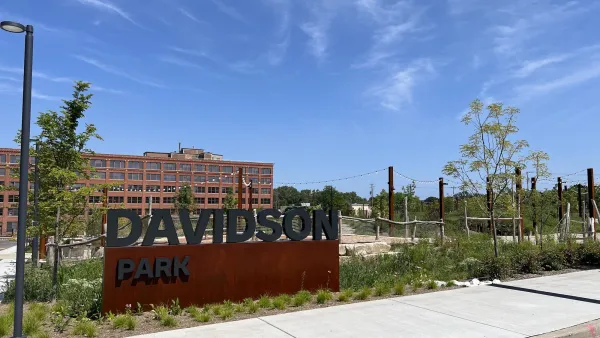
Harley-Davidson turned a Milwaukee parking lot into a green oasis
The park, adjacent to Harley-Davidson headquarters, doubles as stormwater retention infrastructure.

Planetizen Federal Action Tracker
A weekly monitor of how Trump’s orders and actions are impacting planners and planning in America.

California plans to bury El Niño’s downpour
If the state plays its cards right, it may be able to store a billion acre-feet of El Niño’s water in aquifers.

Desperate measures: Advocates weigh draining Lake Powell to fill Colorado River
Draining the reservoir could reduce evaporation losses by a couple hundred thousand acre-feet.

Los Angeles just elected an urban planner as its mayor
Transportation analysts are optimistic that Raman will be more aggressive in addressing transit issues than Bass.

Mamdani’s pied-à-terre tax survives legal challenge
A panel of judges found that the plaintiffs failed to demonstrate injury as a result of New York City's implementation of the tax.

Eastern Nebraska is running out of electricity
Data centers and electrification are straining eastern Nebraska’s grid, throttling economic development.

FREE Course: Walkable City 1: Why Walkability?
After describing his path towards focusing on walkability as the essence of good planning, Jeff Speck marches through his five principal reasons for making more walkable places.
Reinventing Malls: Planning Alchemy—Turning Gray Fields Into Gold
The course focuses on the opportunities and imperatives that shape reinvention of mall sites.

City of Rosemead
Rutgers University, Edward J. Bloustein School of Planning and Public Policy
One Hundred Miles
University of Michigan School for Environment and Sustainability (SEAS)
Hunter College, City University of New York (CUNY)
The Architects Foundation
City of Cambridge
Montrose County
The Pocatello Development Authority