The Salk is an exceptional world-class space, and it is accessible, but it is not a public space, writes urban designer Howard Blackson, III.


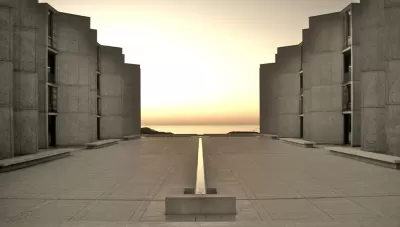
The Salk Institute in La Jolla, with its combination of concrete and granite perched at the ocean's edge, is striking in the tension between modern design and nature.
However, Blackson posits that the juxtaposition between what is modern and the natural landscape is not the only tension around the landmark building. There also is a tension around the idea that the Salk Institute is a private place with limited public access.
As extraordinarily as the Salk is, it isn't nearly as extraordinary as simple public space in the United States. Placemaking has a hierarchy of value. Less at the private, a little more to the semi-private, to the most at the public realm.
Placemaking is about tapping into the connection between public space and the community around it, something that is counter to a private/public project.
Writes Blackson: "The idea of ‘public space’ is a relatively new with its revolutionary genesis in our country found in Frederick Law Olmsted’s ‘Central Park’ and Yosemite Valley national park plan. While the Salk Institute is a powerful place, true public space is decidedly more powerful, transcendental and revolutionary."
Read the full story: Beyond Lou Kahn

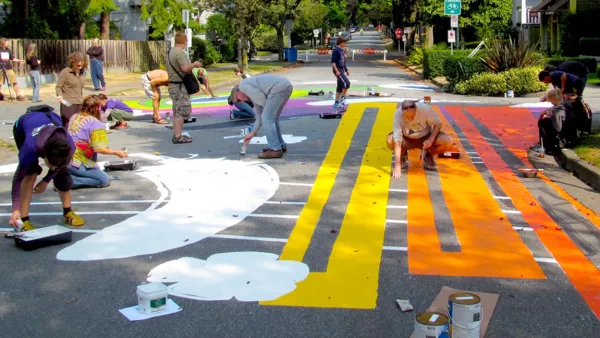
What Is Placemaking, Really?
It's a term that gets bandied about by the "creative class" to describe an endless array of projects, from whimsical pop-up art to new uses for century-old buildings. But what does placemaking really mean?
The Pendulum Shifts: Expertise in Planning Is Now Suspect
Thinking grass roots empowerment makes expertise unnecessary is not a return to traditional placemaking. It's just a new take on business as usual, argues Scott Doyon.
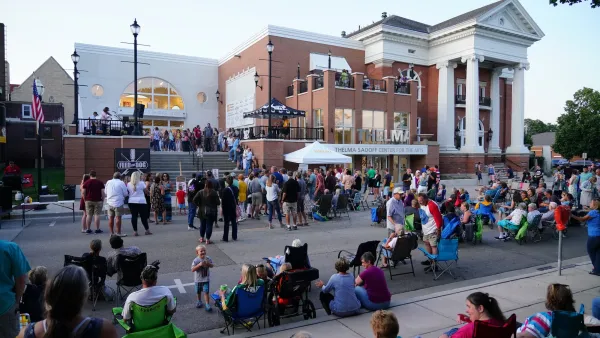
How Placemaking Lost its Way — And How it Can Get Back on Track
The term has often become diluted, getting attached to projects that don’t live up to its lofty aspirations.

Planetizen Federal Action Tracker
A weekly monitor of how Trump’s orders and actions are impacting planners and planning in America.

Amtrak, CN end decades-long dispute with eight-year agreement
The new operating agreement establishes an updated framework for the companies to work together, including processes to resolve disputes.

Judges permit Denver to divert 77,000 acre feet from the Colorado River for reservoir expansion
Overuse and climate change have caused the Colorado River’s water levels to plummet.

Boston has spent millions making the Green Line more accessible — and there’s no end in sight
While the city has invested millions into expanding and adding platforms to the Green Line to make it more accessible, new train cars set to arrive next year will be too tall for disabled passengers to board without raising the current platforms.

Idaho may see an 18% drop in federal surface transit funding — the largest estimated cut in the US
Transit systems in rural communities are much more reliant on federal funding to provide their services.

How ‘post-disaster gentrification’ alters neighborhoods after natural calamities
After hurricanes, fires or other calamities, the original residents of a community are often replaced by younger, wealthier residents.

FREE Course: Walkable City 1: Why Walkability?
After describing his path towards focusing on walkability as the essence of good planning, Jeff Speck marches through his five principal reasons for making more walkable places.
Reinventing Malls: Planning Alchemy—Turning Gray Fields Into Gold
The course focuses on the opportunities and imperatives that shape reinvention of mall sites.

City of Wisconsin Rapids
Harvard University Graduate School of Design
KFH Group Inc.
The Architects Foundation
University of Cincinnati Online
The Pocatello Development Authority
The Urban Renewal Agency of the City of Pocatello