A column by Robert Trigaux lists ten projects that the Tampa Bay region "can't afford to screw up" if it wants to gain more attention on the national stage.


"Nobody wants to bungle a major project deemed fundamental to the Tampa Bay region's future health and standing as a metro area worthy of greater national attention," writes Robert Trigaux to introduce his list of ten projects central to the improvement of the Tampa Bay region. But he also wonders if the region lacks the "muscle" to do the heavy lifting necessary to deliver the projects on the wishlist.
In fact, Trigaux also assigns grades to each of the projects on the list to indicate how well the region has done in proceeding with the project so far. And those grades don't average well. According to the list, there's only one grade above a B, an A- for "Jeff Vinik's 40-acre urban 'work, live, play' real estate redevelopment just south of downtown Tampa."
Earning the lowest grades are two areas of critical infrastructure concern including "Inbred energy policy" (Grade: F), which, Trigaux argues, limits the region's capacity to deliver half of the other projects on the list, and "Transportation that works" (Grade: D).
Read the full story: Trigaux: 10 Tampa Bay projects we can't afford to screw up
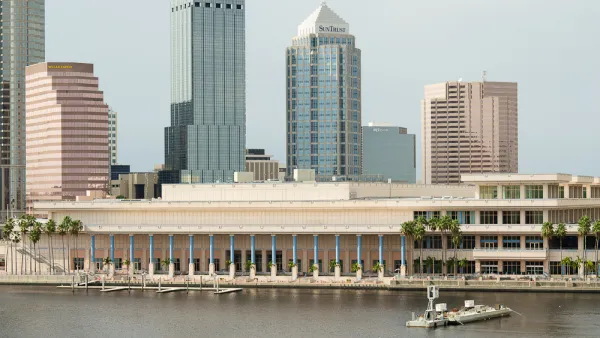
Inside Tampa's New Urbanism Makeover
The Tampa Bay Times dives into New Urbanism with an interview of Jeff Speck and Dvid Dixon about their work on the $1 billion transformation of Tampa's downtown waterfront.
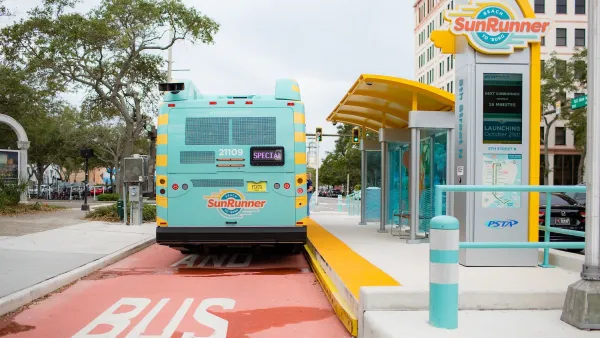
Lawsuit Claims Florida Bus Lane Removal was Illegal
The state cites an increase in crashes and congestion as reasons for eliminating a dedicated bus lane on the SunRunner BRT line, but city data tells a different story.
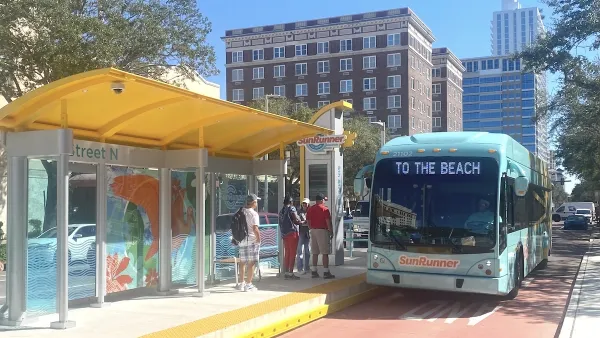
Florida Law Could Eliminate Dedicated Bus Lanes
A new law calls for a minimum ridership of 6,000 passengers in the first year for new bus rapid transit lines. To date, no bus lines in the Tampa Bay region come close.

Planetizen Federal Action Tracker
A weekly monitor of how Trump’s orders and actions are impacting planners and planning in America.

Washington state to charge fee to drivers with fuel-efficient cars
Revenue from the fee will go towards supporting the state’s highways.

Illinois considers spending $1 billion in taxpayer money on data center
A quantum computing campus and data center are currently under construction in Chicago.

Nearly billion-dollar budget deficit looms over MTA
Metropolitan Transit Authority officials say the cost of healthcare, wages, electricity and fuel is outpacing revenue from tolls, taxes and fares.

Senate passes bill overhauling permitting
The bill still needs to pass the House.

Did data centers change how voters cast their ballots?
Texas, Ohio, and Georgia all flipped party control. But in rural counties, the effect of local data centers was mixed.

FREE Course: Walkable City 1: Why Walkability?
After describing his path towards focusing on walkability as the essence of good planning, Jeff Speck marches through his five principal reasons for making more walkable places.
Reinventing Malls: Planning Alchemy—Turning Gray Fields Into Gold
The course focuses on the opportunities and imperatives that shape reinvention of mall sites.

City of Charlotte
City of Rosemead
Rutgers University, Edward J. Bloustein School of Planning and Public Policy
University of Michigan School for Environment and Sustainability (SEAS)
Hunter College, City University of New York (CUNY)
The Architects Foundation
University District Partnership