A blight elimination plan for Flint, Michigan has take shape over the past year, revealing innovative, community-based strategies for improving vacant properties and stabilizing the city's population.


Anna Clark provides in-depth coverage of Flint, Michigan's campaign to reduce blight around the city. Clark reveals more of the details of the plan that was first announced during the 2014 State of the City address by Flint Mayor Dayne Walling and then found institutional support with the release of the "Beyond Blight" framework. For instance, "Flint is committing to specific metrics in blight elimination, and it is adapting its strategy to the unique needs of different neighborhoods. This is a good-faith approach for the community, bringing transparency to an effort that is inherently radical." Community engagement efforts to back up the plan include a "Your Neighborhood Inventory"—a "collaborative on-the-ground assessment of property conditions, which created a cache of data that the planners relied upon."
Next steps of the plan, according to Clark, include the creation of "a 'Problem Property Portal' where residents can both get and give information. Each of the nine wards will also have a resident named 'Blight Elimination Captain,' who can act as a conduit of information on both ends."
Scott goes on to detail more of the innovative methods proposed by the Flint blight reduction plan as well as making two recommendations for how the plan might be improved.
Read the full story: Flint, Michigan Has an Ambitious New Plan to Fight Blight

Planning 'Beyond Blight' in Flint, Michigan
Luke Telendar updates the planning efforts of Flint, Michigan, which earlier this year released its first new master plan since 1960, "Imagine Flint," and has more recently released a blight
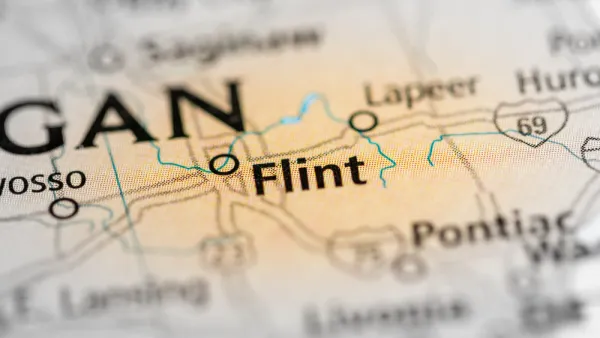
Community Mapping Project Pays Off in More Ways Than One for Flint
The community's hard work has helped Flint planners take an inventory of its building stock, as well as secure needed funding from the federal government.

Nextdoor—the 'Facebook for Neighborhoods—Catching on with Investors and Users
As social media platforms evolve into specific niches, the Nextdoor platform is quickly expanding its online version of neighborhood-level interaction.

Planetizen Federal Action Tracker
A weekly monitor of how Trump’s orders and actions are impacting planners and planning in America.

Amtrak, CN end decades-long dispute with eight-year agreement
The new operating agreement establishes an updated framework for the companies to work together, including processes to resolve disputes.

Judges permit Denver to divert 77,000 acre feet from the Colorado River for reservoir expansion
Overuse and climate change have caused the Colorado River’s water levels to plummet.

NYC DOT wants faster, more permanent street upgrades
The city is examining ways to build more concrete infrastructure without getting entangled in 'decades-long' projects.

'Something we’ve never seen before:' rising utility rates could strain city finances nationwide
Data centers, climate change and other factors have caused utility rates in the United States to increase by 38% since 2020.

Trump to overrule local leaders, lease millions of acres of America’s Pacific Island territories’ seafloors to mining companies
International law says that the Indigenous people of America’s territories have a right to prior and informed consent regarding projects that impact their countries.

FREE Course: Walkable City 1: Why Walkability?
After describing his path towards focusing on walkability as the essence of good planning, Jeff Speck marches through his five principal reasons for making more walkable places.
Reinventing Malls: Planning Alchemy—Turning Gray Fields Into Gold
The course focuses on the opportunities and imperatives that shape reinvention of mall sites.

Harvard University Graduate School of Design
KFH Group Inc.
Greater Baltimore Committee
The Architects Foundation
University of Cincinnati Online
The Pocatello Development Authority
The Urban Renewal Agency of the City of Pocatello