The Los Angeles Times offers a broadly ranging, interactive feature on the decrepit state of Los Angeles' water infrastructure.


Ben Poston and Matt Stevens sum up the challenge facing Los Angeles: "About one-fifth of the city's water pipes were installed before 1931 and nearly all will reach the end of their useful lives in the next 15 years. They are responsible for close to half of all water main leaks, and replacing them is a looming, $1-billion problem for the city."
The feature is full of helpful graphics, statistics, and images. Leading the page is an interactive map of the pipes that have leaked in the past years.
Behind all the reportage is the big question, perhaps the biggest question, about the future of Los Angeles: How will the city solve its water infrastructure problem? "The DWP has a $1.3-billion plan to replace 435 miles of deteriorating pipe in the next 10 years, but difficult questions remain about how the agency will find the money, how much it will inconvenience commuters and whether the utility can ever catch up with its aging infrastructure."
Read the full story: L.A.’s aging water pipes; a $1-billion dilemma

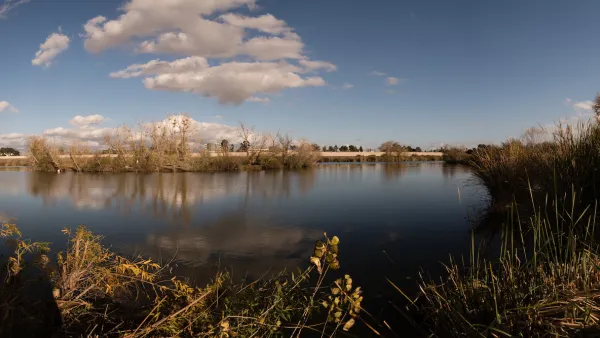
LA’s ‘Spongy’ Infrastructure Captured Almost 9 Billion Gallons of Water
The city is turning away from stormwater management practices that shuttle water to the ocean, building infrastructure that collects and directs it underground instead.
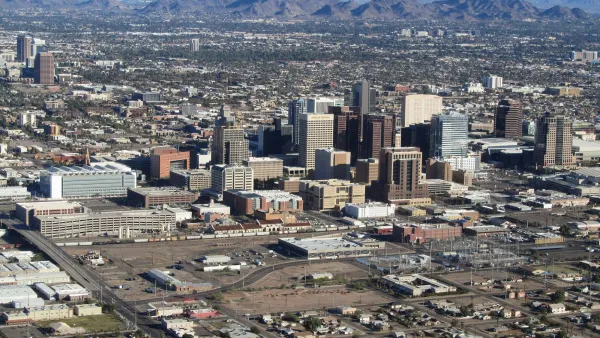
Waterline Breaks Plague Phoenix as City Struggles to Keep Up
Pipeline breaks are a daily occurrence in the city, but funding for an expanded pipe-replacement program has been a contentious issue.
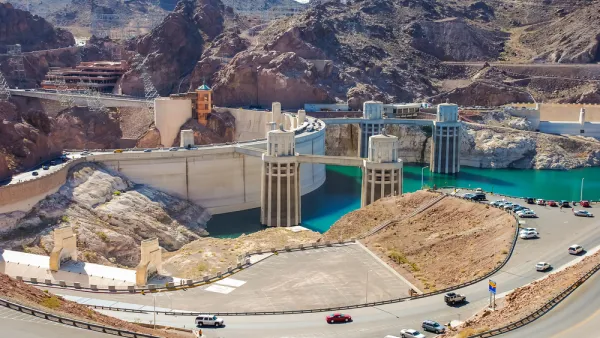
10 Water Policy and Infrastructure Realities
In celebration of Water Week in the United States, as well as World Water Day, as celebrated by the United Nations, Brookings has complied a list of ten facts about water policy and infrastructure.

Planetizen Federal Action Tracker
A weekly monitor of how Trump’s orders and actions are impacting planners and planning in America.

‘Going backwards:’ Baltimore mayor, students rally against state's transit funding plan
Maryland's proposed six-year plan provides no funding for Baltimore’s BMORE bus program and reduces its road maintenance funding.

Detroit to transform waterfront with $2.2 billion investment
Developers will convert about 18 acres of unused parking lot space into civic spaces.

Newsom vetoes high-speed rail supervision bill after agency receives condemnatory audit
The audit found the CHSRA approved almost $600,000 in unallowable travel expenses.

Nation sees first electric plane-boat hybrid take off in public demo
The Viceroy Seaglider can fly at speeds of 180mph for up to 180 miles.

One of nation’s poorest counties to receive $6 billion data center
The developers estimate the project will create 200 permanent jobs and 1,000 temporary construction jobs.

FREE Course: Walkable City 1: Why Walkability?
After describing his path towards focusing on walkability as the essence of good planning, Jeff Speck marches through his five principal reasons for making more walkable places.
Reinventing Malls: Planning Alchemy—Turning Gray Fields Into Gold
The course focuses on the opportunities and imperatives that shape reinvention of mall sites.

City of Thousand Oaks
City of Wisconsin Rapids
Harvard University Graduate School of Design
The Architects Foundation
University of Cincinnati Online
Northern Illinois Transit Authority (NITA)
The Pocatello Development Authority
The Urban Renewal Agency of the City of Pocatello