A catastrophic event in Edgewater, New Jersey, in which a 408-unit apartment complex was gutted by fire, has inspired legislators to propose a moratorium on the materials and practices of "light frame construction."


"Two weeks after a fast-moving blaze nearly destroyed an Edgewater apartment complex, a bill introduced in the Assembly on Thursday calls for a moratorium on new multi-family developments using the same lightweight wood construction while the state evaluates its safety," reports Jean Rimbach.
Although there is still debate among legislators bout whether a moratorium is necessary, the bill would move quickly to put on hold "lightweight wood construction" and revise the building code for construction of multi-family apartments around the state. Rimbach provides the following details of how such a moratorium would be implemented and what kind of construction is in question:
- "The bill calls for the commissioner of the Department of Community Affairs to evaluate the safety of light frame construction in multiple-unit dwellings, focusing on the hazards it poses in the event of a fire. Code would be revised based on the findings, prohibiting such construction in certain cases if appropriate."
- "The proposed legislation, in part, defines 'light frame construction' as any building method using metal-plate connected wood trusses or composite wood joists as floor or roof system structural elements.
Read the full story: Bill is introduced in N.J. Assembly for freeze on lightweight wood construction

Oregon Bill Would Ban E-Bikes for Riders Under 16
State lawmakers seek to change Oregon e-bike laws following the death of a 15-year old last summer.

Fire Officials Say More LA Freeway Underpasses at Fire Risk
The city’s fire department is surveying other underpasses for hazardous materials and other code violations that led to the November 11 fire that shut down a key interstate segment.
Texas Legislation Would Add More Roadblocks for Transit Funding in Austin
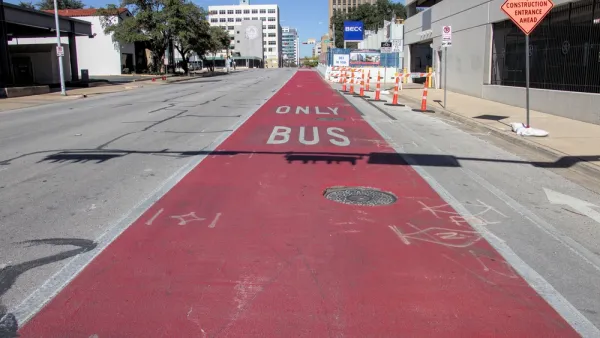
A former Austin city councilmember, now at the Texas State Legislature, is trying to make it harder for Austin Transit Partnership to borrow money to fund Project Connect, the Austin region’s big, ambitious transit investment plan.

Planetizen Federal Action Tracker
A weekly monitor of how Trump’s orders and actions are impacting planners and planning in America.

California plans to bury El Niño’s downpour
If the state plays its cards right, it may be able to store a billion acre-feet of El Niño’s water in aquifers.

Desperate measures: Advocates weigh draining Lake Powell to fill Colorado River
Draining the reservoir could reduce evaporation losses by a couple hundred thousand acre-feet.

Los Angeles just elected an urban planner as its mayor
Transportation analysts are optimistic that Raman will be more aggressive in addressing transit issues than Bass.

Mamdani’s pied-à-terre tax survives legal challenge
A panel of judges found that the plaintiffs failed to demonstrate injury as a result of New York City's implementation of the tax.

Eastern Nebraska is running out of electricity
Data centers and electrification are straining eastern Nebraska’s grid, throttling economic development.

FREE Course: Walkable City 1: Why Walkability?
After describing his path towards focusing on walkability as the essence of good planning, Jeff Speck marches through his five principal reasons for making more walkable places.
Reinventing Malls: Planning Alchemy—Turning Gray Fields Into Gold
The course focuses on the opportunities and imperatives that shape reinvention of mall sites.

City of Rosemead
Rutgers University, Edward J. Bloustein School of Planning and Public Policy
One Hundred Miles
University of Michigan School for Environment and Sustainability (SEAS)
Hunter College, City University of New York (CUNY)
The Architects Foundation
City of Cambridge
Montrose County
The Pocatello Development Authority