As solar power approaches and even surpasses fossil fuels in cost, the next goal is to make the source of renewable energy ubiquitous.


Tina Casey shares news of the huge scale that the solar industry has achieved in recent years: "The US solar industry has engineered a 1200% increase in utility-scale capacity since 2008, according to a new blog post from the Energy Department."
The article's title—"Nothing Can Stop the US Solar Juggernaut Now"—implies a long-term pattern that will persist beyond the current "hiccup" (as Casey describes it) in the price of oil. The Obama Administration even has a plan to bring the cost of solar energy into parity with fossil fuels, called the SunShot initiative. Casey declares that SunShot has been "so far so good," but a lot more work remains to be done to make solar " not only competitive but ubiquitous."
Along those lines, the Energy Department last week announced $59 million of new funding to support the solar industry. According to a press release announcing the funds, "[the] Department is making $45 million in funding available to quickly move innovative solar manufacturing technologies to market, and is also awarding more than $14 million for 15 new projects to help communities develop multi-year solar deployment plans to install solar electricity in homes, businesses, and communities." Casey provides additional insight into those programs in the article.
Read the full story: Nothing Can Stop The US Solar Industry Juggernaut Now

Border Town Removes Licensing Barrier to Encourage Solar
On the U.S.-Mexico border just west of the Gulf of Mexico, Brownsville looks to take advantage of its sunny territory.

Solar Power Beats DOE Cost Targets Three Years Early
With a set of 2020 affordability targets met three years early, the DOE can turn its attention to reliability, resilience, and storage.
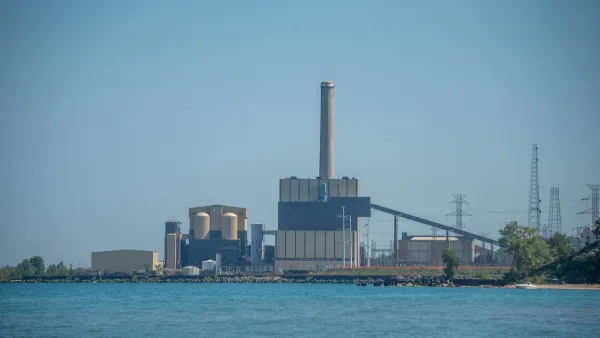
Federal judge strikes down DOE orders to keep Michigan power plant open past retirement date
The decision is one of the first successful legal challenges to President Trump’s “national energy emergency” ruling, which instructs federal agencies to use emergency powers to increase fossil fuel production.

Planetizen Federal Action Tracker
A weekly monitor of how Trump’s orders and actions are impacting planners and planning in America.

Amtrak, CN end decades-long dispute with eight-year agreement
The new operating agreement establishes an updated framework for the companies to work together, including processes to resolve disputes.

Northwest rail fans eager for Sept. 30 debut of Amtrak’s Airo fleet
Get ready for that new train smell and more seats. But they won’t go faster or run more frequently on the Cascades route in Washington and Oregon.

Brightline Florida files for bankruptcy
The transit company is over $5 billion in debt.

St. Louis Metro to test if single-car trains can reduce operating costs, maintain rider satisfaction
The pilot program will run from October to spring 2027, and begin with one single-car train operating on Metrolink’s Red and Blue lines.

Pennsylvania is building data centers in abandoned mines
Housing data centers in mines provides an alternative to destroying local forests and may spare residents from data centers’ noise and air pollution.

FREE Course: Walkable City 1: Why Walkability?
After describing his path towards focusing on walkability as the essence of good planning, Jeff Speck marches through his five principal reasons for making more walkable places.
Reinventing Malls: Planning Alchemy—Turning Gray Fields Into Gold
The course focuses on the opportunities and imperatives that shape reinvention of mall sites.

City of Thousand Oaks
City of Wisconsin Rapids
Harvard University Graduate School of Design
The Architects Foundation
University of Cincinnati Online
The Pocatello Development Authority
The Urban Renewal Agency of the City of Pocatello