The New York Daily News focuses on the de Blasio Administration's efforts to combat a growing number of homeless in New York City.


"The homeless population has risen to an all-time high, forcing the de Blasio administration to house desperate families in decrepit tenements red-flagged by the city’s own inspectors as hazardous," according to an article by Harry Stevens and Greg B. Smith.
The article presents a few statistics to measure the trends of homelessness in New York:
- "By mid-December, the homeless census reached a record 59,068" but the Coalition for the Homeless "says it peaked even higher at 60,352."
- "The homeless count, according to the city and the coalition, includes 25,000 children."
- And the current figures represent a "10% jump from the 53,615 in shelters on de Blasio’s Inauguration Day."
According to the article, the de Blasio Administration has been forced to the use of controversial "cluster" housing to provide shelter for the growing homeless population. "Despite the mayor’s wishes, the city actually increased the number of cluster units in 2014 by nearly 8% — from 2,918 to 3,143. The 225-unit jump was far less than the 1,150 cluster units Bloomberg added in his last two years, but critics were hoping for a total turnaround."
Read the full story: Thousands of New Yorkers living in dangerous 'cluster units' as homeless population tops 59,000, a record high
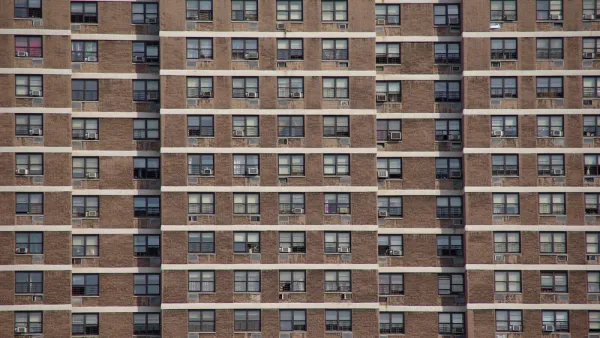
New York's Homeless 'Cluster Sites' to Become Affordable Housing
Conceived as a stop-gap measure, New York City's cluster site program essentially pays landlords to house homeless people. Now, Mayor de Blasio wants to convert some of those sites directly into affordable units.
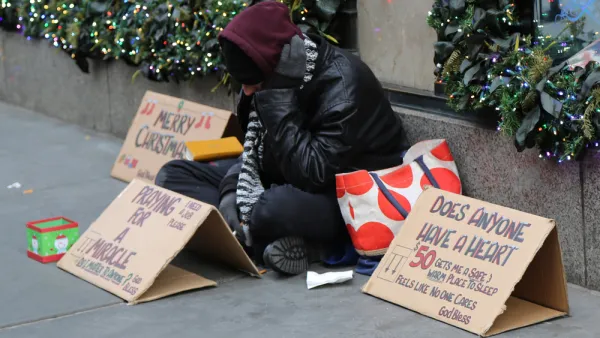
Homeless Shelters and Property Values
In Manhattan, homeless shelters are shown to have a negative effect on property values.
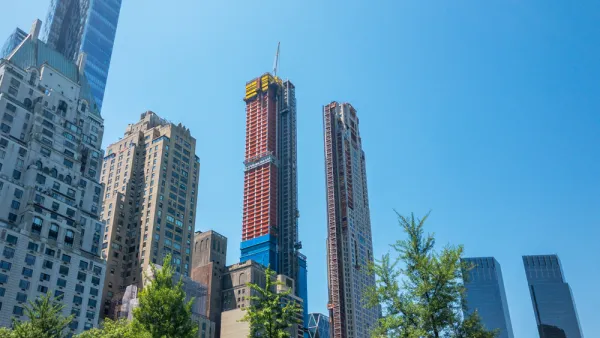
Billionaires Row Residents Sue to Block Homeless Shelter
The denizens of the luxury apartments near Central Park oppose the "expense" of a new homeless shelter.

Planetizen Federal Action Tracker
A weekly monitor of how Trump’s orders and actions are impacting planners and planning in America.

California plans to bury El Niño’s downpour
If the state plays its cards right, it may be able to store a billion acre-feet of El Niño’s water in aquifers.

Desperate measures: Advocates weigh draining Lake Powell to fill Colorado River
Draining the reservoir could reduce evaporation losses by a couple hundred thousand acre-feet.

US buildings threatened, destroyed by fires set to triple by 2060
Researchers found a high fire risk for socioeconomically vulnerable neighborhoods in the American West.

LA residents may be allowed to paint their own crosswalks
Councilwoman Katy Yaroslavsky put out a motion instructing the Los Angeles Department of Public Transportation to study the feasibility of allowing volunteers to paint crosswalks.

Dallas moves to overhaul its zoning code
The city's zoning reform will allow more multi-family and mixed-use developments.

FREE Course: Walkable City 1: Why Walkability?
After describing his path towards focusing on walkability as the essence of good planning, Jeff Speck marches through his five principal reasons for making more walkable places.
Reinventing Malls: Planning Alchemy—Turning Gray Fields Into Gold
The course focuses on the opportunities and imperatives that shape reinvention of mall sites.

City of Rosemead
Rutgers University, Edward J. Bloustein School of Planning and Public Policy
One Hundred Miles
Hunter College, City University of New York (CUNY)
The Architects Foundation
University of Cincinnati Online
City of Cambridge
Montrose County
The Pocatello Development Authority