FiveThirtyEight and ESPN recently produced a short documentary about the creators of Falling Fruit—a website that maps food sources in cities around the world.


In the first installment of a series of short documentaries, FiveThirtyEight and ESPN Films introduce Evan Welty and Caleb Phillips, creators of the Falling Fruit website—"an open-source, user-generated website that catalogs the location of edible plants all over the world."
As Anna Maria Barry-Jester explains in the FiveThirtyEight post, Falling Fruit "has more than 786,000 data points, each of which represents a location containing one or more plants."
"What’s remarkable about the site," adds Barry Jester, "is that 98 percent of the data points currently come from municipal tree inventories."
The article goes on to address the question asked by the headline: "How many people can the plans in one city feed?" although the answer is not totally clear.
When Planetizen first caught wind of Falling Fruit, Henry Grabar wrote about the potential of the site to help planners design more edible cities.
Read the full story: How Many People Can The Plants In One City Feed?

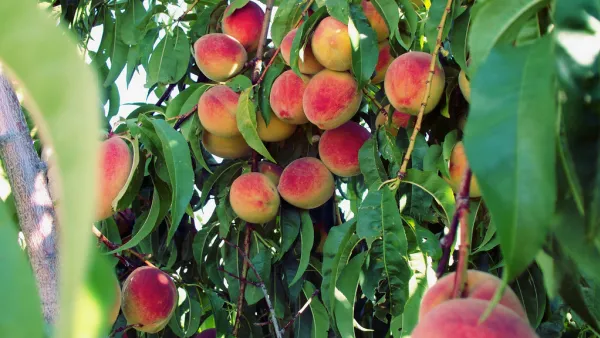
An App to Map Free Urban Snacks
A map and website developed by PhD student Ethan Welty and friend Caleb Philip catalogs the cornucopia of edible trees found in the "urban orchards" of two-dozen cities around the world.
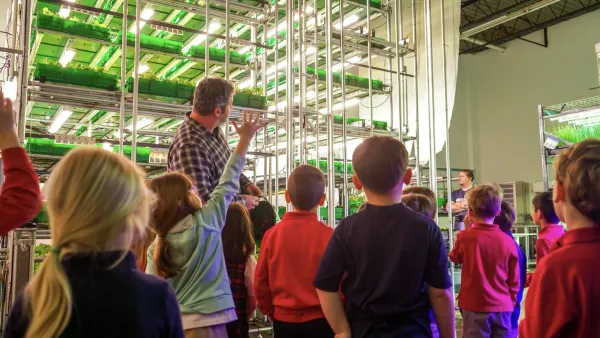
A Multimillion Dollar Virginia Company is Turning Empty Office Buildings Into Farms
Area 2 Farms envisions a world where 90% of the U.S. population lives within 10 miles of an indoor farm.

Urban Farming Addressing Hunger (and More) in Pittsburgh
Urban farming provides opportunities to increase food security in addition to other benefits.

Planetizen Federal Action Tracker
A weekly monitor of how Trump’s orders and actions are impacting planners and planning in America.

California plans to bury El Niño’s downpour
If the state plays its cards right, it may be able to store a billion acre-feet of El Niño’s water in aquifers.

Chicago breaks ground on $3 billion megadevelopment
The new neighborhood, titled Foundry Park, will one day host 3,700 residences.

One of Denver’s busiest corridors to gain BRT
The project will span 18 miles and contain 74 bus rapid transit stations.

275,000 bus trips are at stake on Seattle's ballot
If passed, the Seattle Transit Measure would trigger a 0.3% sales tax and raise an average of $138 million per year to maintain and expand Seattle’s bus services.

Texas may pay Israeli company billions to ease water woes
Texas awarded IDE Technologies the contract for its Harbor Island project, which is slated to become the Western Hemisphere's largest desalination plant.

FREE Course: Walkable City 1: Why Walkability?
After describing his path towards focusing on walkability as the essence of good planning, Jeff Speck marches through his five principal reasons for making more walkable places.
Reinventing Malls: Planning Alchemy—Turning Gray Fields Into Gold
The course focuses on the opportunities and imperatives that shape reinvention of mall sites.

City of Rosemead
Rutgers University, Edward J. Bloustein School of Planning and Public Policy
One Hundred Miles
Hunter College, City University of New York (CUNY)
The Architects Foundation
University of Cincinnati Online
City of Cambridge
Montrose County
The Pocatello Development Authority