Following the splashy announcement of media mogul Barry Diller's plans to finance a $170 million park at Manhattan's Pier 54, a New York Times column renews the call for more equity in open space around New York City.


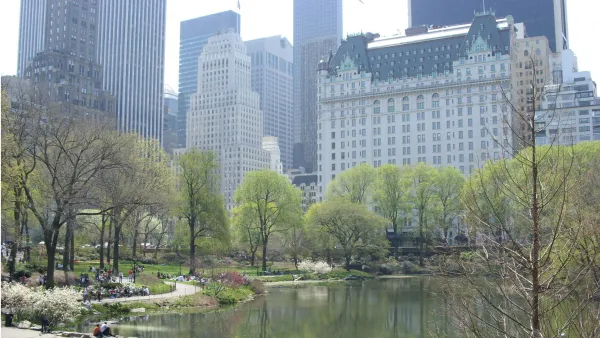
A column by David Callahan examines a recent trend in American cities, most notably, perhaps, in New York City, of ultra-wealthy philanthropists developing parks in neighborhoods frequented by the ultra-wealthy. Callahan writes: "While it’s hard to argue with more parks, or the generosity of donors like Mr. Diller, this isn’t just about new patches of green. It’s more evidence of how a hollowed-out public sector is losing its critical role, and how private wealth is taking the wheel and having a growing say over basic parts of American life."
The column goes on to detail some of the effects of New York's stark divide between the haves and the have-nots when it comes to neighborhood access to parks around New York City. The column also concludes by calling for private parks conservancies to contribute funds for the rehabilitation of parks in low-income parts of the city.
Read the full story: The Billionaires’ Park

De Blasio Announces $130 Million Park Equity Plan
In response to criticisms of the large investments in "big ticket" parks in wealthy neighborhoods during the Bloomberg Administration, New York City announced a park equity plan this week.
A Proposal for New York's Park Inequity Problem
The inequities of New York City’s park system have been on the policy radar since state legislation was introduced last year that would require large, wealthy park conservancies to contribute to smaller, cash-strapped parks around the city.
Opinion: Funding for N.Y.C. Parks Should Be a Priority
New York City parks are in desperate need of maintenance and infrastructure improvements, and the city should make investments now to support these essential public spaces.

Planetizen Federal Action Tracker
A weekly monitor of how Trump’s orders and actions are impacting planners and planning in America.

California plans to bury El Niño’s downpour
If the state plays its cards right, it may be able to store a billion acre-feet of El Niño’s water in aquifers.

Chicago breaks ground on $3 billion megadevelopment
The new neighborhood, titled Foundry Park, will one day host 3,700 residences.

California High-Speed Rail Authority CEO resigns after $600,000 scandal
Under Ian Choudri, the authority used taxpayer dollars to fund first class flights and trips to nightclubs.

Want to study the Missouri River? Soon, you may need unanimous approval from 10 states
Legislation would require 10 governors’ permission to study or build projects moving water outside the basin.

Desperate measures: Advocates weigh draining Lake Powell to fill Colorado River
Draining the reservoir could reduce evaporation losses by a couple hundred thousand acre-feet.

FREE Course: Walkable City 1: Why Walkability?
After describing his path towards focusing on walkability as the essence of good planning, Jeff Speck marches through his five principal reasons for making more walkable places.
Reinventing Malls: Planning Alchemy—Turning Gray Fields Into Gold
The course focuses on the opportunities and imperatives that shape reinvention of mall sites.

City of Rosemead
Rutgers University, Edward J. Bloustein School of Planning and Public Policy
One Hundred Miles
Hunter College, City University of New York (CUNY)
The Architects Foundation
University of Cincinnati Online
City of Cambridge
Montrose County
The Pocatello Development Authority