Freeways have a rare ability to symbolize both a mundane convenience and a bulwark of segregation. One columnist notes the powerful act of protesting racial injustice by closing freeways.


"Quite apart from the original intent of a national highway system, which included economic development by quickly moving goods between distant cities, and national defense, urban highways were sold as a tool of segregation. They have proven to be wildly successful," writes Alex Inen, who provides lots of details about how the St. Louis region's history of freeway construction left communities like Ferguson and the city of St. Louis behind.
The article also concludes by noting the symbolism of recent protests that shut down highways across the country: "Shutting down Interstates is a powerful and meaningful symbolic protest. It disrupts the thing which has materially enabled self-segregation. We have sacrificed our communities to allow people to pass through, fast. The symbolism of forcing a pause is powerful."
Read the full story: The Powerful Symbolism of Shutting Down an Interstate
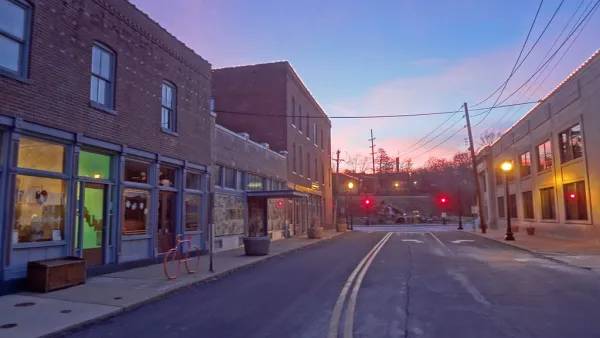
UrbanPlan Program Aims to Inspire a More Diverse Generation of Planners
An Urban Land Institute program brings students into the discussion and gives them the tools to make a difference in the planning processes that define their communities.
How Federal Housing Programs Built Segregation in St. Louis
St. Louis Public Radio details the work of a local researcher who says the segregation of today's St. Louis is the result of deliberate, decades-long federal housing policy.
Report Details Deep Inequality in the St. Louis Region
Ken Leiser shares the results of survey finding that "Blacks are far more likely than whites to live in poverty, to be unemployed and to drop out of school in the St. Louis region."

Planetizen Federal Action Tracker
A weekly monitor of how Trump’s orders and actions are impacting planners and planning in America.

California plans to bury El Niño’s downpour
If the state plays its cards right, it may be able to store a billion acre-feet of El Niño’s water in aquifers.

Desperate measures: Advocates weigh draining Lake Powell to fill Colorado River
Draining the reservoir could reduce evaporation losses by a couple hundred thousand acre-feet.

Los Angeles just elected an urban planner as its mayor
Transportation analysts are optimistic that Raman will be more aggressive in addressing transit issues than Bass.

Mamdani’s pied-à-terre tax survives legal challenge
A panel of judges found that the plaintiffs failed to demonstrate injury as a result of New York City's implementation of the tax.

Eastern Nebraska is running out of electricity
Data centers and electrification are straining eastern Nebraska’s grid, throttling economic development.

FREE Course: Walkable City 1: Why Walkability?
After describing his path towards focusing on walkability as the essence of good planning, Jeff Speck marches through his five principal reasons for making more walkable places.
Reinventing Malls: Planning Alchemy—Turning Gray Fields Into Gold
The course focuses on the opportunities and imperatives that shape reinvention of mall sites.

City of Rosemead
Rutgers University, Edward J. Bloustein School of Planning and Public Policy
One Hundred Miles
University of Michigan School for Environment and Sustainability (SEAS)
Hunter College, City University of New York (CUNY)
The Architects Foundation
City of Cambridge
Montrose County
The Pocatello Development Authority