Bloomberg reports that the dream vehicle of commuters everywhere—a flying car—might be available on the market within three years.



Josh Dean shares news of the Terrafugia Transition, a flying car that "will be capable of 70 miles (110 kilometers) per hour on the road and 100 mph in the sky…"
The Terrafugia Transition is the work of MIT graduate Carl Dietrich, who is currently "refining details on the third-generation prototype of his $279,000 vehicle before attempting certification by both the FAA, which regulates planes, and the National Highway Traffic Safety Administration, which oversees cars."
Dean notes that although the flying car is a concept that has certainly been dreamed of before, the "reason the Transition is further along than any previous flying-car concept is that, in 2004, the FAA created the so-called light sport aircraft designation for planes that weigh less than 1,320 pounds (600 kilograms) and seat no more than two people. LSA manufacturers are given an easier path to market in order to encourage entrepreneurship and innovation in a niche of the industry that has seen very little of either."
Read the full story: The Flying Car Is (Almost) For Real
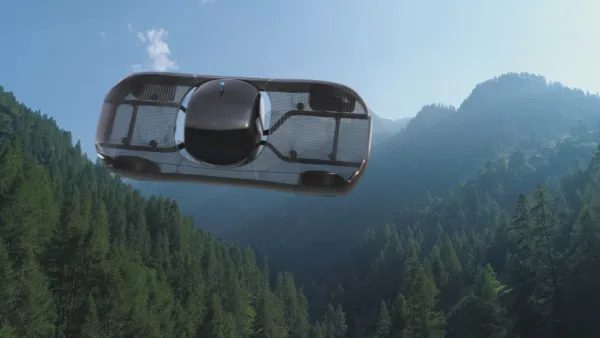
‘Electric Flying Car’ Approved for Test Flights
A $300,00 electric flying car has been cleared for test flights in the United States.
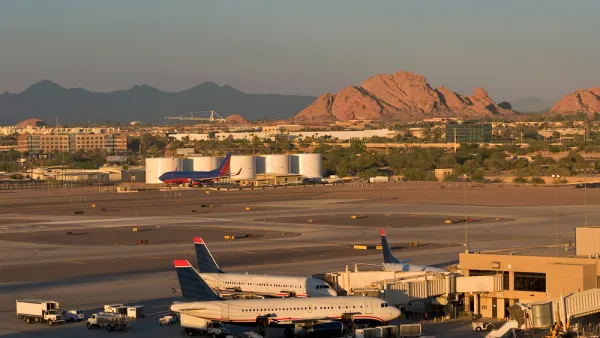
A Growth Plan for the Phoenix Sky Harbor Airport
With a growing population comes a need for more airport capacity, and Phoenix is no different. The challenge is finding the space to grow.
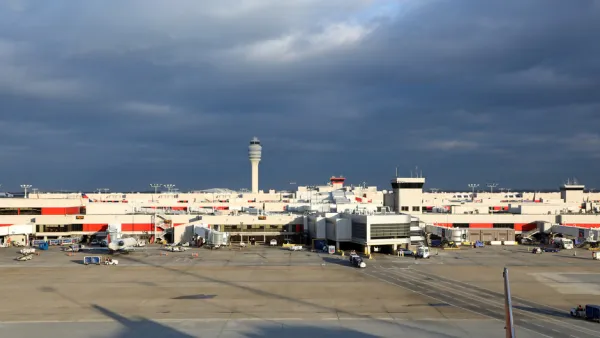
Infrastructure Week Begins With Air Traffic Control Modernization
Infrastructure Week 2017 kicked-off Monday with the announcement that the president plans to privatize air traffic control. It won't be the first attempt at modernizing the antiquated system. Additional events planned Wednesday through Friday.

Planetizen Federal Action Tracker
A weekly monitor of how Trump’s orders and actions are impacting planners and planning in America.

California plans to bury El Niño’s downpour
If the state plays its cards right, it may be able to store a billion acre-feet of El Niño’s water in aquifers.

Desperate measures: Advocates weigh draining Lake Powell to fill Colorado River
Draining the reservoir could reduce evaporation losses by a couple hundred thousand acre-feet.

Housing is the top priority of Seattle’s sole new councilmember
Jenks campaigned on building 1,000 new units of affordable housing.

New tax cuts may slash $1.5 billion in funding for Miami transit, public parks
Amendment 3 will save Miami-Dade homeowners $2,700 in 2028.

Arizona, Wisconsin, Pennsylvania hope to finally advance climate goals post-midterms
The three states have spent years under Republican or divided control.

FREE Course: Walkable City 1: Why Walkability?
After describing his path towards focusing on walkability as the essence of good planning, Jeff Speck marches through his five principal reasons for making more walkable places.
Reinventing Malls: Planning Alchemy—Turning Gray Fields Into Gold
The course focuses on the opportunities and imperatives that shape reinvention of mall sites.

City of Rosemead
Rutgers University, Edward J. Bloustein School of Planning and Public Policy
One Hundred Miles
University of Michigan School for Environment and Sustainability (SEAS)
Hunter College, City University of New York (CUNY)
The Architects Foundation
City of Cambridge
Montrose County
The Pocatello Development Authority