Big news out of the Netherlands this week: a Dutch company has installed the world's first solar-powered bike path. But are the system's inefficiencies worth its costs?


Brad Plumer explains the drawbacks of the "first-ever bike path built entirely of solar panels," unveiled on November 12, 2014. Plumer's concerns follow a cost benefit analysis: "The bike path will cost roughly $3.7 million and, when it's fully built out to 330 feet in 2016, will generate enough electricity to power… three households. Not very cost-effective. (That's more than 1,000 times costlier than the price of rooftop solar electricity in the United States.)"
Plumer quotes Craig Morris, of Renewables International, who is "sour on the whole idea." A better idea, according to Morris: "You could install roofs above parts of the bike paths and then install solar panels on the roofs. Less dirt. You can angle the panels. More electricity with less hassle."
Plumer goes on to explain a few modest but creative possibilities for the use of solar roads.
Read the full story: The Netherlands built a bike path entirely out of solar panels

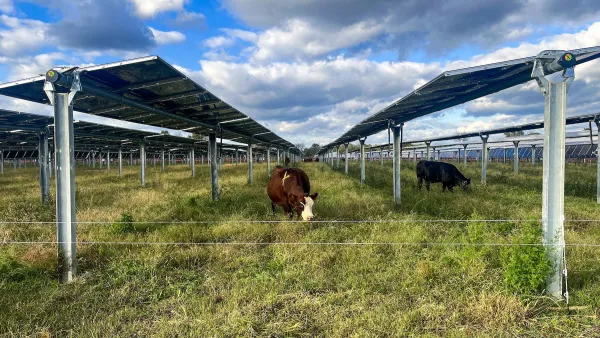
Cows at Tennessee's 'Silicon Ranch' graze under solar panels
The project aims to prove that agriculture and solar energy production can work in tandem.
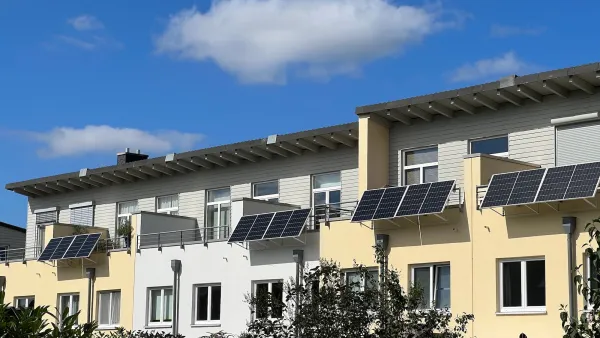
28 States and DC Could Legalize ‘Balcony Solar’
Plug-in solar panels, which are becoming popular across Europe, live in a regulatory gray area in the United States.
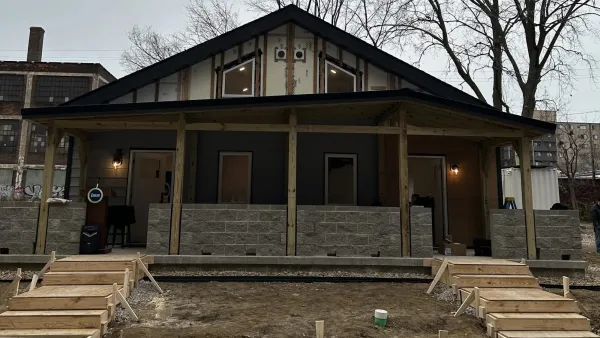
Cleveland Deploys Solar to Make Affordable Housing More Affordable
A nonprofit-backed project is bringing efficient duplexes to Cleveland.

Planetizen Federal Action Tracker
A weekly monitor of how Trump’s orders and actions are impacting planners and planning in America.

Amtrak, CN end decades-long dispute with eight-year agreement
The new operating agreement establishes an updated framework for the companies to work together, including processes to resolve disputes.

Judges permit Denver to divert 77,000 acre feet from the Colorado River for reservoir expansion
Overuse and climate change have caused the Colorado River’s water levels to plummet.

Philadelphia to invest $2 billion into upgrading city airports as PHL places last in customer satisfaction
Modernizations to Philadelphia's airports will include baggage system upgrades and a new automated parking garage guidance system.

The LA housing policies making developers turn away from the city
Despite LA’s housing shortage, developers say the city’s "mansion-tax" and pandemic-era policies make it an unappealing place to build housing.

New density bill would require 7 California cities to establish regional transit hubs
The bill would also require major cities in California to permit high-rise residential buildings.

FREE Course: Walkable City 1: Why Walkability?
After describing his path towards focusing on walkability as the essence of good planning, Jeff Speck marches through his five principal reasons for making more walkable places.
Reinventing Malls: Planning Alchemy—Turning Gray Fields Into Gold
The course focuses on the opportunities and imperatives that shape reinvention of mall sites.

City of Wisconsin Rapids
Harvard University Graduate School of Design
KFH Group Inc.
The Architects Foundation
University of Cincinnati Online
The Pocatello Development Authority
The Urban Renewal Agency of the City of Pocatello