Louisville has shown leadership in the open data movement by doubling the amount of data it shares with the public in the past year.


Jacob Ryan reports: "[Louisville] officials have increased the amount of open data by nearly 200 percent in just a year’s time." Ryan cites the inaugural Open Data Report by Metro Technology Services in sharing the news.
"This means that information about subjects as diverse as foreclosure sales, city expenditures, resident complaints and registered dog bites are available for public viewing via an online portal. And Metro Technology Services director Jason Ballard said more is to come."
Louisville's open data project follows a 2013 executive order by Mayor Greg Fischer, "which declared that public data from any Metro Government department should be 'open by default,' unless it is sensitive material protected by law."
Louisville ranks 13th out of 74 cities participating in the U.S. City Open Data Census.
Read the full story: City Continues To Open Data To Public
The Trouble With Government Transparency
Keeping government open and accountable has led to some problems for cities, according to John D. Donahue.
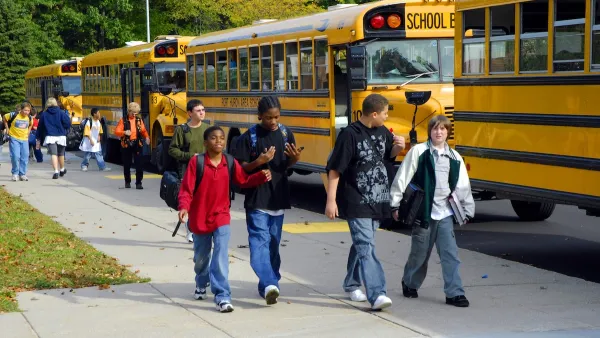
Learning loss and urban schools, part 2
Did test scores in progressive cities drop more post-COVID than test scores in moderate ones?
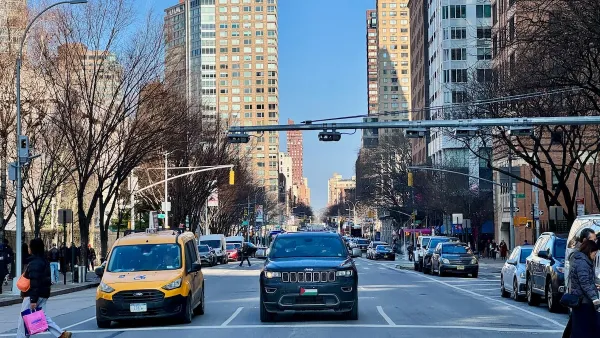
NYC’s ‘Rare and Comprehensive’ Public Data Reveals Congestion Pricing's Success
The Metropolitan Transportation Authority’s analytics and data team maintains over 180 regularly updated datasets about the city’s transportation system.

Desperate measures: Advocates weigh draining Lake Powell to fill Colorado River
Draining the reservoir could reduce evaporation losses by a couple hundred thousand acre-feet.

Eastern Nebraska is running out of electricity
Data centers and electrification are straining eastern Nebraska’s grid, throttling economic development.

Malls are becoming the midtowns of the future
Mall and office park redevelopments are a generational opportunity to create new nodes of urbanity.

NYC breaks ground on anti-flooding infrastructure project
New York City's new system will reduce stormwater flows to local sewers by 90%.

One Kentucky town’s secret to affordable housing
The Smoketown Community Land Trust has already built seven affordable homes for community members.

Houston gains petal-shaped cooling infrastructure to make streets more ‘delightful’
The city has installed the pavilions along 15 blocks in Houston.

FREE Course: Walkable City 1: Why Walkability?
After describing his path towards focusing on walkability as the essence of good planning, Jeff Speck marches through his five principal reasons for making more walkable places.
Reinventing Malls: Planning Alchemy—Turning Gray Fields Into Gold
The course focuses on the opportunities and imperatives that shape reinvention of mall sites.

City of Rosemead
Rutgers University, Edward J. Bloustein School of Planning and Public Policy
One Hundred Miles
University of Michigan School for Environment and Sustainability (SEAS)
Hunter College, City University of New York (CUNY)
The Architects Foundation
City of Cambridge
Montrose County
The Pocatello Development Authority