According to a book by John Marzluff, "Welcome to Subirdia: Sharing Our Neighborhoods with Wrens, Robins, Woodpeckers, and Other Wildlife," Seattle's greatest diversity of birds lives in its suburbs.


Mary Ann Gwinn reviews the book, providing insight regarding Marzluff's research and findings:
In urban Seattle, Marzluff’s research crew found birds even in degraded areas like the industrial neighborhood along the Duwamish River, where they spotted Caspian terns, peregrine falcons and belted kingfishers. But the greatest bird diversity occurred not downtown, or even in forest reserves, but in outlying suburban neighborhoods — “the jumbled collection of houses, allotments and gardens, derelict and vacant land, golf courses and other recreational sites, and by the cemeteries, schoolyards, highway and railway verges, business parks and shopping centres, situated amid the greenways that comprise suburbia,” Marzluff wrote in a recent opinion piece for Aeon Magazine. These areas offer shelter and food, including both bird feeders and a rich mix of plant species that birds rely on.
Given that great diversity of birds, Marzluff dubs Seattle's outlying areas as "Subirdia," and, according to Gwinn, "[Marzluff's] conclusions offer hope in an era of despair at what humans’ destructive habits are doing to wildlife: Given a little help from human hands, birds can thrive in the midst of development."
Read the full story: ‘Subirdia’: Surprisingly, birds thrive in suburban areas
Study Finds Economic Value in Urban-Dwelling Birds
Researchers at the University of Washington and Humboldt State University have produced evidence value added by birds in urban settings.
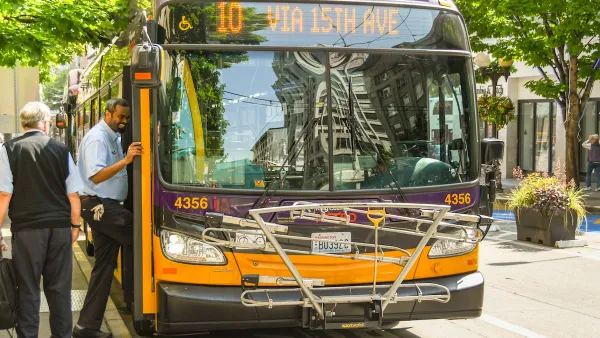
Seattle passes record-breaking transit services expansion
Proposition 1 will double the city’s transit tax to add 95,000 more bus trips and preserve 180,000 bus trips annually.
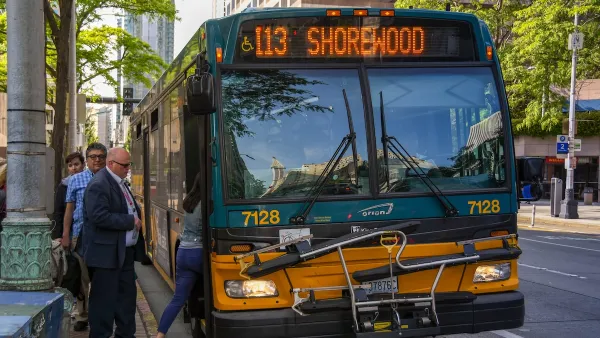
275,000 bus trips are at stake on Seattle's ballot
If passed, the Seattle Transit Measure would trigger a 0.3% sales tax and raise an average of $138 million per year to maintain and expand Seattle’s bus services.

Planetizen Federal Action Tracker
A weekly monitor of how Trump’s orders and actions are impacting planners and planning in America.

California plans to bury El Niño’s downpour
If the state plays its cards right, it may be able to store a billion acre-feet of El Niño’s water in aquifers.

Desperate measures: Advocates weigh draining Lake Powell to fill Colorado River
Draining the reservoir could reduce evaporation losses by a couple hundred thousand acre-feet.

Mamdani’s pied-à-terre tax survives legal challenge
A panel of judges found that the plaintiffs failed to demonstrate injury as a result of New York City's implementation of the tax.

Eastern Nebraska is running out of electricity
Data centers and electrification are straining eastern Nebraska’s grid, throttling economic development.

Seattle passes record-breaking transit services expansion
Proposition 1 will double the city’s transit tax to add 95,000 more bus trips and preserve 180,000 bus trips annually.

FREE Course: Walkable City 1: Why Walkability?
After describing his path towards focusing on walkability as the essence of good planning, Jeff Speck marches through his five principal reasons for making more walkable places.
Reinventing Malls: Planning Alchemy—Turning Gray Fields Into Gold
The course focuses on the opportunities and imperatives that shape reinvention of mall sites.

City of Rosemead
Rutgers University, Edward J. Bloustein School of Planning and Public Policy
One Hundred Miles
University of Michigan School for Environment and Sustainability (SEAS)
Hunter College, City University of New York (CUNY)
The Architects Foundation
City of Cambridge
Montrose County
The Pocatello Development Authority