In need of 80 additional employees to keep up with the city's pothole repair deficit, Mayor Rah Emanuel is proposing that the city raise taxes parking.


"Mayor Rahm Emanuel wants to raise Chicago’s parking tax again — this time by 2 full percentage points — to raise the $10 million needed to double the year-round army assigned to patch potholes and repair crumbling streets," reports Fran Spielman.
Spielman provides additional details of the current parking tas scheme: "The parking tax currently stands at 20 percent weekdays and 18 percent on weekends, with 87 percent of the revenue generated by garages in the downtown area and at O’Hare Airport." As for what the increased tax rate would get the city: "By raising the tax to 22 percent on weekdays and 20 percent on weekends, Emanuel hopes to generate the $10 million needed to hire the 80 employees needed to staff 18 additional crews."
Spielman's coverage also details some of the other changes to taxes and tax breaks proposed in Mayor Rahm Emanuel's proposed budget. The article also covers Mayor Emanuel's past tinkering with the parking tax as well as the presenting the side of the opposition to any additional increases for the tax rate (i.e., tourism interests).
Read the full story: Emanuel eyes raising parking tax to pay for pothole patches
Tracking Chicago’s Potholes
A new animated map presents the reported cases of potholes in Chicago since November—the maps colorful and provides insights into how the city, and our relationship to it, can change with time.
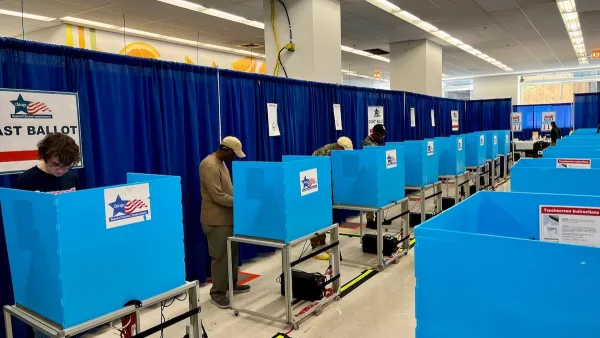
Chicago voters approve permanent festival grounds, penalty for vacant property owners
Currently, major summer and fall festivals take over public parks for weeks at a time, drawing criticism from nearby residents
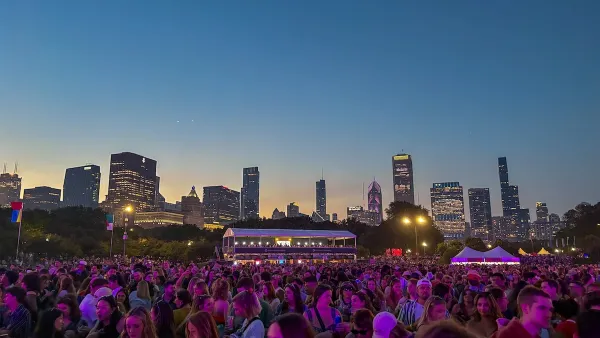
Non-stop party: Chicago voters weigh permanent festival grounds
A stable place for bleachers, stages and drainage may streamline the setup and teardown of large events.

Desperate measures: Advocates weigh draining Lake Powell to fill Colorado River
Draining the reservoir could reduce evaporation losses by a couple hundred thousand acre-feet.

Eastern Nebraska is running out of electricity
Data centers and electrification are straining eastern Nebraska’s grid, throttling economic development.

Malls are becoming the midtowns of the future
Mall and office park redevelopments are a generational opportunity to create new nodes of urbanity.

NYC breaks ground on anti-flooding infrastructure project
New York City's new system will reduce stormwater flows to local sewers by 90%.

One Kentucky town’s secret to affordable housing
The Smoketown Community Land Trust has already built seven affordable homes for community members.

Houston gains petal-shaped cooling infrastructure to make streets more ‘delightful’
The city has installed the pavilions along 15 blocks in Houston.

FREE Course: Walkable City 1: Why Walkability?
After describing his path towards focusing on walkability as the essence of good planning, Jeff Speck marches through his five principal reasons for making more walkable places.
Reinventing Malls: Planning Alchemy—Turning Gray Fields Into Gold
The course focuses on the opportunities and imperatives that shape reinvention of mall sites.

City of Rosemead
Rutgers University, Edward J. Bloustein School of Planning and Public Policy
One Hundred Miles
University of Michigan School for Environment and Sustainability (SEAS)
Hunter College, City University of New York (CUNY)
The Architects Foundation
City of Cambridge
Montrose County
The Pocatello Development Authority