Using a cloud-based computing setup, the third largest maker of luxury vehicles unveiled a new set of protections from hackers in the face of driverless travel.


A recent piece on Bloomberg News by Dorothee Tschampa reports how Daimler AG, the parent company of Mercedes-Benz, announced the new technology protecting car-data at a conference in their hometown of Stuttgart, Germany earlier this week.
According to Christine Hohmann-Dennhardt, the head of legal affairs at Daimler AG, "[e]lements of the technology will include enabling people in a vehicle to control how much of their data is available to the outside world while they’re on the road." Drivers will also be able to erase information automatically upon finishing any give trip.
Indeed, Tschampa also cites a recent study by Boston-based Lux Research within her piece. The group estimated the industry surrounding self-driving cars will value $87 billion by 2030, with the majority of money focused on developing software. This has "prompted automakers and insurers to look at how to prevent hackers from gaining access to information or even hijacking vehicles by remote control."
FULL STORY: Mercedes Sets Up Cloud Firewall to Halt Car-Data Hacking


More Diesel Driving Bans Coming to German Cities
Germany's automotive industry and Chancellor Angela Merkel are increasingly worried about the economic effects of court-sanctioned diesel driving bans to improve air quality, as enacted in Hamburg last May. Four more cities are likely to enact bans.

German Cities to Breathe Easier After Court Ruling on Diesel Car Bans
Unlike banning sales of new internal combustion vehicles at a future date, the German court ruling applies to the operation of older, diesel-powered cars in the country's most polluted cities. It's up to the cities, though, to enact the bans.
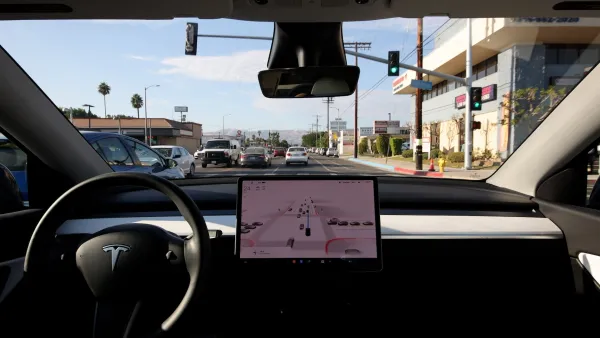
Tesla Launches Unsupervised Robotaxis in Austin
The company has been operating autonomous taxis with human safety drivers in the car in Austin since last June.

The state-sanctioned urbicide of Austin
People don’t kill cities. Freeways do.

US to reduce Colorado River water deliveries to Mexico
A new Colorado Treaty amendment reduces Mexico’s Colorado River water allocation by 250,000 acre feet.

New Jersey’s second-largest city bans standalone data centers
Jersey City will continue to allow co-location facilities, such as those meant for research institutions that store their own data.

Amtrak not solely to blame for New Jersey commuter rail's unreliability, report finds
A new study from the Garden State Initiative found that NJ Transit’s budget grew 20% across a 4 year period, but reliability declined significantly over the same period.

EPA erases limits on planet-warming pollution from power plants
Under Monday’s plan, power plants would still have some limits on how much mercury, arsenic and other contaminants they can emit.

Phoenix announces new on-demand transit service, more frequent RAPID buses
Both new services will launch in October, and are part of Phoenix's Project Effective Access Solutions for Easing Congestion.

FREE Course: Walkable City 1: Why Walkability?
After describing his path towards focusing on walkability as the essence of good planning, Jeff Speck marches through his five principal reasons for making more walkable places.
Reinventing Malls: Planning Alchemy—Turning Gray Fields Into Gold
The course focuses on the opportunities and imperatives that shape reinvention of mall sites.

Eagle County Government
Harvard University Graduate School of Design
Nashville Planning Department
The Architects Foundation
University of Cincinnati Online
The Pocatello Development Authority
The Urban Renewal Agency of the City of Pocatello
Journal of the American Planning Association