James Rojas explains the importance of front porches in Latino-American communities.


In the second part of a series on The Project For Public Spaces blog, Jame Rojas describes the composition, use, and importance of front porches in Latino-American communities throughout the United States. Despite the diminishing use of front porches in larger American society, Rojas explains how the front porch for Latinos remains a widely used amenity. According to Rojas, the "relatively mild climates found in Latin America, and due to a Spanish colonial-historical precedent that has favored a courtyard model of development, the use of outdoor space as part of the home is now commonplace within many Latino-American households."
For Latinos, the front porch provides the opportunity to engage with neighbors and become civic-minded, participating in the "sidewalk ballet," as coined by Jane Jacobs, and the larger neighborhood. Indeed, the Latino front porch is unique and adorned "with icons from Latin American architecture such as arches, tiles, stucco, brick, and wrought-iron railing and lighting fixtures."
As Rojas puts it, "[t]he front porch is where the Latinos express their cultural identity through use, design, and celebration especially in areas of US Southwest. These makes the Latino front porch an enduring and salient space in the American urban and suburban landscape."
Read the full story: Front Porch Placemaking: the Latino Connection to the Street
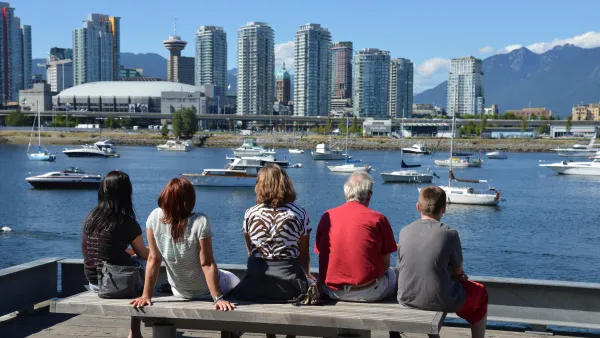
A Twitter Feed that Sings About Placemaking
"My twitter stream is alive with the sound of placemaking," writes Chuck Wolfe. While preparing for this week's Placemaking Week in Vancouver, he explains the importance of PPS-led programming and hopes for various panels, proceedings and events.
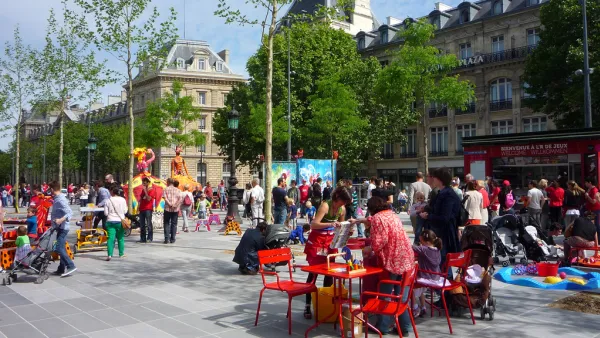
The Difficult Task of Creating Topophilia
The Project for Public Spaces celebrates its 40th anniversary this year, spanning a seismic shift from modernist planning and urban decay of the 1970s to the urban resurgence and focus on smart growth of today. PPS's Ethan Kent reflects.
'Heart of the Community' Program Awards Placemaking Grants
Southwest Airlines and the project for Public Spaces continue their partnership on the Heart of the Community program, awarding placemaking grants to six cities around the country.

Planetizen Federal Action Tracker
A weekly monitor of how Trump’s orders and actions are impacting planners and planning in America.

California plans to bury El Niño’s downpour
If the state plays its cards right, it may be able to store a billion acre-feet of El Niño’s water in aquifers.

Desperate measures: Advocates weigh draining Lake Powell to fill Colorado River
Draining the reservoir could reduce evaporation losses by a couple hundred thousand acre-feet.

Los Angeles just elected an urban planner as its mayor
Transportation analysts are optimistic that Raman will be more aggressive in addressing transit issues than Bass.

Mamdani’s pied-à-terre tax survives legal challenge
A panel of judges found that the plaintiffs failed to demonstrate injury as a result of New York City's implementation of the tax.

Eastern Nebraska is running out of electricity
Data centers and electrification are straining eastern Nebraska’s grid, throttling economic development.

FREE Course: Walkable City 1: Why Walkability?
After describing his path towards focusing on walkability as the essence of good planning, Jeff Speck marches through his five principal reasons for making more walkable places.
Reinventing Malls: Planning Alchemy—Turning Gray Fields Into Gold
The course focuses on the opportunities and imperatives that shape reinvention of mall sites.

City of Rosemead
Rutgers University, Edward J. Bloustein School of Planning and Public Policy
One Hundred Miles
University of Michigan School for Environment and Sustainability (SEAS)
Hunter College, City University of New York (CUNY)
The Architects Foundation
City of Cambridge
Montrose County
The Pocatello Development Authority