Planners and residents are concerned about the lack of green space requirements in the booming area of Uptown in Dallas. Instead of delivering amenities, some say, developers are often engaged in battles over density.


According to an article by Melissa Repko, planners and city officials in Dallas say the city "must strike a better balance between buildings and open space." In Dallas, explains Repko, "the idea of impact fees and dedication ordinances hasn’t gained traction."
"Dallas caps the maximum lot coverage of a building, but the remaining land can be paved for parking. Many new buildings offer just a thin frame of shrubs and maybe a pool deck. And city parks officials say they don’t have money to buy public land, especially in pricey neighborhoods."
The article takes a turn into a discussion about density, including a quote from City Plan Commissioner Bobby Abtahi (after employing the American Planning Association's definition of "excessive" density), who claims that public fear of density is one of the big causes of the lack of green space.
Read the full story: Green space is sparse amid boom in Uptown
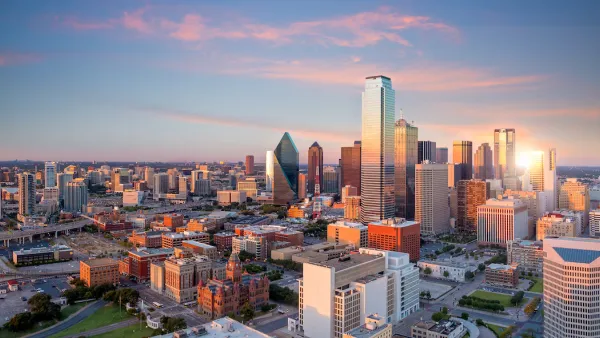
Dallas Code Reform Makes Way for Missing Middle Housing
The Dallas City Council voted to change the city’s building code to allow up to eight residential units in three-story buildings.
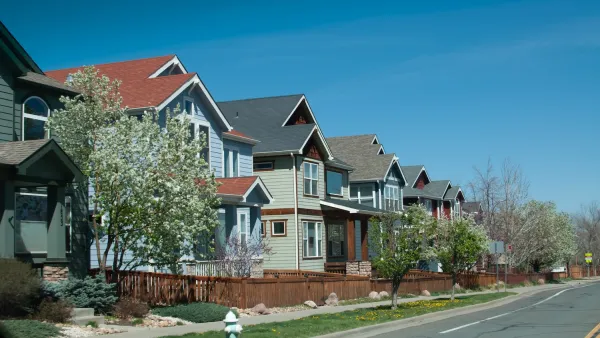
Proposed Boulder Ballot Measures Call for Impact Fees, Affordable Duplexes
Boulder residents are working to put two housing-related proposals on the November ballot.
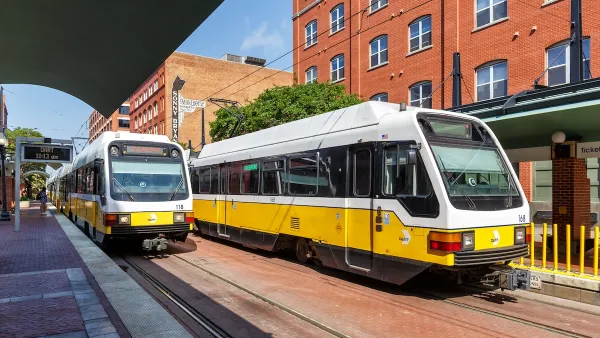
North Texas Transit Leaders Tout Benefits of TOD for Growing Region
At a summit focused on transit-oriented development, policymakers discussed how North Texas’ expanded light rail system can serve as a tool for economic growth.

Planetizen Federal Action Tracker
A weekly monitor of how Trump’s orders and actions are impacting planners and planning in America.

California plans to bury El Niño’s downpour
If the state plays its cards right, it may be able to store a billion acre-feet of El Niño’s water in aquifers.

Desperate measures: Advocates weigh draining Lake Powell to fill Colorado River
Draining the reservoir could reduce evaporation losses by a couple hundred thousand acre-feet.

Los Angeles just elected an urban planner as its mayor
Transportation analysts are optimistic that Raman will be more aggressive in addressing transit issues than Bass.

Mamdani’s pied-à-terre tax survives legal challenge
A panel of judges found that the plaintiffs failed to demonstrate injury as a result of New York City's implementation of the tax.

Eastern Nebraska is running out of electricity
Data centers and electrification are straining eastern Nebraska’s grid, throttling economic development.

FREE Course: Walkable City 1: Why Walkability?
After describing his path towards focusing on walkability as the essence of good planning, Jeff Speck marches through his five principal reasons for making more walkable places.
Reinventing Malls: Planning Alchemy—Turning Gray Fields Into Gold
The course focuses on the opportunities and imperatives that shape reinvention of mall sites.

City of Rosemead
Rutgers University, Edward J. Bloustein School of Planning and Public Policy
One Hundred Miles
University of Michigan School for Environment and Sustainability (SEAS)
Hunter College, City University of New York (CUNY)
The Architects Foundation
City of Cambridge
Montrose County
The Pocatello Development Authority