A new app called ZoningCheck provides users a responsive query function. In addition to the obvious layer of bureaucratic interface saved by the process, the app also makes a compelling case for the benefits of open municipal codes.


Alex Howard describes the use—and larger potential—of the Zoning Check app. ZoningCheck, according to Howard, "is focused upon making it easier for entrepreneurs, nonprofits, and small business owners to find properties in a given city that are zoned for commercial use."
Here's how it works: "A user chooses a city (currently limited to about a dozen municipalities in California), a kind of business, and then a specific location or, crucially, potential locations. The result is a personalized map that displays where that type of business is permitted, conditionally permitted, or prohibited in a given municipality."
Howard quotes Joel Mahoney, co-founder of OpenCounter, to explain the implications of the new app: "As far as we know, this is the first time trying to make queryable…A lot of cities have an interactive zoning map that you can zoom around in, but it's not responsive to you. If you're trying to open up a bakery, it doesn't show you where a bakery is allowed."
Read the full story: ZoningCheck puts computable municipal codes to good use
App Maps the Unbuilt Potential of the New York City Skyline
The "Accidental Skyline" project puts a powerful visualization tool in the hands of citizens curious to know more about the possible development enabled by the land use regulations of New York City.
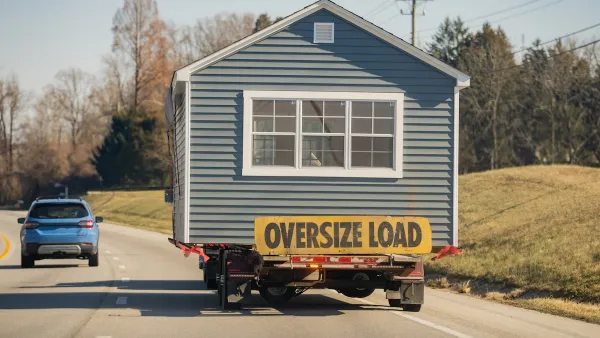
A third of Texas cities must update their zoning codes to comply with new housing law
Texas municipalities are now required to allow manufactured housing in at least one residential zoning district.

Arlington’s New Form-Based Zoning Designed to Guide a Cohesive Public Realm
Form-based zoning focuses on the design of buildings and how they interact with the public realm.

Planetizen Federal Action Tracker
A weekly monitor of how Trump’s orders and actions are impacting planners and planning in America.

Washington state to charge fee to drivers with fuel-efficient cars
Revenue from the fee will go towards supporting the state’s highways.

Illinois considers spending $1 billion in taxpayer money on data center
A quantum computing campus and data center are currently under construction in Chicago.

People Mover delayed again, LAX and contractor trade barbs
The automated train was last slated to open in January 2027.

Trump to blast ‘hydrocarbon highway’ through ‘world’s longest art gallery’
Environmental and historic preservation groups are suing to stop the project.

25 states cast bids to be the home of U.S. Space Academy
The academy will train scientists, officers and astronauts for the U.S. Space Force.

FREE Course: Walkable City 1: Why Walkability?
After describing his path towards focusing on walkability as the essence of good planning, Jeff Speck marches through his five principal reasons for making more walkable places.
Reinventing Malls: Planning Alchemy—Turning Gray Fields Into Gold
The course focuses on the opportunities and imperatives that shape reinvention of mall sites.

City of Charlotte
City of Rosemead
Rutgers University, Edward J. Bloustein School of Planning and Public Policy
University of Michigan School for Environment and Sustainability (SEAS)
Hunter College, City University of New York (CUNY)
The Architects Foundation
University District Partnership