Urban farming has taken root as Detroit transforms. Now, farmers and entrepreneurs must continue to find new ways to profit from the city's new farming business model.


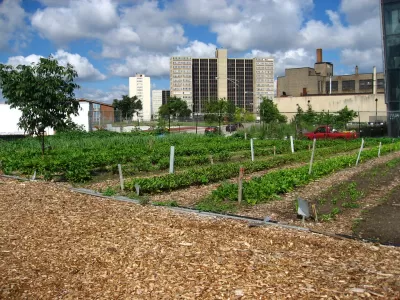
A new business opportunity is growing alongside Detroit’s estimated 250 acres of tomato plants, cornstalks and trees," reports Michael Martizen. "The city’s estimated 1,400 urban farms and gardens have created new markets for farm loan banks and equipment companies that supply them with everything from seed and fertilizer to compost and tractors — just as they’ve done for years with Detroit’s rural counterparts throughout the state."
Despite some early successes, like the Hantz Woodlands, the industry is still figuring out how to respond to the unique situations of much of Detroit's urban farming capacity: "But doing business with Detroit’s urban farmers will require some adaptation on the part of equipment rental companies. Most farms and gardens in the city are 3-5 acres, or smaller, so they don’t need huge machines. And some farmers already share tractors and other equipment among multiple sites." Moreover, "[some] believe the equipment rental companies and farm banks are hesitant to partner with some smaller farms because they’re still trying to understand Detroit’s new industry."
Read the full story: Opportunity sprouts from Detroit's urban farms

Detroit Residents Plant 15,000 Trees in a Day
The story of Hantz Woodlands—and a local philanthropist's vision to transform urban blight into an urban forest.
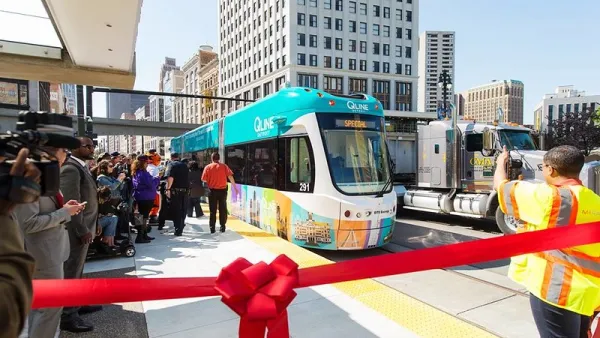
Detroit's Rebirth: Beyond the Headlines
John Gallagher takes a look at some of the civic factors and organizations that have worked behind the scenes to pull Detroit through.
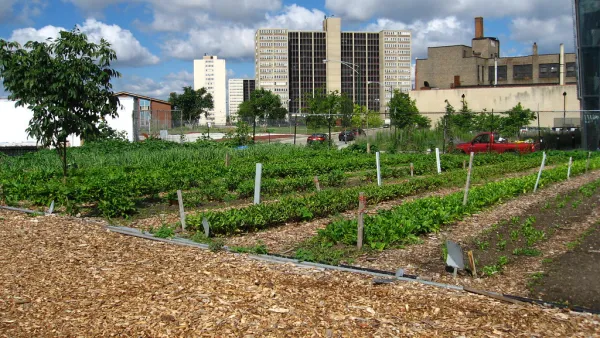
Detroit Gives Go-Ahead to Controversial Urban Farm Project
By a narrow vote, Detroit's City Council has given approval for the city to sell 140 acres of vacant land to financial services business owner John Hantz for the creation of an urban agriculture project. Some are calling the deal a "land grab."

‘Going backwards:’ Baltimore mayor, students rally against state's transit funding plan
Maryland's proposed six-year plan provides no funding for Baltimore’s BMORE bus program and reduces its road maintenance funding.

Detroit to transform waterfront with $2.2 billion investment
Developers will convert about 18 acres of unused parking lot space into civic spaces.

HUD modernizes 50-year-old manufactured housing framework
The Next Generation Manufactured Housing Action Plan establishes new energy-efficiency standards for manufactured homes, and new guidelines for anchoring them.

After $600,000 wasted, CA high-speed rail board limits CEO’s power
Ian Choudri will no longer be able to sign, change or manage contracts.

Lithium mines leech water from surrounding communities. Soon, they’ll run dry
Researchers concluded that most lithium mines won't have enough water to meet industry demands by 2050.

El Niño takes lives, infrastructure as U.S. storm systems prove ill-prepared
About two-thirds of America's culverts are in states with outdated design standards.

FREE Course: Walkable City 1: Why Walkability?
After describing his path towards focusing on walkability as the essence of good planning, Jeff Speck marches through his five principal reasons for making more walkable places.
Reinventing Malls: Planning Alchemy—Turning Gray Fields Into Gold
The course focuses on the opportunities and imperatives that shape reinvention of mall sites.

One Hundred Miles
County of Mendocino
planning NEXT
The Architects Foundation
University of Cincinnati Online
Montrose County
Northern Illinois Transit Authority (NITA)
The Pocatello Development Authority