A reporter in Philadelphia doesn't hold back the innuendo in a recent article about the city's efforts to improve pedestrian safety. The implication: pedestrians won't be safe until the police start writing jaywalking tickets.


"In Philadelphia's stepped-up efforts to reduce pedestrian deaths and injuries, one tactic has not been used: Issuing tickets to scofflaw pedestrians," reports Paul Nussbaum. In fact, Philadelphia police have written zero tickets for jaywalking so far this year.
As Nussbaum reports, however, "[in] Philadelphia, pedestrians routinely ignore red lights and 'don't walk' signals, and are as likely to cross in the middle of a block as at a crosswalk." Moreover, "[distracted] walking has also become a growing problem."
To be fair, Philadelphia faces a large challenge when it comes to improving the safety of its streets. Reports Nussbaum: "Pedestrians represent a much larger share of traffic fatalities in Philadelphia than in the nation as a whole: In 2012, 32 percent of people killed in traffic accidents in Philadelphia were pedestrians, compared with 14 percent nationwide."
"And last month, the city won a $525,000 grant from the U.S. Department of Transportation to 'expand pedestrian safety education and enforcement efforts.'" The city was one of three (along with New York City and Louisville) to receive such funding.
Read the full story: Phila. trails in issuing jaywalking tickets
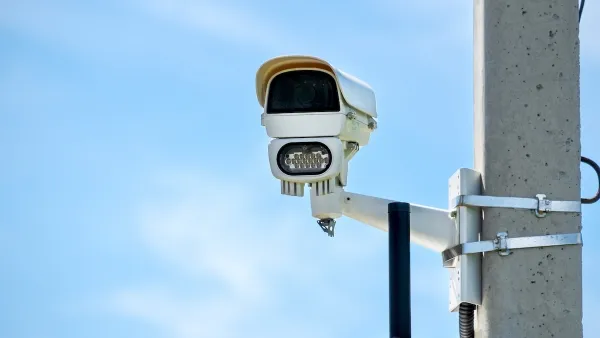
Philly Speed Camera Program Cuts Fatalities in Half
Excessive speeding along dangerous segments of Roosevelt Boulevard dropped by 90 percent after the city installed automated enforcement cameras.
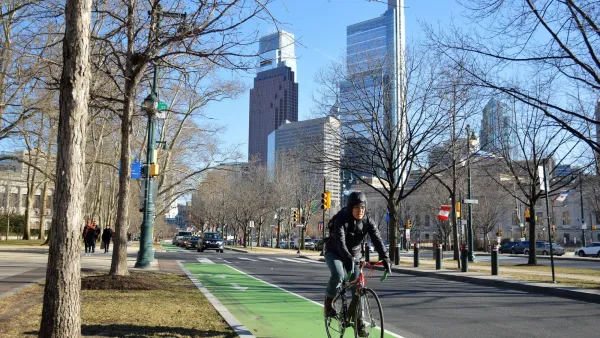
Philly Road Safety Advocates Call for Action From the City
Mayor Parker’s administration is proposing massive cuts to the city’s Vision Zero program while pedestrian and cyclist deaths remain high.
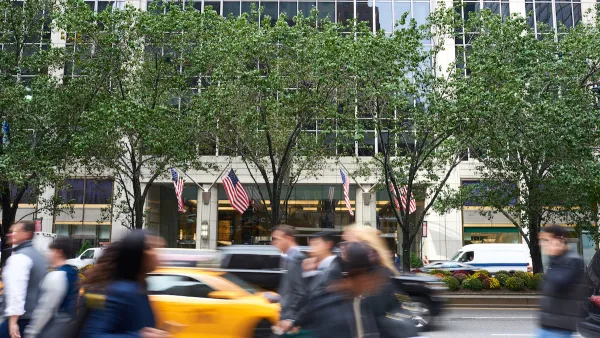
NYC Officials Split on Jaywalking Decriminalization
While some council members say the ‘outdated’ practice disproportionately impacts Black and Latino residents, law enforcement officials say its a necessary measure for road safety.

Desperate measures: Advocates weigh draining Lake Powell to fill Colorado River
Draining the reservoir could reduce evaporation losses by a couple hundred thousand acre-feet.

Eastern Nebraska is running out of electricity
Data centers and electrification are straining eastern Nebraska’s grid, throttling economic development.

Move over, LA: St. Louis gears up for Olympics, invests millions in downtown redevelopment
The Missouri city will host the 2028 Olympic soccer group stage and knockout matches.

MTA sends Dem leaders a wish list to mend Trump’s damages
Requests include exempting new train and bus components from tariffs and increasing transit security funding.

Mass. votes against statewide minimum lot size for single-family homes
Over 2 million residents voted on Question 7; it was decided by just over 30,000 votes.

Maryland’s $15 billion bridge project gains key approval
The Maryland Transit Authority said the project will create over 60,000 jobs and add $23 billion to the local economy.

FREE Course: Walkable City 1: Why Walkability?
After describing his path towards focusing on walkability as the essence of good planning, Jeff Speck marches through his five principal reasons for making more walkable places.
Reinventing Malls: Planning Alchemy—Turning Gray Fields Into Gold
The course focuses on the opportunities and imperatives that shape reinvention of mall sites.

City of Rosemead
Rutgers University, Edward J. Bloustein School of Planning and Public Policy
One Hundred Miles
University of Michigan School for Environment and Sustainability (SEAS)
Hunter College, City University of New York (CUNY)
The Architects Foundation
City of Cambridge
The Pocatello Development Authority
The Urban Renewal Agency of the City of Pocatello