As Providence, Rhode Island gears up for its second attempt at TIGER funds to help pay for its proposed streetcar line, a local reporter makes a sometimes surprising case against the plan.


An article by Kate Nagle examines the prospects of streetcar plans in Providence, Rhode Island, where local officials are applying for TIGER grants for the second time after losing out on funding last year.
"According to the City of Providence's proposal put forth this spring, the streetcar route would encompass 2.5 miles, with a one time cost of $114 million -- of which 34% would come from federal funding -- followed by annual costs of $3 million for the 12 stop line."
Like many others pushing for streetcars, planners in Providence are hoping that the streetcar will bring economic development benefits like job creation and increases in property values.
Nagle repeatedly references a recent article by Yonah Freemark, which questioned the impact of light rail in some of its early adopter cities, like Portland and San Jose. Freemark responded to the article on Twitter:


Read the full story: Prov. Pushing for Trolley Program that Has Failed in Other Cities

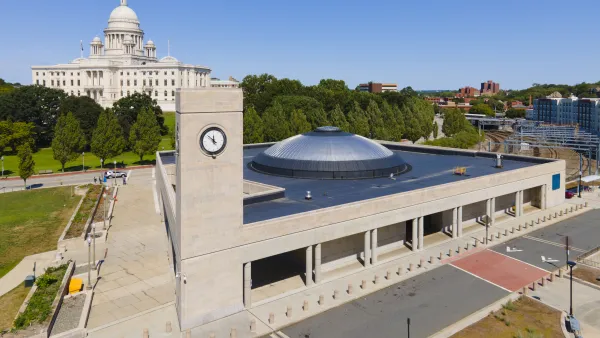
Providence train station to gain new bus hub
The new hub will replace the one currently located at Kennedy Plaza.
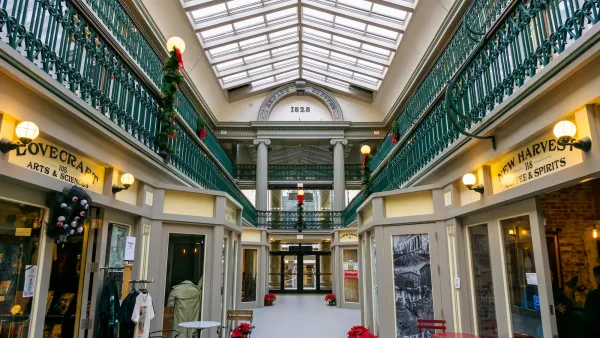
You Can Live Inside America’s Oldest Indoor Shopping Mall
The Arcade in Providence, Rhode Island, first built in 1828, was redeveloped into 48 micro-housing units.
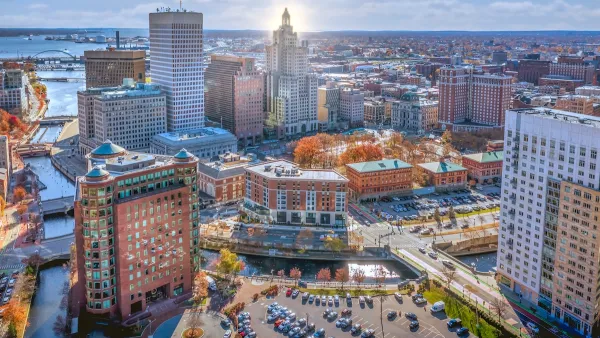
From Plan to Place: Providence’s Downtown Renaissance
Providence’s downtown is transforming from plan to place. Decades of strategic planning, zoning reforms, & investment are paying off, creating a more vibrant, walkable urban core. Here’s how thoughtful policy and design are shaping the city’s future.

Planetizen Federal Action Tracker
A weekly monitor of how Trump’s orders and actions are impacting planners and planning in America.

Amtrak, CN end decades-long dispute with eight-year agreement
The new operating agreement establishes an updated framework for the companies to work together, including processes to resolve disputes.

Judges permit Denver to divert 77,000 acre feet from the Colorado River for reservoir expansion
Overuse and climate change have caused the Colorado River’s water levels to plummet.

NYC DOT wants faster, more permanent street upgrades
The city is examining ways to build more concrete infrastructure without getting entangled in 'decades-long' projects.

'Something we’ve never seen before:' rising utility rates could strain city finances nationwide
Data centers, climate change and other factors have caused utility rates in the United States to increase by 38% since 2020.

Trump to overrule local leaders, lease millions of acres of America’s Pacific Island territories’ seafloors to mining companies
International law says that the Indigenous people of America’s territories have a right to prior and informed consent regarding projects that impact their countries.

FREE Course: Walkable City 1: Why Walkability?
After describing his path towards focusing on walkability as the essence of good planning, Jeff Speck marches through his five principal reasons for making more walkable places.
Reinventing Malls: Planning Alchemy—Turning Gray Fields Into Gold
The course focuses on the opportunities and imperatives that shape reinvention of mall sites.

Harvard University Graduate School of Design
KFH Group Inc.
Greater Baltimore Committee
The Architects Foundation
University of Cincinnati Online
The Pocatello Development Authority
The Urban Renewal Agency of the City of Pocatello