The ongoing saga of the tax and regulatory standing of Airbnb, the popular room rental app and poster child for the sharing economy, is evolving in San Francisco, Portland and the state of New York.


Shortly after announcing the launch of its “Shared City” program in Portland, news about Airbnb’s tax collection policies have been emerging in San Francisco and New York State.
First in San Francisco, Carolyn Said reported that Airbnb had agreed to pay the city’s 14 percent hotel tax by the summer. A few days after that article, John Cote reported on a decision by the San Francisco Treasurer John Cisneros confirming that Airbnb is subject to the city’s hotel tax as the law is currently written.
Next in New York City, Kaja Whitehouse reports that Airbnb is “working on getting two bills passed by May that would allow it to collect the 14.7 percent hotel tax and pass it on to city and state authorities…”
The situation in New York State is different than that of Portland and San Francisco because “the company claims it is hindered in New York by laws that place the burden of collecting and paying taxes on the individual host….Airbnb says it wants to do the work for them. Changing the laws would allow the company to tack on an extra charge for taxes on renters’ bills in the same way hotels do for their guests.”
Read the full story: Airbnb to collect hotel taxes for San Francisco rentals
Does Airbnb Impact the Affordable Housing Market?
Michelle Cohen discusses whether or not companies like Airbnb, which provide platforms for room and house-sharing aimed at travelers, impact a city's affordable housing market.
A Shot Across the Bow of the Shared Economy
New York Attorney General Eric T. Schneiderman penned an op-ed for the New York Times that specifically calls out Airbnb and Uber—two companies at the forefront of calls to regulate the emerging sharing economy.
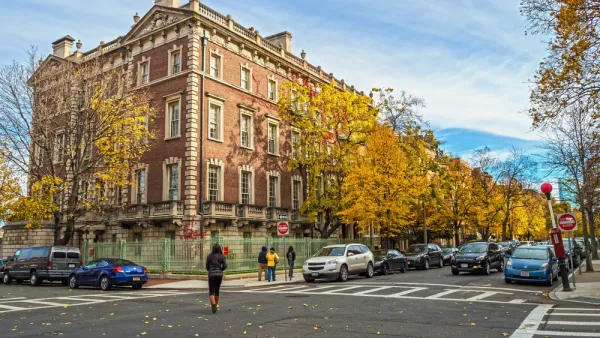
Boston Mayor Wants to Limit Short-Term Rentals
Boston Mayor Martin J. Walsh thinks short-term rental companies like Airbnb are having a negative effect on the city's housing market, and he'll walk a fine line to regulate the industry.

Desperate measures: Advocates weigh draining Lake Powell to fill Colorado River
Draining the reservoir could reduce evaporation losses by a couple hundred thousand acre-feet.

Eastern Nebraska is running out of electricity
Data centers and electrification are straining eastern Nebraska’s grid, throttling economic development.

Malls are becoming the midtowns of the future
Mall and office park redevelopments are a generational opportunity to create new nodes of urbanity.

NYC breaks ground on anti-flooding infrastructure project
New York City's new system will reduce stormwater flows to local sewers by 90%.

One Kentucky town’s secret to affordable housing
The Smoketown Community Land Trust has already built seven affordable homes for community members.

Houston gains petal-shaped cooling infrastructure to make streets more ‘delightful’
The city has installed the pavilions along 15 blocks in Houston.

FREE Course: Walkable City 1: Why Walkability?
After describing his path towards focusing on walkability as the essence of good planning, Jeff Speck marches through his five principal reasons for making more walkable places.
Reinventing Malls: Planning Alchemy—Turning Gray Fields Into Gold
The course focuses on the opportunities and imperatives that shape reinvention of mall sites.

City of Rosemead
Rutgers University, Edward J. Bloustein School of Planning and Public Policy
One Hundred Miles
University of Michigan School for Environment and Sustainability (SEAS)
Hunter College, City University of New York (CUNY)
The Architects Foundation
City of Cambridge
Montrose County
The Pocatello Development Authority