Most millennials and Gen Xers are either too busy or too disengaged to realize how the future of their hometowns is being shaped by people much older than they.



After more than 35 years attending public meetings about community planning and development, Bob Ransford has an unfortunate observation. “…the most profound thing I’ve learned is that too often, the wrong people are in the room. That has led to long and non-productive processes. It’s led to unreasonable expectations and plans that fall far short of what’s really possible.”
“I’ve sat through too many public hearings on new housing developments where speaker after speaker objecting to a developer’s plan were people much older than the demographic cohort that the project was designed to accommodate.” Moreover, says Ransford, “Far too often, those participating in planning and influencing the important decisions are not the people who will be most impacted by those decisions over the long term.”
After breaking down the numbers behind the under-representation of younger cohorts on issues of planning, Ransford offers the following advice: “We need to find new ways of reaching out to the people who are going to be living 25 and 30 years from now in the housing, neighbourhoods and towns we are planning and building today.”
FULL STORY: Community planning must include input from younger people


Study Finds Seniors Could Be Stuck with Unsellable Homes in the Future
A new paper predicts that home-buying trends among younger generations will lead to a flood of homes that older homeowners will not be able to sell.
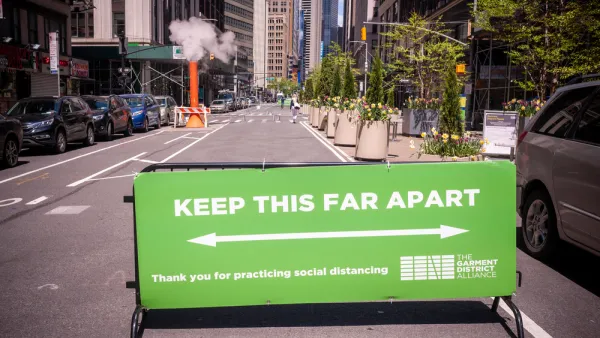
Pandemic Planning Must Reconcile With the Inequities of the Past
The ongoing debate about the role of marginalized communities in the emergency planning programs of the pandemic has now been detailed on the pages of the New York Times.

Millennials Choose Cities for First Homes
New research suggests that millennials are remaining in urban areas as they transition from renting to homeownership.

The state-sanctioned urbicide of Austin
People don’t kill cities. Freeways do.

US to reduce Colorado River water deliveries to Mexico
A new Colorado Treaty amendment reduces Mexico’s Colorado River water allocation by 250,000 acre feet.

New Jersey’s second-largest city bans standalone data centers
Jersey City will continue to allow co-location facilities, such as those meant for research institutions that store their own data.

Amtrak not solely to blame for New Jersey commuter rail's unreliability, report finds
A new study from the Garden State Initiative found that NJ Transit’s budget grew 20% across a 4 year period, but reliability declined significantly over the same period.

EPA erases limits on planet-warming pollution from power plants
Under Monday’s plan, power plants would still have some limits on how much mercury, arsenic and other contaminants they can emit.

Phoenix announces new on-demand transit service, more frequent RAPID buses
Both new services will launch in October, and are part of Phoenix's Project Effective Access Solutions for Easing Congestion.

FREE Course: Walkable City 1: Why Walkability?
After describing his path towards focusing on walkability as the essence of good planning, Jeff Speck marches through his five principal reasons for making more walkable places.
Reinventing Malls: Planning Alchemy—Turning Gray Fields Into Gold
The course focuses on the opportunities and imperatives that shape reinvention of mall sites.

Eagle County Government
Harvard University Graduate School of Design
Nashville Planning Department
The Architects Foundation
University of Cincinnati Online
The Pocatello Development Authority
The Urban Renewal Agency of the City of Pocatello
Journal of the American Planning Association