A recent article laments the missed opportunity of President Obama’s recent calls for increased spending on infrastructure: a lack of acknowledgement that cities are the best places to spend those dollars.


Starting from the assumption that “[public] investment in infrastructure and human or social capital combine to provide a societal foundation for dynamic economic growth and development by connecting the various economic sectors and industries,” a recent article by Michael A. Pagano makes the case for focusing infrastructure spending in the nation’s cities to achieve maximum economic benefit.
“Why is it so difficult… to knit together a transformative economic strategy that is explicitly rooted in and mediated by a metropolitan- or urban-focused set of policies?”
That difficulty is particularly troubling to Pagano given the high costs of deferred maintenance of the existing urban infrastructure. (The tendency of the federal government to favor infrastructure investments in suburban and rural settings has been discussed before.)
Instead of expanding infrastructure investments farther and farther out into the sprawl, Pagano suggests an alternative: “If new or expanded infrastructure projects are required, there must be an economic demand for those economic activities, and the political entities that gain from them should pay the lion's share of their costs.”
FULL STORY: Why We Should Focus Infrastructure Spending on Urban America

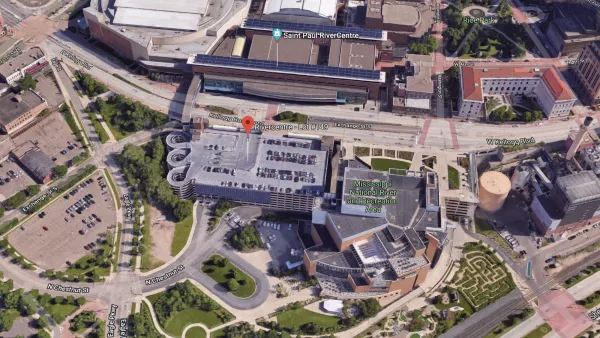
St. Paul Seeks State Money for Parking Garage
The state of Minnesota is disinclined, so far, to pay for the project, but St. Paul officials are looking to invest big money to replace a large parking garage in the downtown entertainment district.
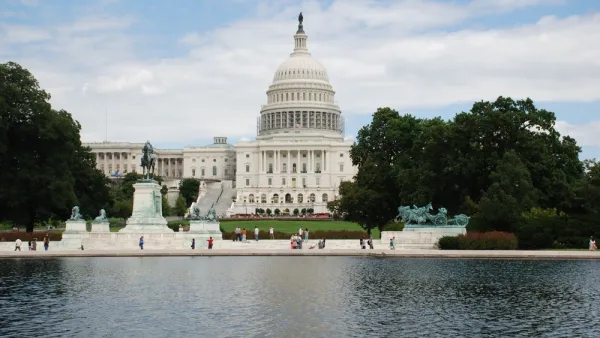
U.S. Conference of Mayors Lobbies for Federal Infrastructure Funding
The devil is in the details, as they say. That will be especially true as Congress and the Trump Administration decide how to allocate infrastructure spending around the county.
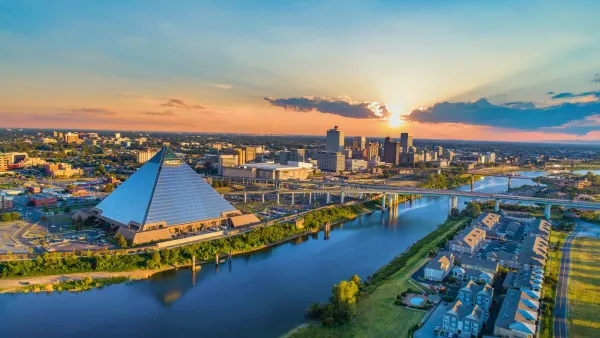
15 US cities and their global namesakes
Hundreds of cities around the United States are named after other places. We tour a few of them.

The state-sanctioned urbicide of Austin
People don’t kill cities. Freeways do.

US to reduce Colorado River water deliveries to Mexico
A new Colorado Treaty amendment reduces Mexico’s Colorado River water allocation by 250,000 acre feet.

New Jersey’s second-largest city bans standalone data centers
Jersey City will continue to allow co-location facilities, such as those meant for research institutions that store their own data.

Amtrak not solely to blame for New Jersey commuter rail's unreliability, report finds
A new study from the Garden State Initiative found that NJ Transit’s budget grew 20% across a 4 year period, but reliability declined significantly over the same period.

EPA erases limits on planet-warming pollution from power plants
Under Monday’s plan, power plants would still have some limits on how much mercury, arsenic and other contaminants they can emit.

Phoenix announces new on-demand transit service, more frequent RAPID buses
Both new services will launch in October, and are part of Phoenix's Project Effective Access Solutions for Easing Congestion.

FREE Course: Walkable City 1: Why Walkability?
After describing his path towards focusing on walkability as the essence of good planning, Jeff Speck marches through his five principal reasons for making more walkable places.
Reinventing Malls: Planning Alchemy—Turning Gray Fields Into Gold
The course focuses on the opportunities and imperatives that shape reinvention of mall sites.

Eagle County Government
Harvard University Graduate School of Design
Nashville Planning Department
The Architects Foundation
University of Cincinnati Online
The Pocatello Development Authority
The Urban Renewal Agency of the City of Pocatello
Journal of the American Planning Association