The city of Providence has announced the first draft of a comprehensive zoning code update—its first since 1994.


Alisha Pina details the proposed zoning code update, which has been in the works for six months and will still require substantial input and revision before it’s complete.
“The goals of the overhaul are numerous, including making the ordinance easy to understand and in line with other ordinances that dictate development and uses of property. For example, the city’s regulation for backyard hens — no more than six on any lot, or one per 800 square feet — is now included in the proposed new ordinance.”
“Planners also want to incorporate the ambitions established in Providence Tomorrow neighborhood plans and the city’s Comprehensive Plan, which were completed between 2005 and 2012. Regulations prohibiting the subdivision of the large lots on Blackstone Boulevard, for example, are included.”
“Incentives for developers who build mixed-used properties near transit hubs — such as Broad Street and North Main Street — include reducing the number of parking spots needed for the property and higher building heights.”
Read the full story: Providence city planners unveil first comprehensive zoning update in 20 years
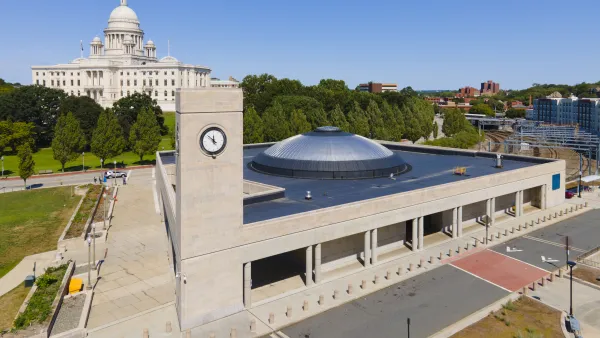
Providence train station to gain new bus hub
The new hub will replace the one currently located at Kennedy Plaza.
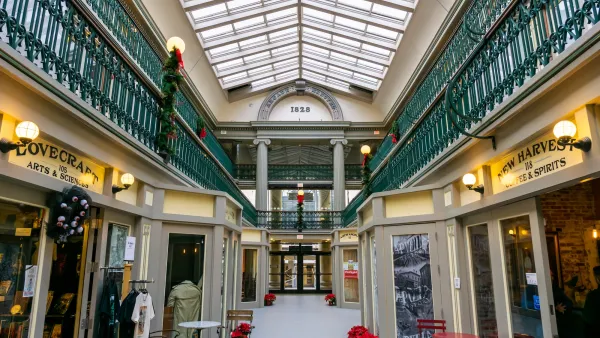
You Can Live Inside America’s Oldest Indoor Shopping Mall
The Arcade in Providence, Rhode Island, first built in 1828, was redeveloped into 48 micro-housing units.

From Plan to Place: Providence’s Downtown Renaissance
Providence’s downtown is transforming from plan to place. Decades of strategic planning, zoning reforms, & investment are paying off, creating a more vibrant, walkable urban core. Here’s how thoughtful policy and design are shaping the city’s future.

Planetizen Federal Action Tracker
A weekly monitor of how Trump’s orders and actions are impacting planners and planning in America.

California plans to bury El Niño’s downpour
If the state plays its cards right, it may be able to store a billion acre-feet of El Niño’s water in aquifers.

Desperate measures: Advocates weigh draining Lake Powell to fill Colorado River
Draining the reservoir could reduce evaporation losses by a couple hundred thousand acre-feet.

Mamdani’s pied-à-terre tax survives legal challenge
A panel of judges found that the plaintiffs failed to demonstrate injury as a result of New York City's implementation of the tax.

Eastern Nebraska is running out of electricity
Data centers and electrification are straining eastern Nebraska’s grid, throttling economic development.

Seattle passes record-breaking transit services expansion
Proposition 1 will double the city’s transit tax to add 95,000 more bus trips and preserve 180,000 bus trips annually.

FREE Course: Walkable City 1: Why Walkability?
After describing his path towards focusing on walkability as the essence of good planning, Jeff Speck marches through his five principal reasons for making more walkable places.
Reinventing Malls: Planning Alchemy—Turning Gray Fields Into Gold
The course focuses on the opportunities and imperatives that shape reinvention of mall sites.

City of Rosemead
Rutgers University, Edward J. Bloustein School of Planning and Public Policy
One Hundred Miles
University of Michigan School for Environment and Sustainability (SEAS)
Hunter College, City University of New York (CUNY)
The Architects Foundation
City of Cambridge
Montrose County
The Pocatello Development Authority