In a recent editorial, Joe Andrade questions the assumptions underlying the Salt Lake City region's approach to population growth.


Joe Andrade recently attended a mayoral conference titled "Mountain Urbanism, Mountain Modernism" in Salt Lake City and found the local political leadership's urbanist prescriptions for population growth (the population is expected to double in the next 25-30 years) to be inadequate.
"No amount of high density housing, public transit, 'repurposing' or recycling will allow us to double the population in this or other Wasatch Front valleys in the next 25 years without asphyxiating," says Andrade.
Rather, Andrade suggests cultural change might be more critical in addressing the pressures that follow population growth: "we need to address the local culture’s — and its politicians’ — emphasis on large families, large homes, private automobiles, 80 mph speed limits, golf courses, asphalt, energy waste, excess water use and other activities and even ideologies based on the now excessive use of material and natural resources."
Read the full story: My view: Mountain urbanism, mountain modernism


Shrinking Great Salt Lake Is a Ticking Time Bomb
Climate change and population growth are shrinking the Great Salt Lake. The environmental consequences are dire.
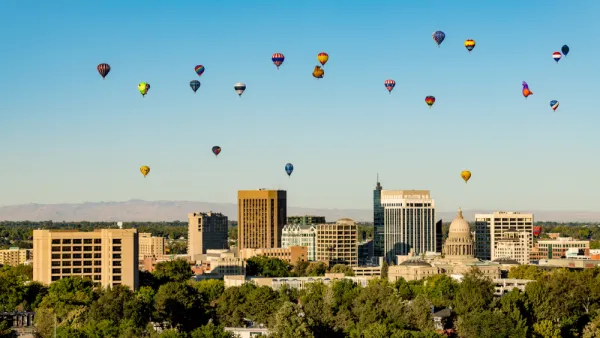
The 'Mountain Lion' Cities Rising in the U.S. West
An economist identifies the growth in nine U.S. cities—scattered from Utah to Texas, Arizona, Washington, and Idaho—as similar to the economic power generated in parts of Asia.
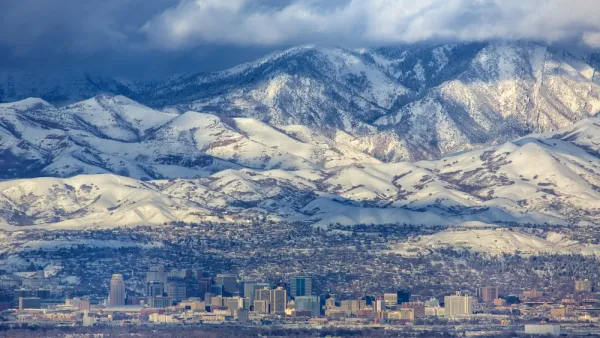
Study Touts the Housing Affordability Benefits of Density for the State of Utah
The density debate can't be avoided in fast-growing Utah, according to the researchers and political leaders who support the findings of a new report from the University of Utah's Kem C. Garner Policy Institute.

Planetizen Federal Action Tracker
A weekly monitor of how Trump’s orders and actions are impacting planners and planning in America.

‘Going backwards:’ Baltimore mayor, students rally against state's transit funding plan
Maryland's proposed six-year plan provides no funding for Baltimore’s BMORE bus program and reduces its road maintenance funding.
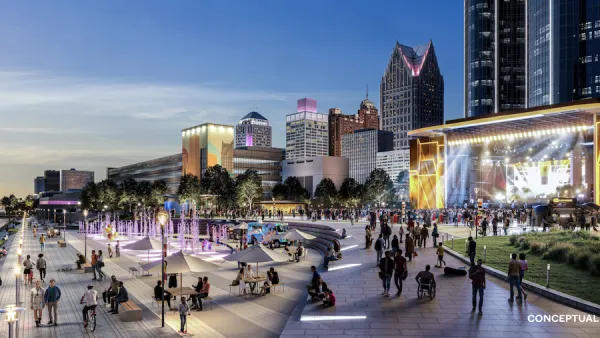
Detroit to transform waterfront with $2.2 billion investment
Developers will convert about 18 acres of unused parking lot space into civic spaces.

U.S.-Iran war may have ‘devastating’ impact on cost to warm homes
Vermont and Maine residents may see a 76% increase in the cost of warming their homes this winter.

Senate bill would ‘overhaul’ environmental permitting laws
Under the proposed act, government agencies would also not be able to suspend or rescind permits after granting them.

Exemption applications for NYC’s pied-à-terre tax see 55% success rate
The city sent nearly 40% of its initial pied-à-terre tax warnings erroneously.

FREE Course: Walkable City 1: Why Walkability?
After describing his path towards focusing on walkability as the essence of good planning, Jeff Speck marches through his five principal reasons for making more walkable places.
Reinventing Malls: Planning Alchemy—Turning Gray Fields Into Gold
The course focuses on the opportunities and imperatives that shape reinvention of mall sites.

One Hundred Miles
County of Mendocino
planning NEXT
The Architects Foundation
University of Cincinnati Online
Montrose County
Northern Illinois Transit Authority (NITA)
The Pocatello Development Authority