An intrepid Reddit user has produced a striking visualization for the economic importance of the country’s urban areas by splitting the nation’s GDP into two—the top 50 percent and the lower 50 percent.


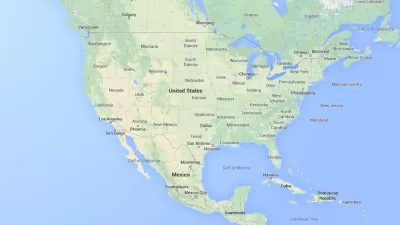
Reddit user Alexandr Trubetskoy has created a map that visualizes the country in two colors, with blue representing the bottom half of the country’s gross domestic product and orange representing the top half. On the map, a shocking amount of the country is covered in blue, and what’s left are the country's largest cities and metropolitan areas.
Writing for the Washington Post’s “the Fix,” Chris Cillizza shares one possible take away from the map: “ Those numbers make clear that while you may like to hate on big cities, you -- and we -- need them.”
Read the full story: The case for big cities, in 1 map
The Mobility-Productivity Paradox
New research shows that excessive vehicle travel reduces economic productivity, and that less mobility provides more productivity. Yes, you read that right.

The Five Most-Changed American Cities
A ranking of population change, home values, and jobs highlights the nation’s most dynamic and most stagnant regions.

Opinion: Why Linking Driving to GDP Misses the Point
The argument that car-centric development is good because it boosts national GDP ignores the massive costs of driving to everyday Americans.

Washington state to charge fee to drivers with fuel-efficient cars
Revenue from the fee will go towards supporting the state’s highways.

Illinois considers spending $1 billion in taxpayer money on data center
A quantum computing campus and data center are currently under construction in Chicago.

Trump to blast ‘hydrocarbon highway’ through ‘world’s longest art gallery’
Environmental and historic preservation groups are suing to stop the project.

NYC, state sue feds over mixed-immigration-status housing assistance rule
The state’s lawsuit argues that the rule change violates the Administrative Procedure Act.

Michigan to turn neighborhood into virtual power plant
Residents will soon be able to divert their excess energy to the grid in exchange for compensation.

Data center, mining project swarm to long-awaited Alaska railroad line
The state-owned railroad approved final plans for the spur line this week; the project is expected to cost $311 million, mostly funded by the federal government

FREE Course: Walkable City 1: Why Walkability?
After describing his path towards focusing on walkability as the essence of good planning, Jeff Speck marches through his five principal reasons for making more walkable places.
Reinventing Malls: Planning Alchemy—Turning Gray Fields Into Gold
The course focuses on the opportunities and imperatives that shape reinvention of mall sites.

City of Charlotte
City of Rosemead
Rutgers University, Edward J. Bloustein School of Planning and Public Policy
University of Michigan School for Environment and Sustainability (SEAS)
Hunter College, City University of New York (CUNY)
The Architects Foundation
University District Partnership