What, exactly, makes a neighborhood walkable? A new study published in the science journal PLOS-ONE begins to answer that question.


The researchers looked at four factors—street connectivity, population density, residential density, and the number of nearby non-residential destinations—in relationship to Toronto residents’ walking habits. They found that the last three factors (population density, residential density, and walkable destinations) most strongly predicted walking activity. Street connectivity had a lower impact on transportation habits.
“Basically, if you live in a dense area, you are more likely to walk and bike often, and you’re even more likely to get physical activity if there are a lot of destinations close to your house,” Angie Schmitt writes.
Read the full story: What Sets Apart the Places Where People Walk More?

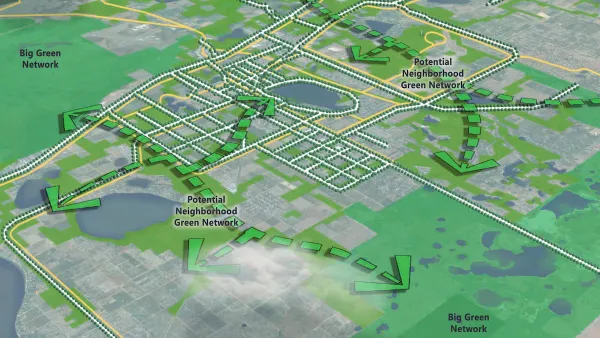
Florida Town Master Plan Encourages Active Living
Lake Wales is redesigning its car-oriented streets to make it easier for residents to walk and bike.

How Long Covid Changes the Transportation Conversation
People living with long Covid symptoms can find themselves unable to make the same mobility choices they used to.
Study: Transit Not a Panacea for Walkability After All
One of the key assumptions of a new partnership between the planning and public health professions is that transit encourages more active mobility than possible with a car-centric lifestyle. But new research casts doubt on those assumptions.

Planetizen Federal Action Tracker
A weekly monitor of how Trump’s orders and actions are impacting planners and planning in America.

Northwest rail fans eager for Sept. 30 debut of Amtrak’s Airo fleet
Get ready for that new train smell and more seats. But they won’t go faster or run more frequently on the Cascades route in Washington and Oregon.

Record-breaking wildlife overpass in Colorado brings 91% reduction in animal collisions
Prior to the overpass, vehicles were hitting one deer per day on Colorado’s Interstate 25.

Detroit to transform waterfront with $2.2 billion investment
Developers will convert about 18 acres of unused parking lot space into civic spaces.

‘Going backwards:’ Baltimore mayor, students rally against state's transit funding plan
Maryland's proposed six-year plan provides no funding for Baltimore’s BMORE bus program and reduces its road maintenance funding.

Trump wants to cancel nearly 98% of funding for HUD housing support program
Multiple housing groups are suing the administration in an effort to preserve the funding.

FREE Course: Walkable City 1: Why Walkability?
After describing his path towards focusing on walkability as the essence of good planning, Jeff Speck marches through his five principal reasons for making more walkable places.
Reinventing Malls: Planning Alchemy—Turning Gray Fields Into Gold
The course focuses on the opportunities and imperatives that shape reinvention of mall sites.

City of Thousand Oaks
City of Wisconsin Rapids
Harvard University Graduate School of Design
The Architects Foundation
University of Cincinnati Online
Northern Illinois Transit Authority (NITA)
The Pocatello Development Authority
The Urban Renewal Agency of the City of Pocatello