Comcast recently released designs for a $1.2 billion skyscraper in Downtown Philadelphia. The building’s potential starkly contrasts the suburban model of commercial office parks.


Comcast has proposed a $1.2 billion, 59-story building designed by Norman Foster at 18th and Arch in Philadelphia. When it opens in 2017, the 1,211-foot-tall building will be the country’s eight tallest, and the tallest outside of New York and Chicago.
Inga Saffron writes that the building is a rebuttal to the bubble conditions of other high tech office parks. And yes, Saffron recognizes the irony of Foster's involvement with this potential sea change of commercial design ethos. "He's the same guy who is designing Apple's sprawling new headquarters on a 170-acre suburban site in Cupertino, Calif., a low-slung, four-story ring that reinforces the status quo.”
Rather, Saffron explains, the new tower is “a skyscraper version of the great, light-filled factory lofts of the early 20th century.” The program of the building is made all the more powerful but its position within the context of the city, where it will be “wedged into the unpredictable heart of Center City atop the region's densest transit hub.”
Moreover, Saffron is explicit about the lofty ambitions for the building: “The tower's simplicity is as potentially radical as Walter Gropius' Fagus factory was in 1913, because it recognizes that urban skyscrapers are not just for paper pushers, but also for collaboration and creativity.”
FULL STORY: Changing Skyline: Comcast tower a new symbol for technology

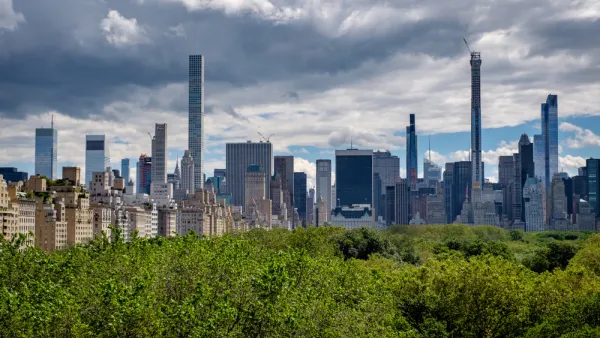
New Supertall Skyscraper Coming to Manhattan
The latest supertall addition to the New York skyline departs from the recent glut of skinny residential buildings popping up in Manhattan. The new building at 270 Park Avenue will have significantly more girth and be filled with offices.
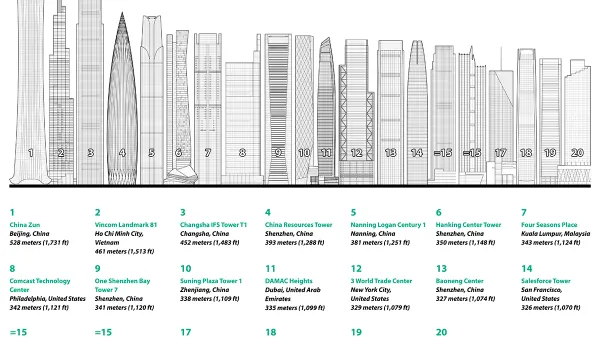
The Year in Skyscraper Construction
China continues to lead the world in the construction of skyscrapers.
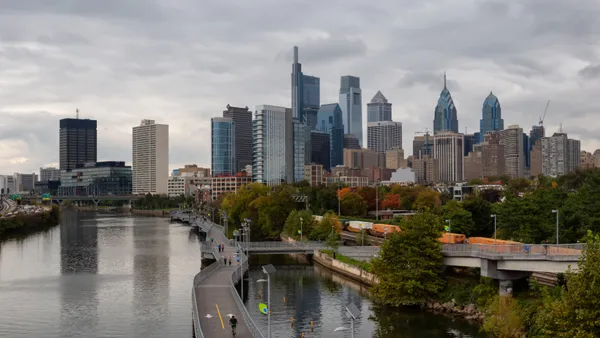
Philly's New Tallest Tower Earns Positive Reviews
The first building in Philadelphia to surpass 1,000 feet is now the tenth tallest building in the country. Here's what local media is writing about the Comcast Technology Center.

Planetizen Federal Action Tracker
A weekly monitor of how Trump’s orders and actions are impacting planners and planning in America.

The state-sanctioned urbicide of Austin
People don’t kill cities. Freeways do.

US to reduce Colorado River water deliveries to Mexico
A new Colorado Treaty amendment reduces Mexico’s Colorado River water allocation by 250,000 acre feet.

5 New England states march closer to 800 megawatt wind energy project
Securing federal approval for the project may be complicated under the Trump administration, which has historically been hostile towards domestic wind power.

Baltimore to break ground on $50 million Transit Priority Project
The project will bring faster bus trips, safer streets and better bike connections to Baltimore.

Airbnb launches $250 million 'last-dollar financing' housing accelerator, makes first investment in Austin
The company will put $6.4 million towards affordable housing development in Texas’ capital.

FREE Course: Walkable City 1: Why Walkability?
After describing his path towards focusing on walkability as the essence of good planning, Jeff Speck marches through his five principal reasons for making more walkable places.
Reinventing Malls: Planning Alchemy—Turning Gray Fields Into Gold
The course focuses on the opportunities and imperatives that shape reinvention of mall sites.

Eagle County Government
Harvard University Graduate School of Design
Nashville Planning Department
The Architects Foundation
University of Cincinnati Online
The Pocatello Development Authority
The Urban Renewal Agency of the City of Pocatello
Journal of the American Planning Association