Though new streetcars, light rail, and subway projects get much of the attention, the lowly bus does most of the heavy public transit lifting across the U.S. Even in rail-heavy cities like Philadelphia and Chicago, bus ridership exceeds trains.


"As I looked through the latest 2012 American Community Survey data to see how transit use has grown or fallen in various cities since 2000, something else stuck out: How many bus riders there really are, even in the few big cities with large rail networks," writes Stephen J. Smith. "While the urban transit stereotype may be a straphanger on a subway, there are actually only three large cities in the U.S. — New York, Boston and Washington, D.C. — where most commuters use rail."
"Given that ridership growth is most likely to come on existing transit systems, as yesterday’s analysis showed, improved buses will play an important role in transit mode share increases (or decreases) in the future."
Read the full story: Even in Cities With Large Rail Networks, Buses Still (Usually) Rule
Indianapolis Bus Ridership Gaining After Investment
Bus ridership in Indianapolis in August is up 3.4% over last year, contrasting ridership in cities around the country.
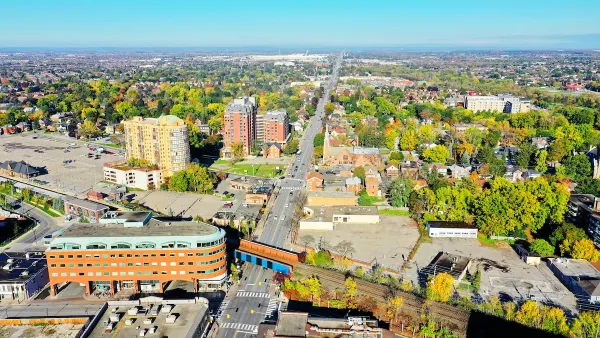
This Toronto Suburb Has More Bus Riders Than Columbus, Ohio
Brampton, Ontario used gradual improvements in service to prove that if you build it, they will ride.
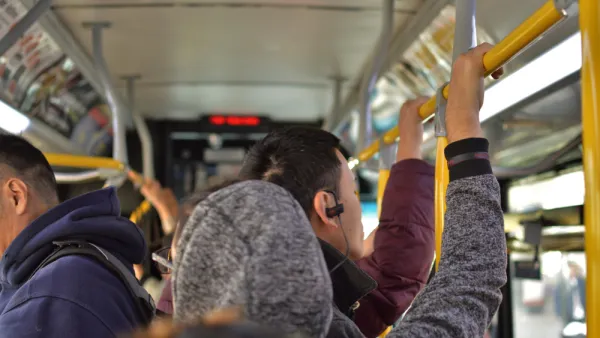
Report: Improved Service Key to Growing Bus Ridership
A NACTO report highlights the importance of bus-friendly policies and infrastructure for boosting ridership numbers and reducing urban congestion and pollution.

Planetizen Federal Action Tracker
A weekly monitor of how Trump’s orders and actions are impacting planners and planning in America.

Eastern Nebraska is running out of electricity
Data centers and electrification are straining eastern Nebraska’s grid, throttling economic development.

Move over, LA: St. Louis gears up for Olympics, invests millions in downtown redevelopment
The Missouri city will host the 2028 Olympic soccer group stage and knockout matches.

Dallas releases zoning code overhaul to officials
The drafted overhaul is over 400 pages long.

NYC renovations for dangerous, ‘mercilessly crammed’ street delayed until 2027
Construction was supposed to begin this fall.

San Diego’s Midway Rising project gets greenlight from city council
The project looks to become the largest affordable housing development in California's history.

FREE Course: Walkable City 1: Why Walkability?
After describing his path towards focusing on walkability as the essence of good planning, Jeff Speck marches through his five principal reasons for making more walkable places.
Reinventing Malls: Planning Alchemy—Turning Gray Fields Into Gold
The course focuses on the opportunities and imperatives that shape reinvention of mall sites.

City of Rosemead
Rutgers University, Edward J. Bloustein School of Planning and Public Policy
One Hundred Miles
University of Michigan School for Environment and Sustainability (SEAS)
Hunter College, City University of New York (CUNY)
The Architects Foundation
City of Cambridge
The Pocatello Development Authority
The Urban Renewal Agency of the City of Pocatello