Cory Booker entered office with a goal of transforming Newark's reputation from failed city to recovering city. J.B. Wogan examines whether the new senator used the city as a platform to boost his own image, or enacted meaningful change.


Though former mayor Cory Booker maintains that he was successful in transforming Newark, "[a]lmost a third of the city's population lives below the federal poverty line. The local unemployment rate is nearly double the national average. And the murder rate remains about where it was before Booker was elected mayor."
"It’s every mayor’s job to be a cheerleader, but there is evidence to support Booker’s rosy outlook," says Wogan. "New grocery stores and hotels—the first in decades—have opened....The city reported $1 billion in real estate development in 2011 and 2012—about a third of all development across the state in sheer square footage. Another $2 billion is in the pipeline for the next two years. Bolstered by a growing immigrant population, Newark finally bucked its 60-year depopulation trend in the 2010 Census."
Wogan examines how Booker was able to attract investment and change perceptions through the force of his personality; leading many to question whether the gains will continue now that he's left town.
Read the full story: But What Did Cory Booker Actually Accomplish in Newark?

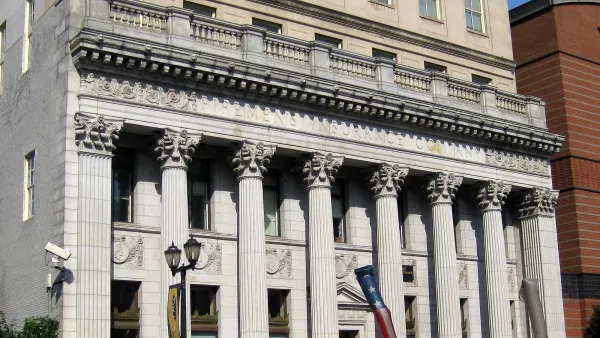
Historic Newark building to become affordable housing
The century-old building will be converted into nearly 200 homes with ground-floor retail.
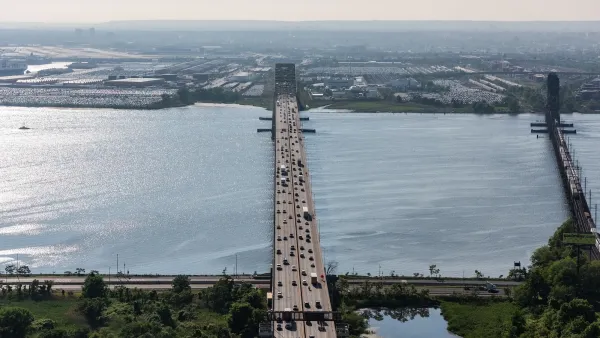
New Jersey Governor Kills ‘Boondoggle’ Highway Expansion
Gov. Sherrill ‘right-sized’ the Newark Bay Bridge reconstruction project, nixing a second proposed bridge and road expansion.

Gateway Tunnel Project Ready to Move Forward
The project is primarily funded through federal agencies and will improve a key link between New Jersey and New York City.

Planetizen Federal Action Tracker
A weekly monitor of how Trump’s orders and actions are impacting planners and planning in America.

California plans to bury El Niño’s downpour
If the state plays its cards right, it may be able to store a billion acre-feet of El Niño’s water in aquifers.

Chicago breaks ground on $3 billion megadevelopment
The new neighborhood, titled Foundry Park, will one day host 3,700 residences.

California High-Speed Rail Authority CEO resigns after $600,000 scandal
Under Ian Choudri, the authority used taxpayer dollars to fund first class flights and trips to nightclubs.

Want to study the Missouri River? Soon, you may need unanimous approval from 10 states
Legislation would require 10 governors’ permission to study or build projects moving water outside the basin.

Desperate measures: Advocates weigh draining Lake Powell to fill Colorado River
Draining the reservoir could reduce evaporation losses by a couple hundred thousand acre-feet.

FREE Course: Walkable City 1: Why Walkability?
After describing his path towards focusing on walkability as the essence of good planning, Jeff Speck marches through his five principal reasons for making more walkable places.
Reinventing Malls: Planning Alchemy—Turning Gray Fields Into Gold
The course focuses on the opportunities and imperatives that shape reinvention of mall sites.

City of Rosemead
Rutgers University, Edward J. Bloustein School of Planning and Public Policy
One Hundred Miles
Hunter College, City University of New York (CUNY)
The Architects Foundation
University of Cincinnati Online
City of Cambridge
Montrose County
The Pocatello Development Authority